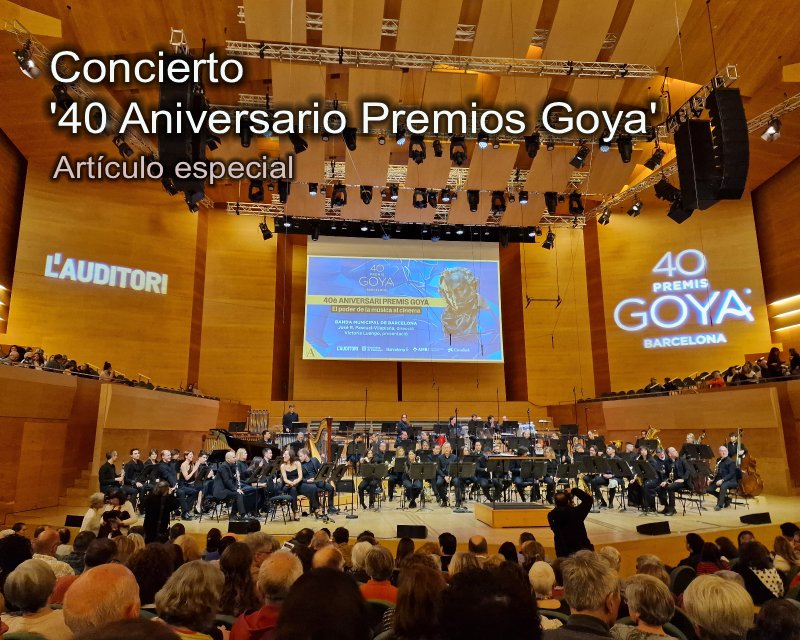
Concert ‘40th Anniversary of the Goya Awards’ in Barcelona [SPECIAL ARTICLE]
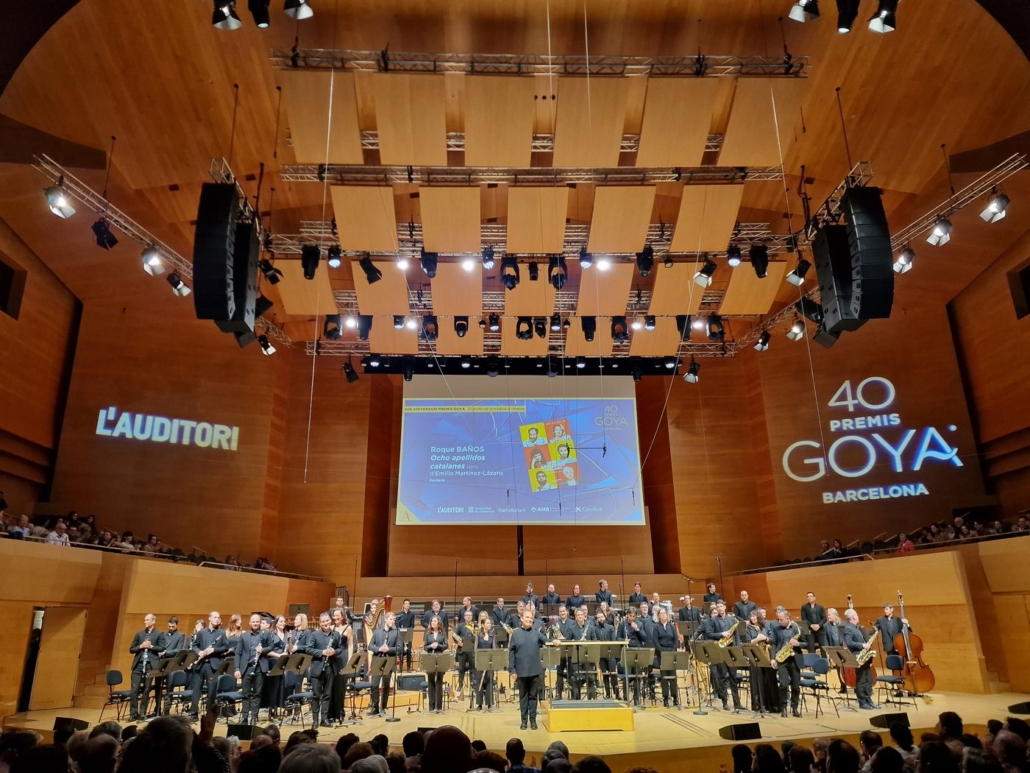
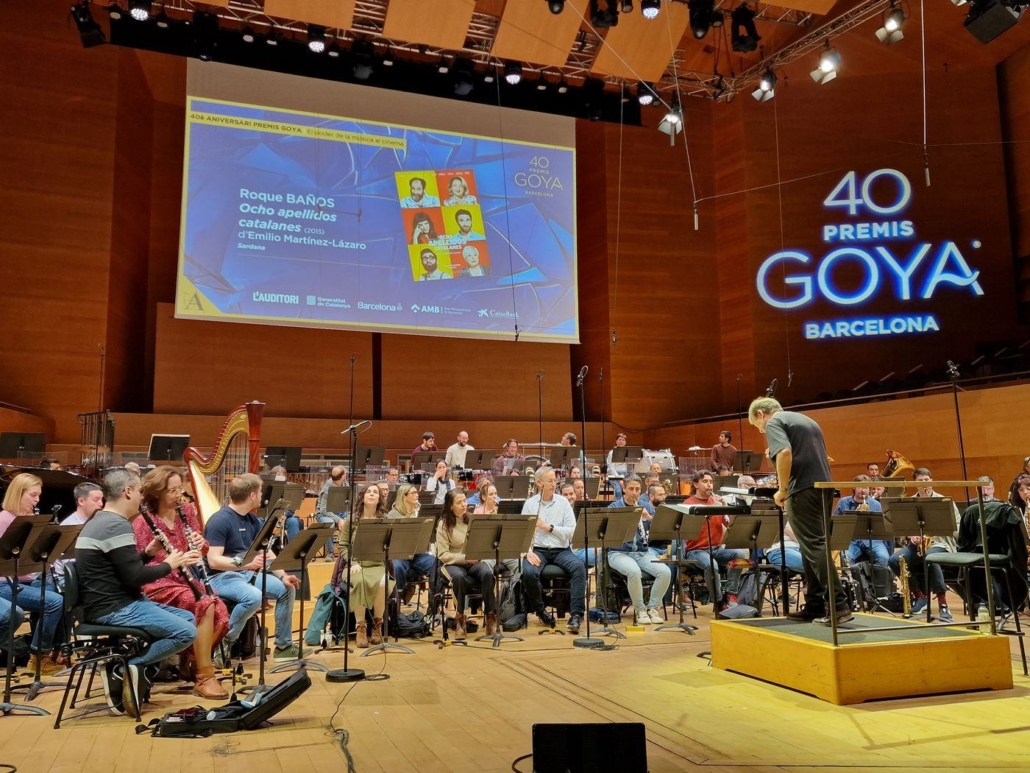
On Sunday, February 22nd, the Academy of Motion Pictures and Arts of Spain organised a concert in honour of the 40th anniversary of the Goya Awards at L’Auditori in Barcelona (read more), as a prelude to the awards ceremony on February 28th (read more).
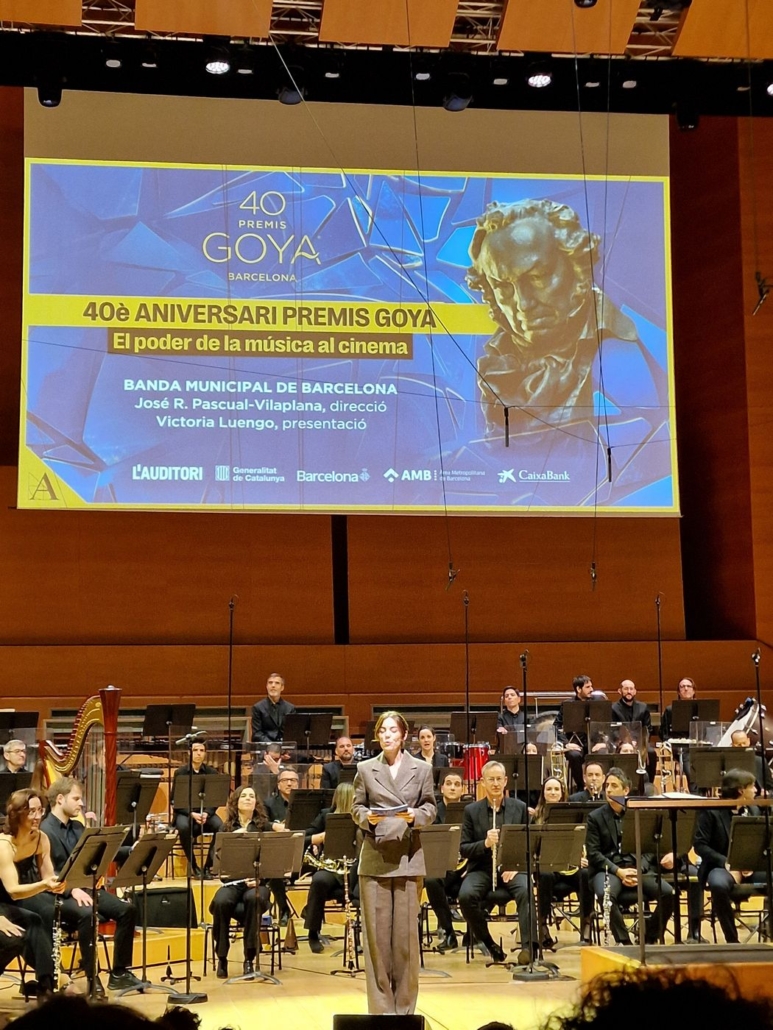
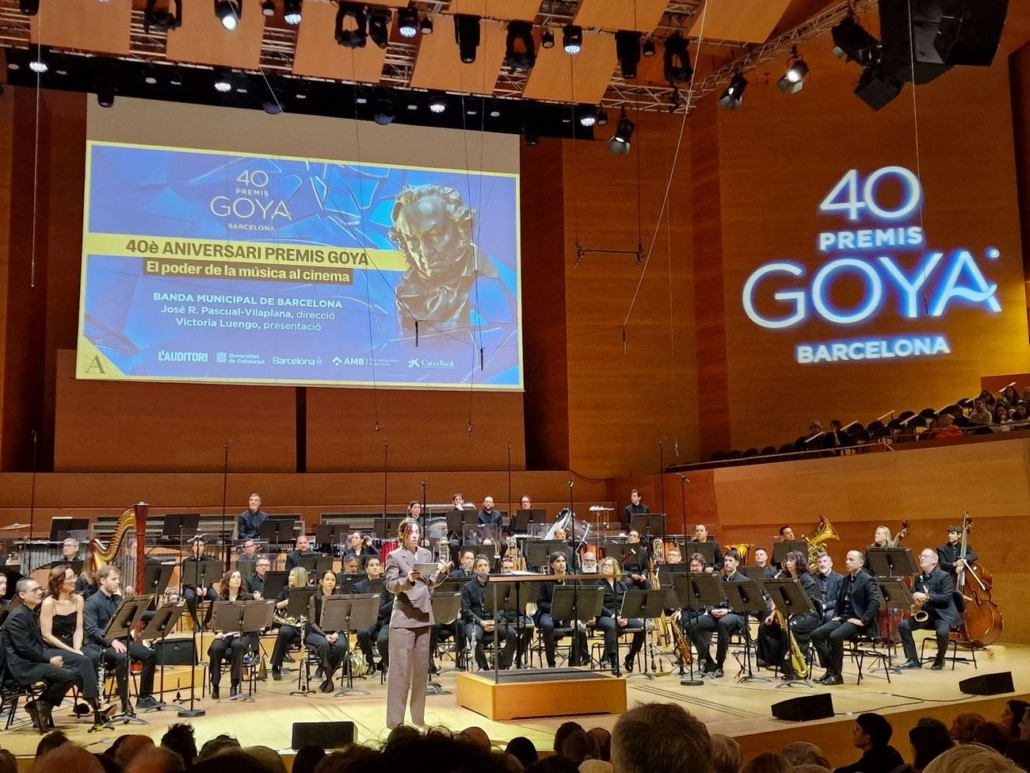
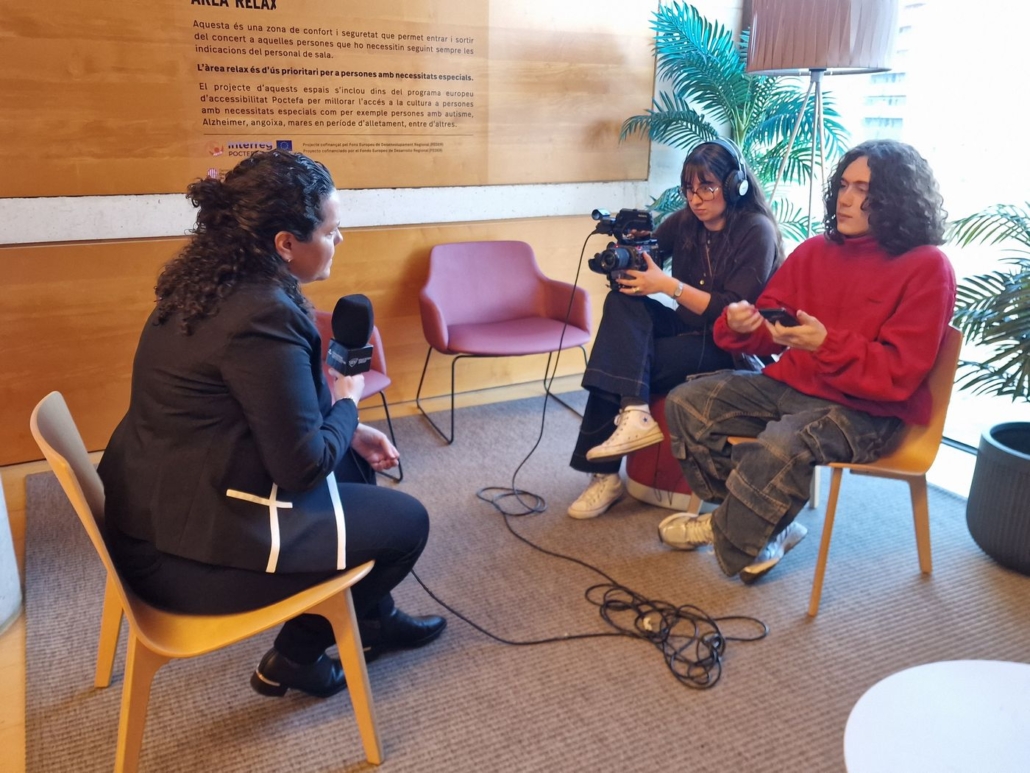
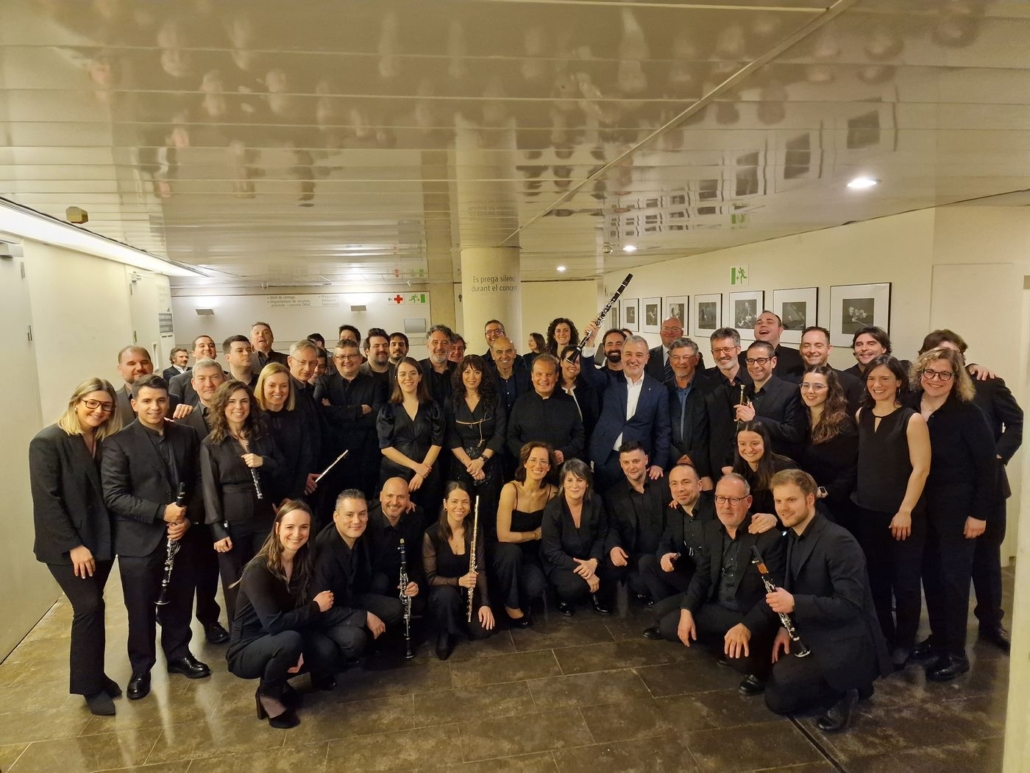
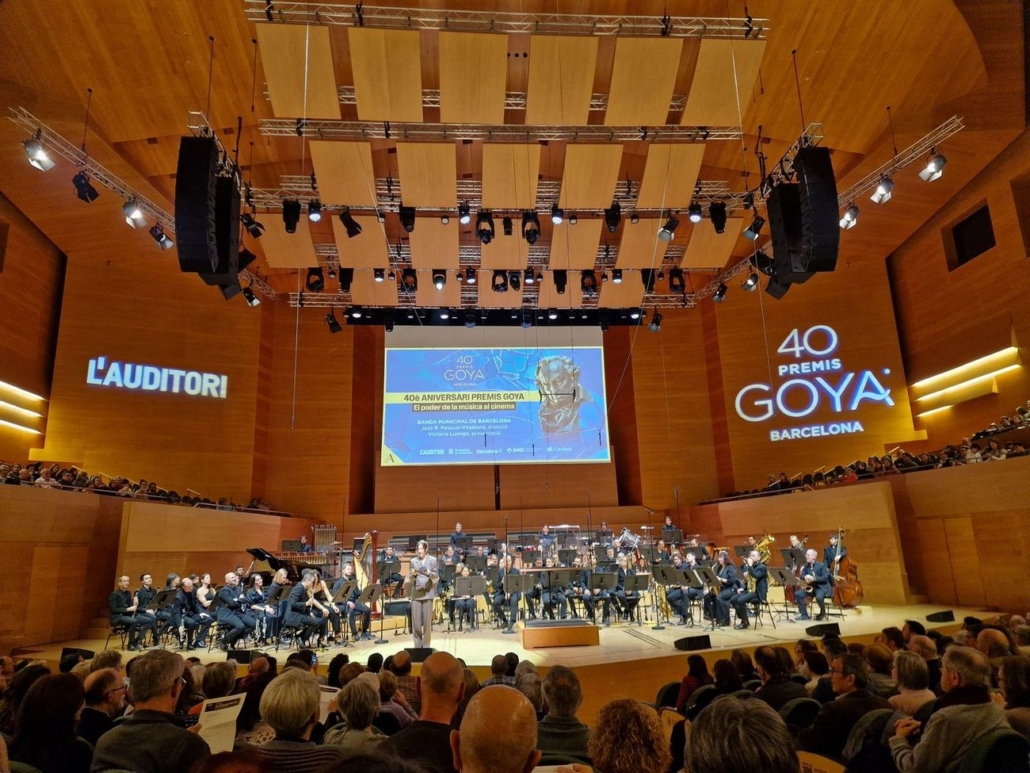
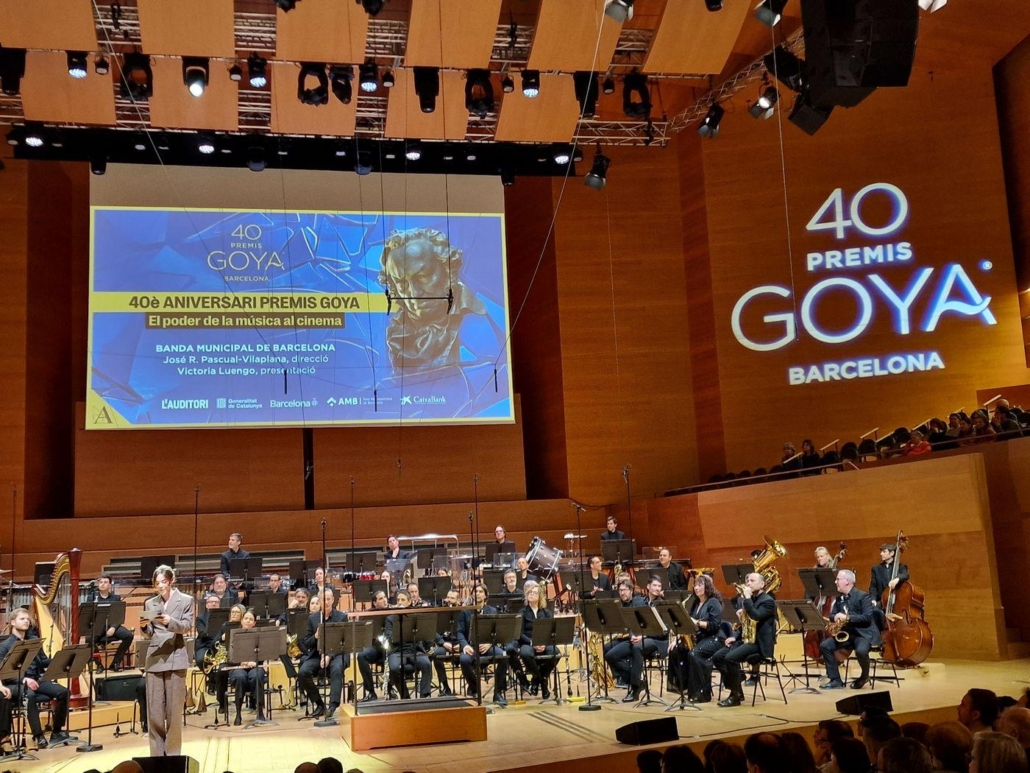
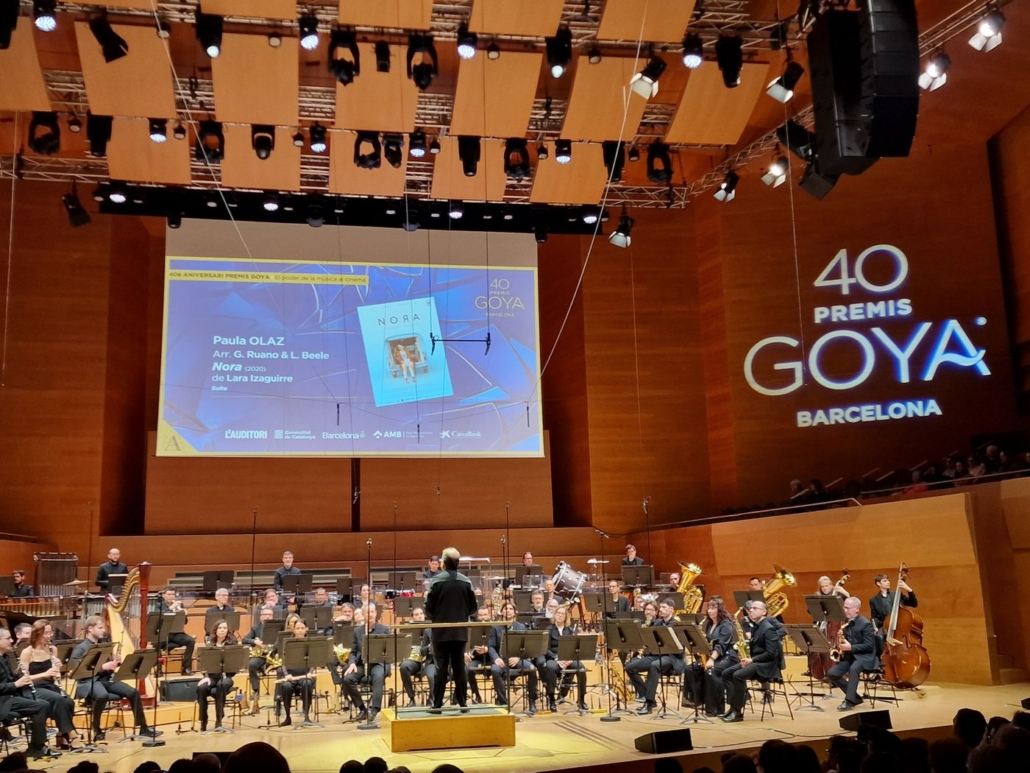
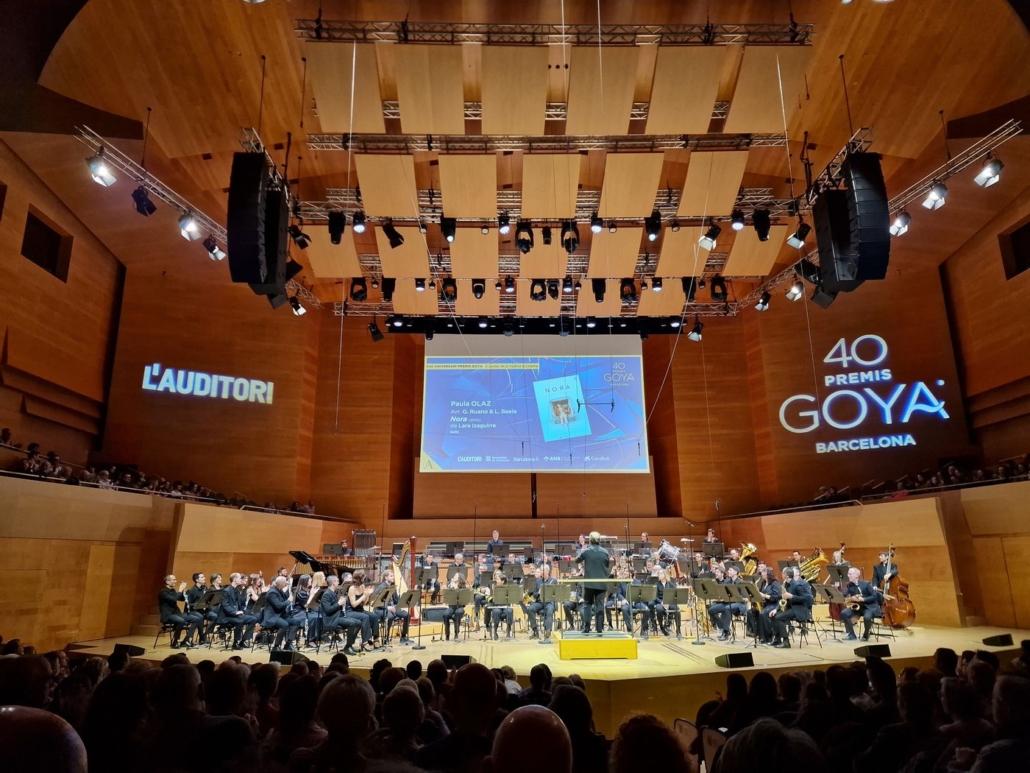
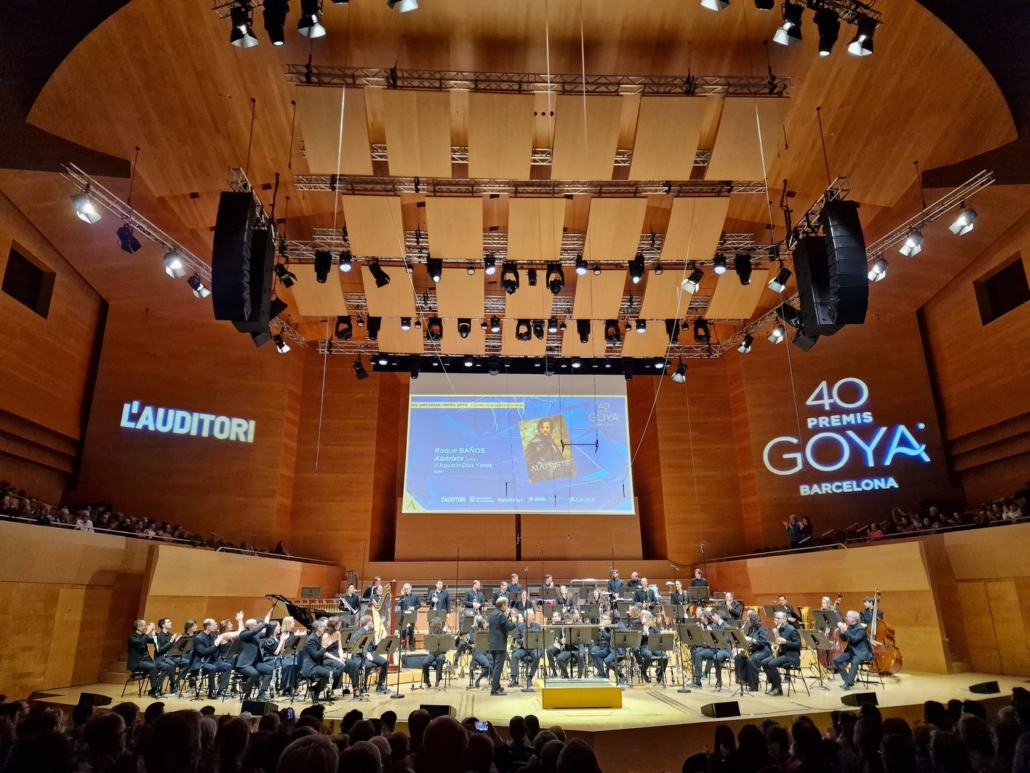
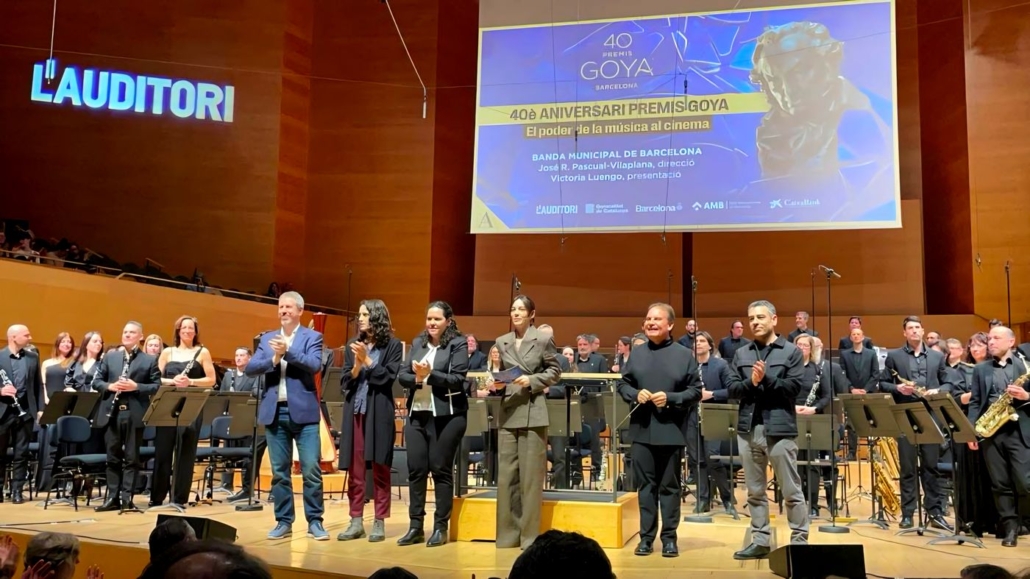
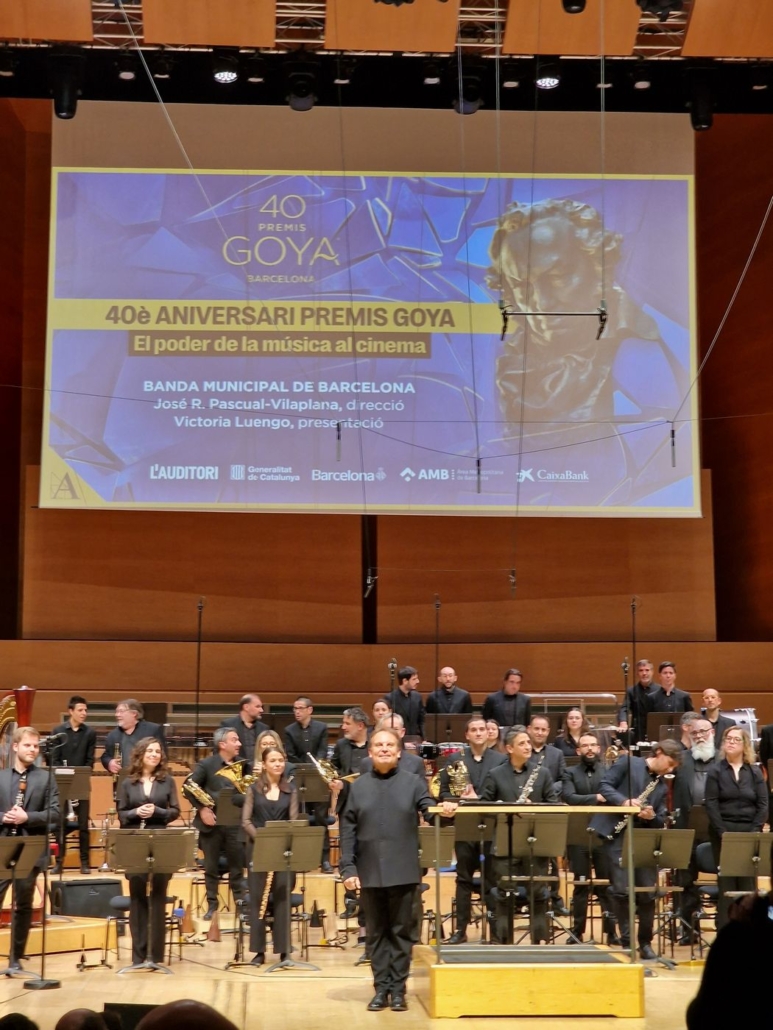
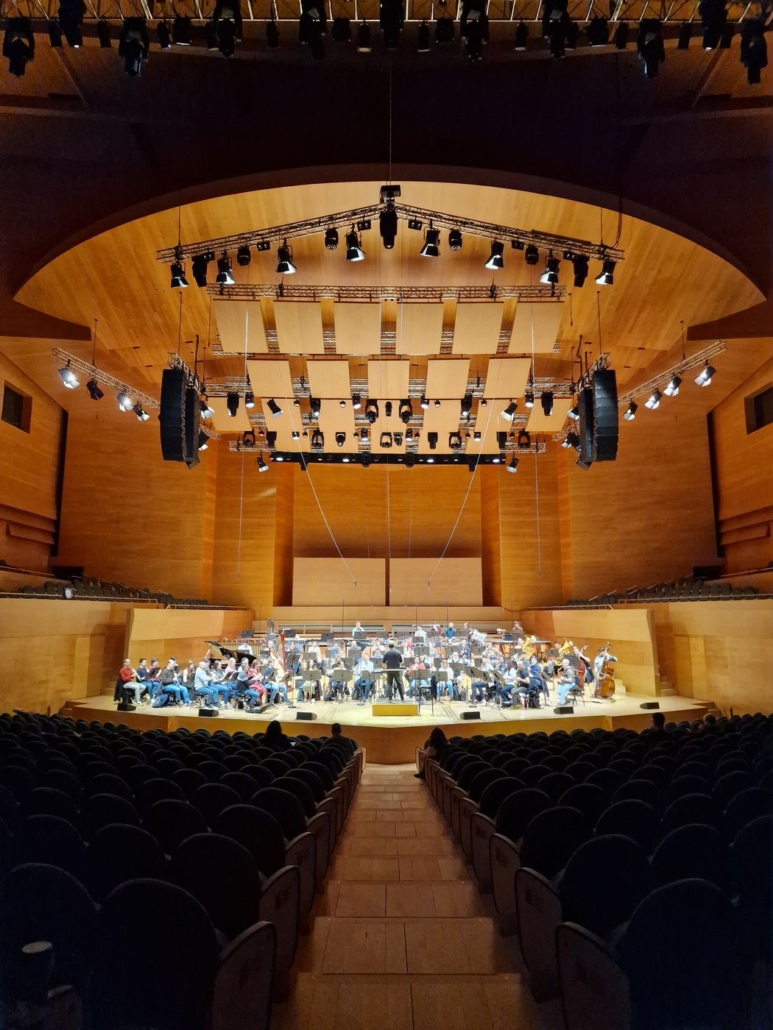
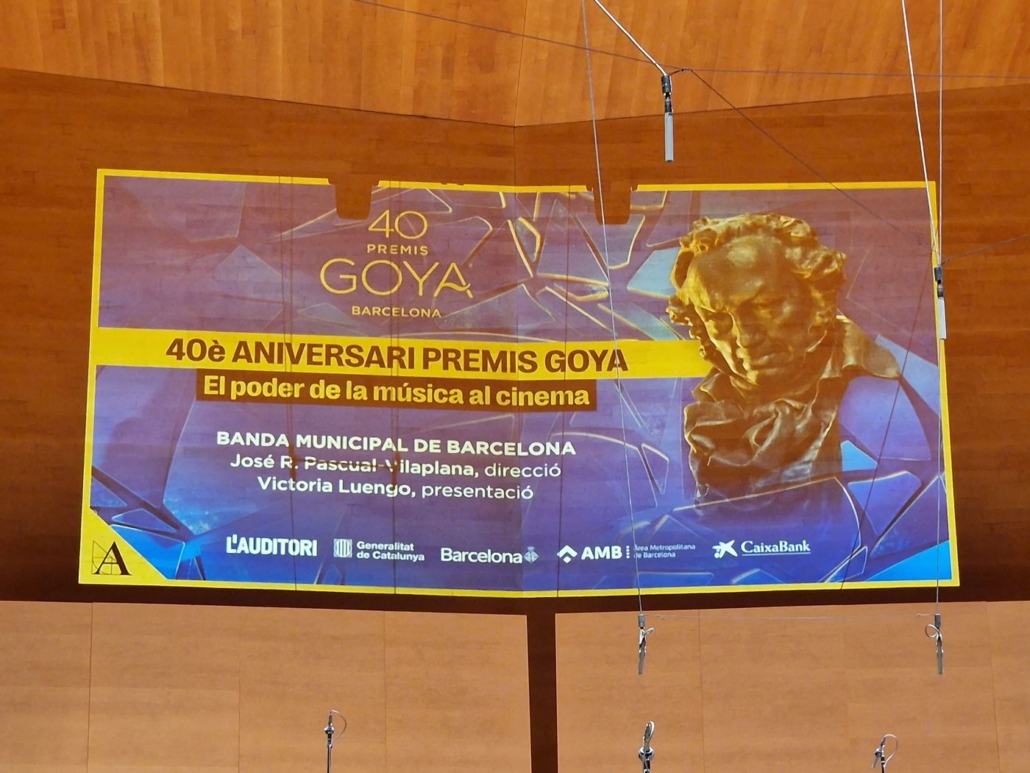
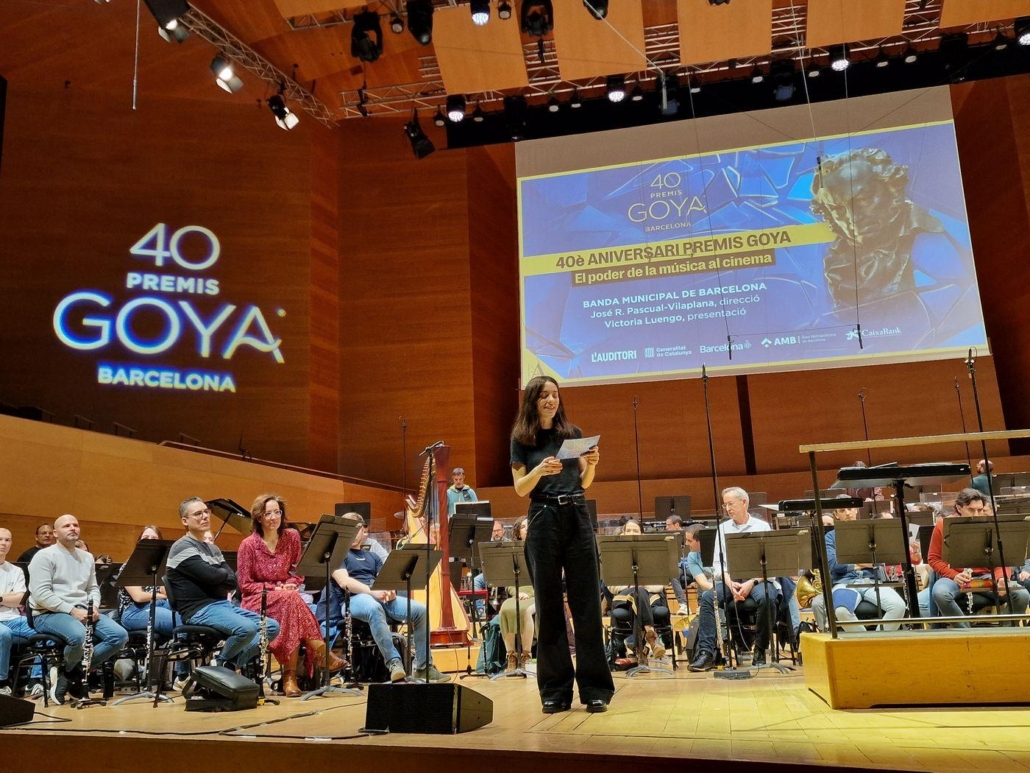
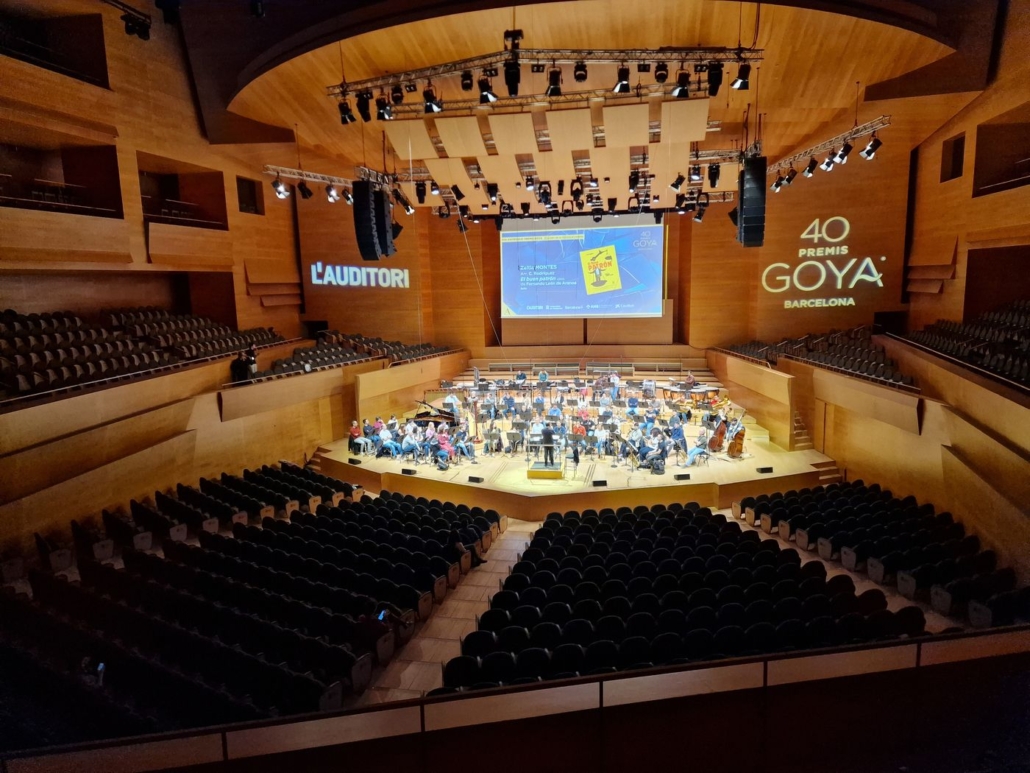
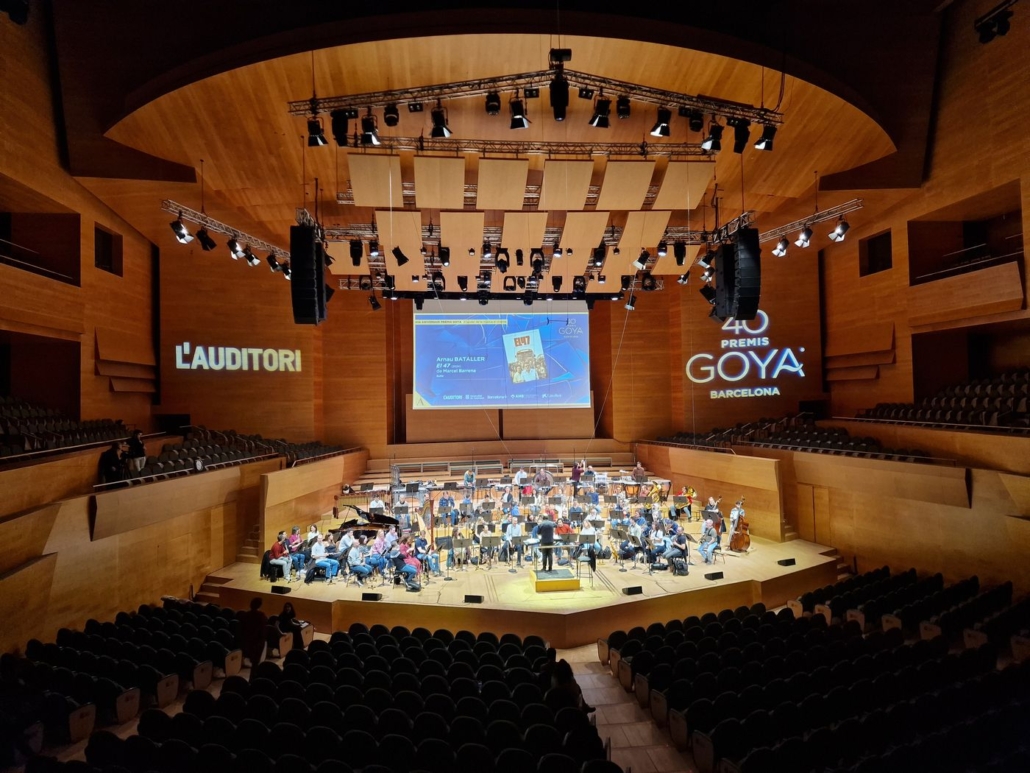
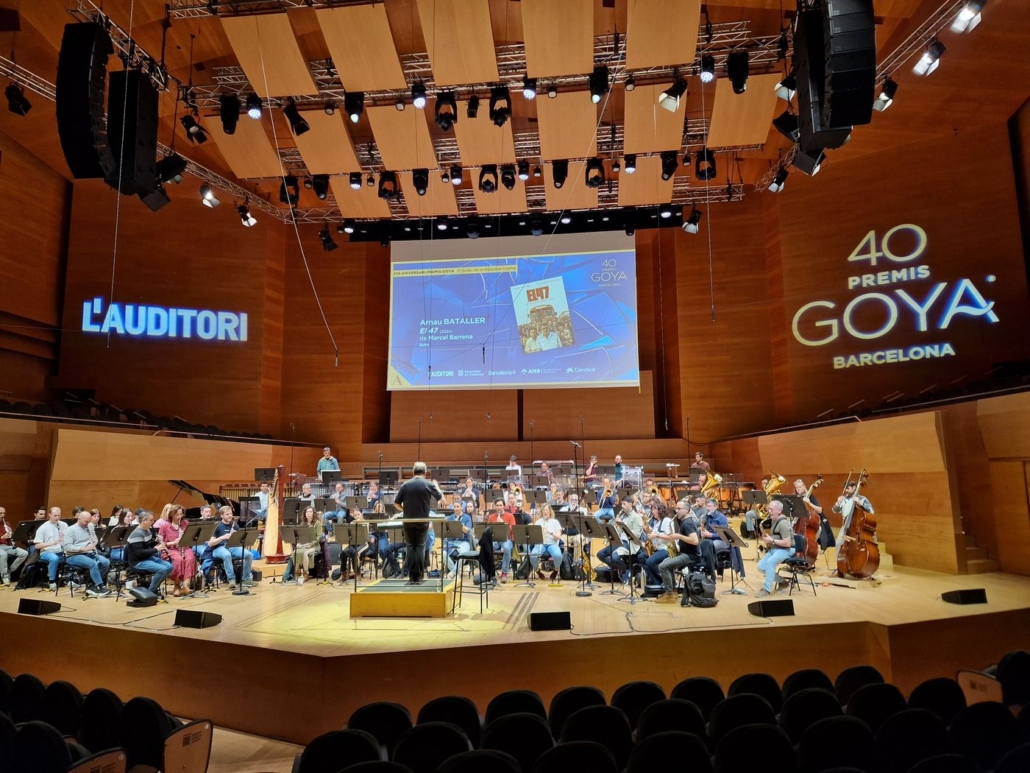
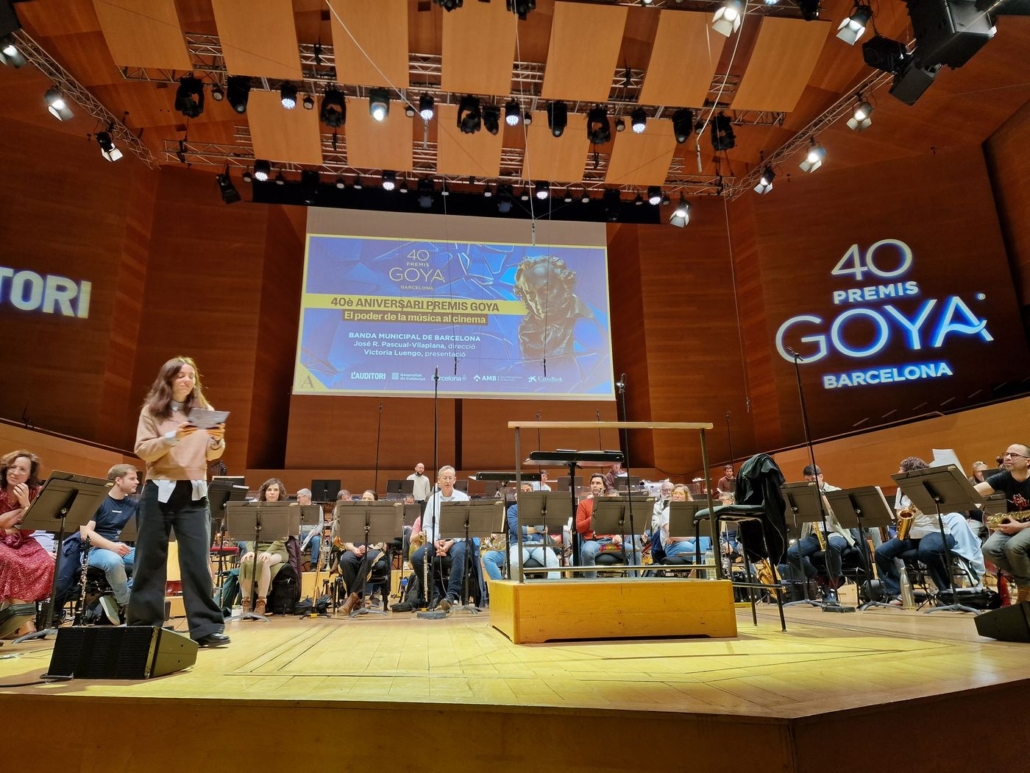
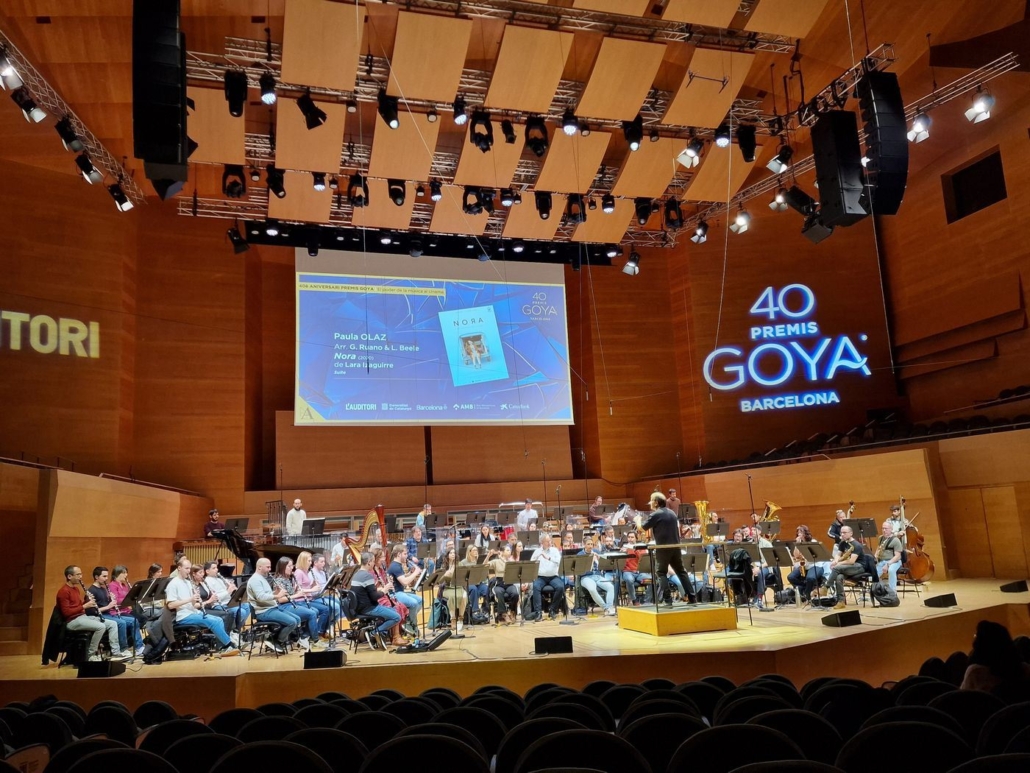
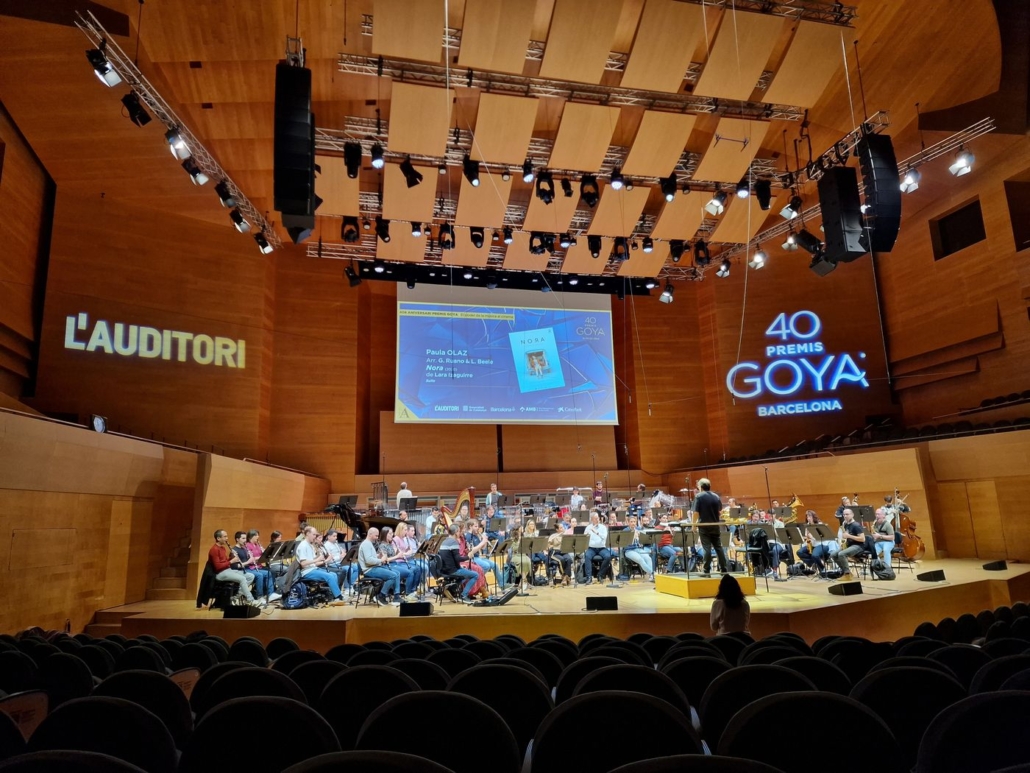
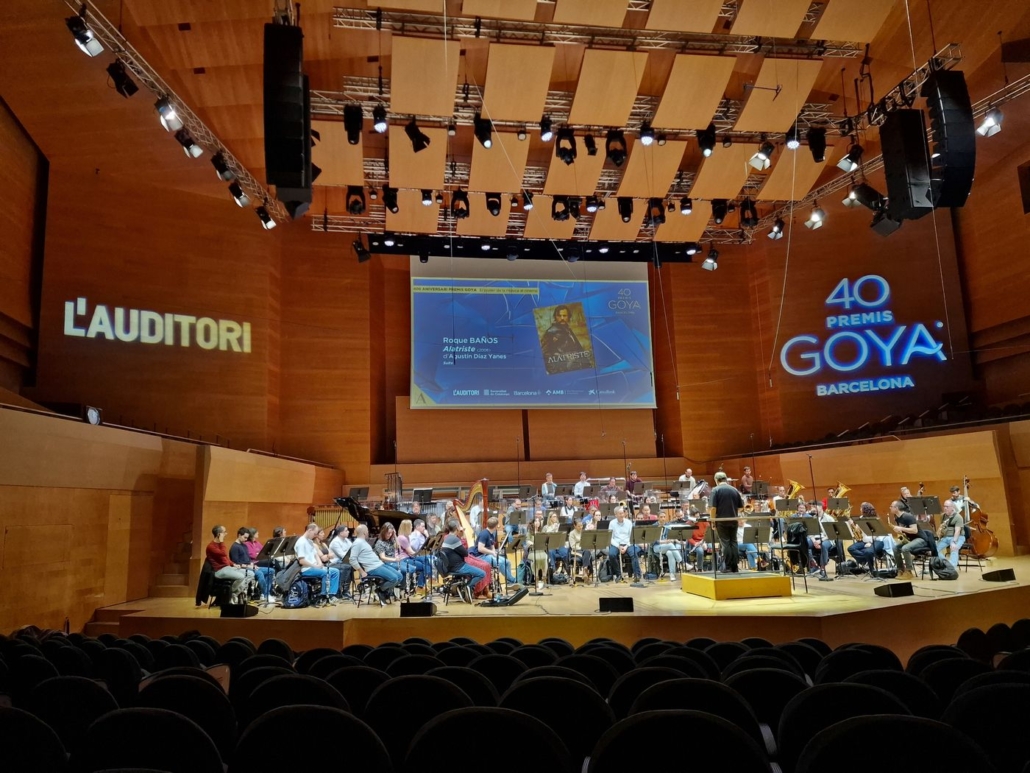
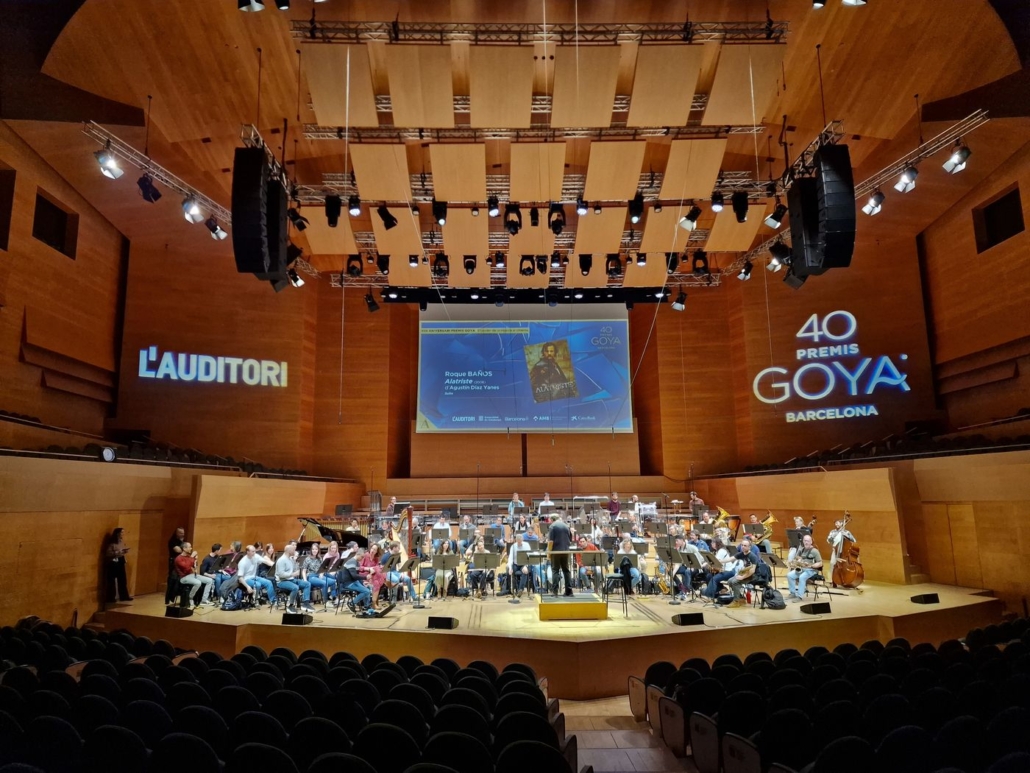
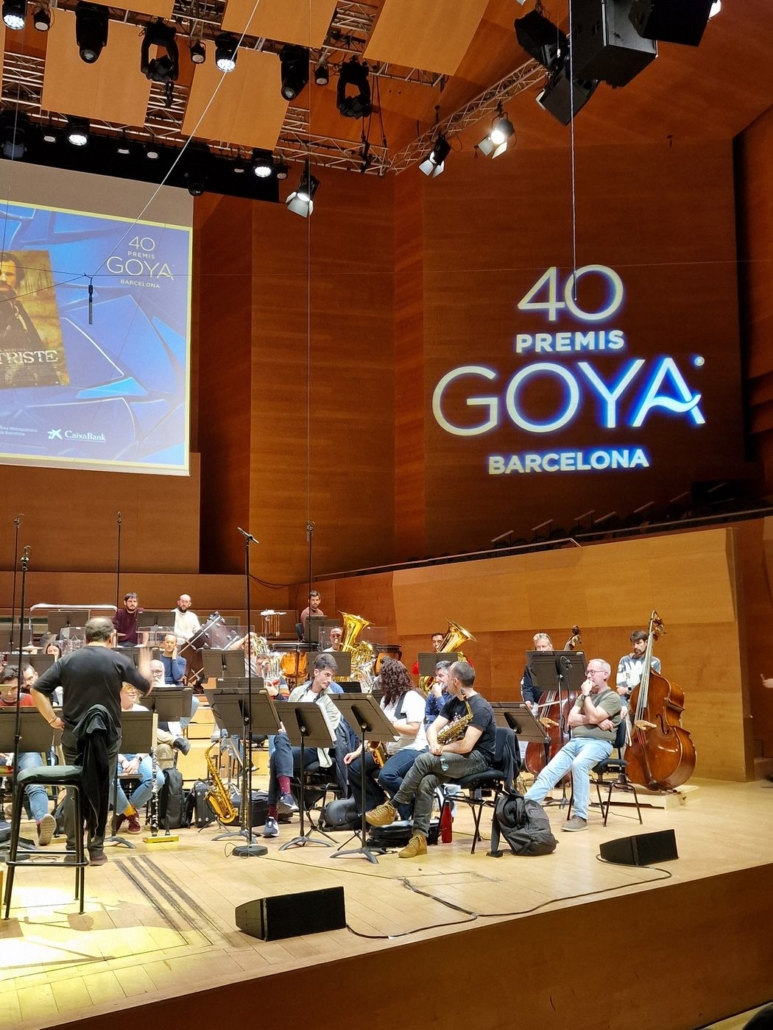
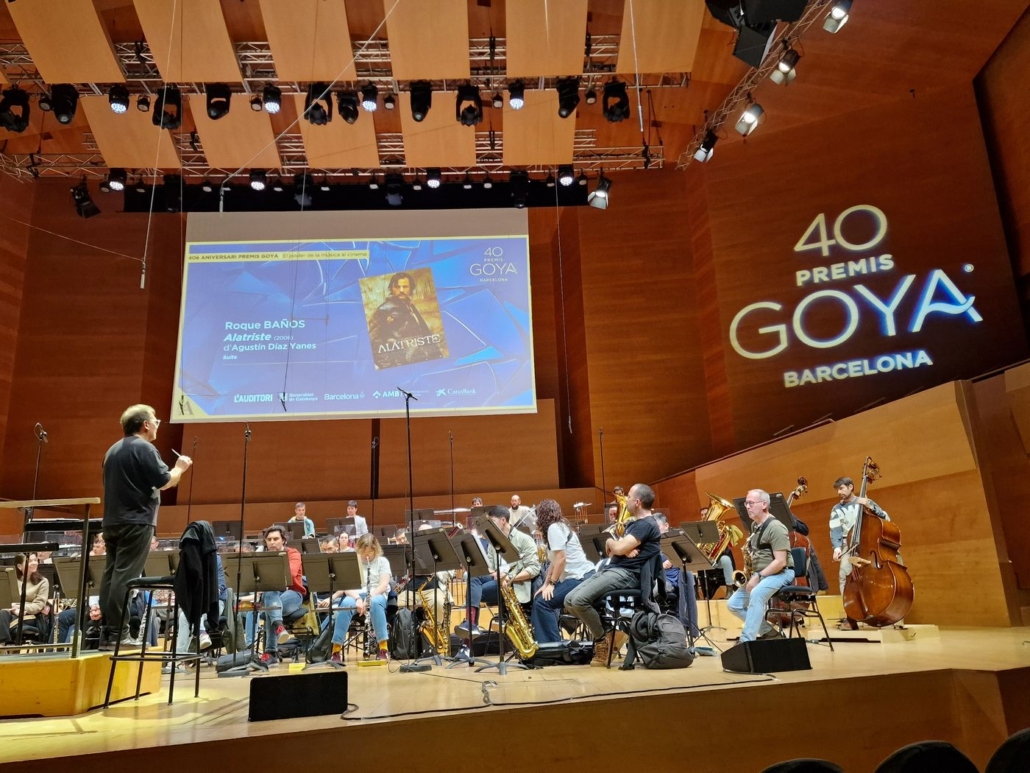
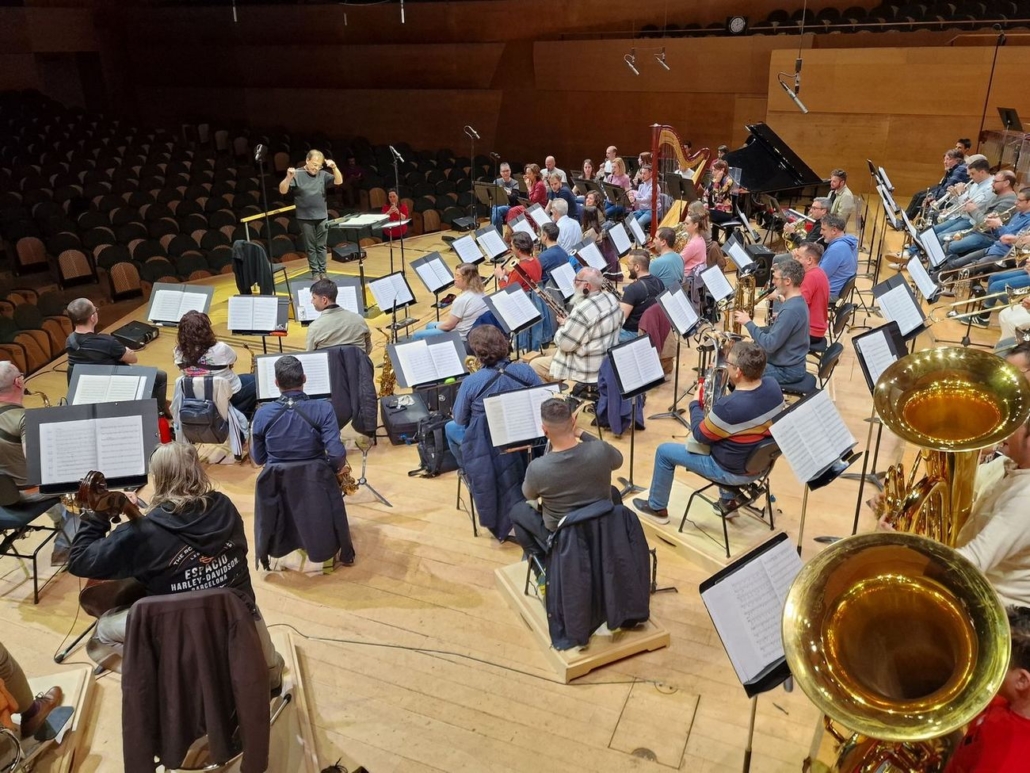
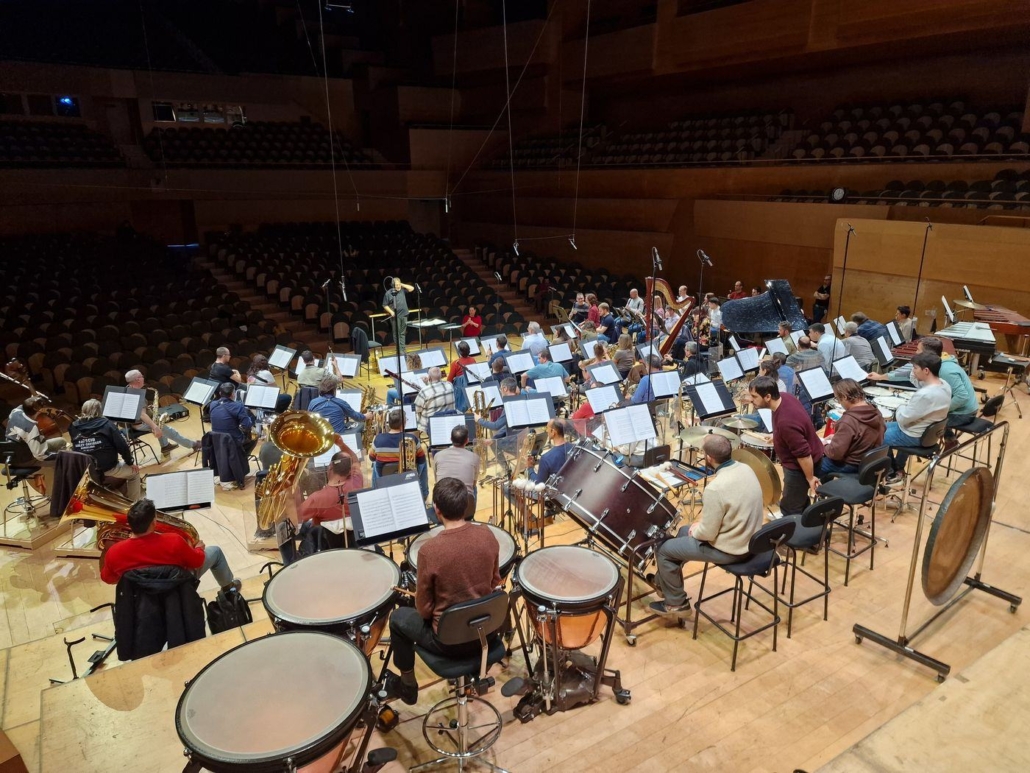
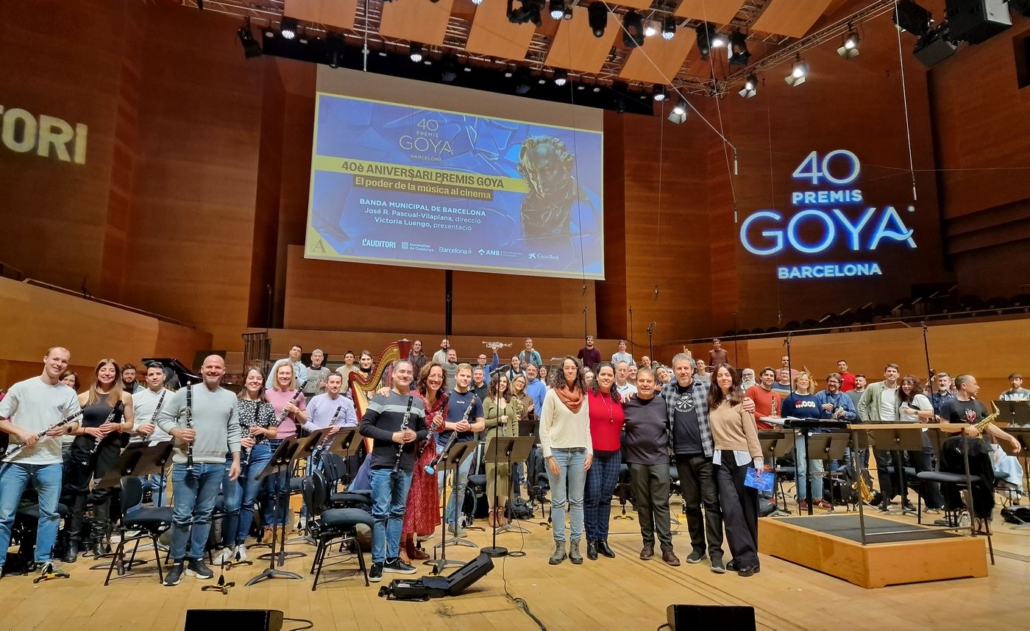
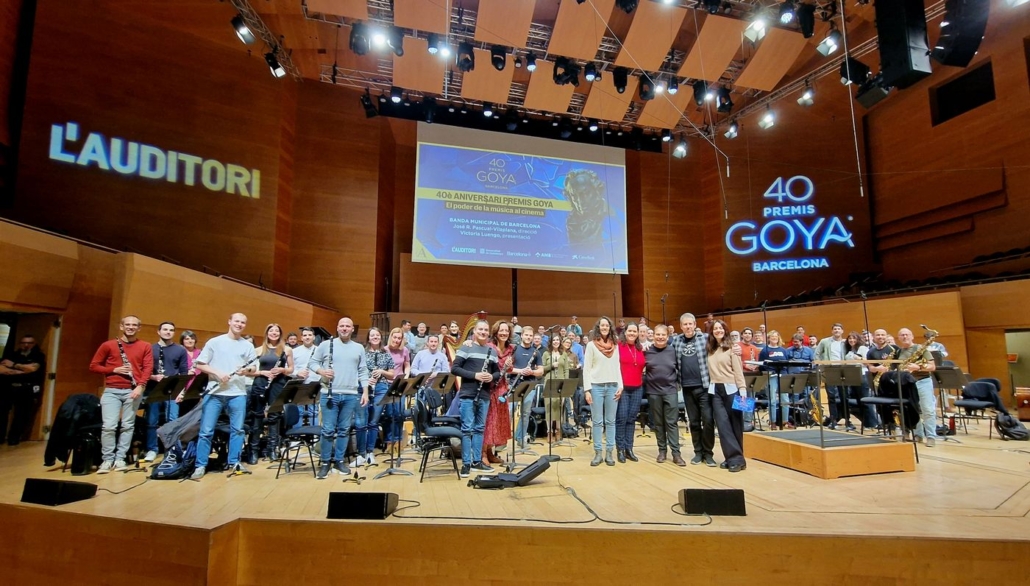
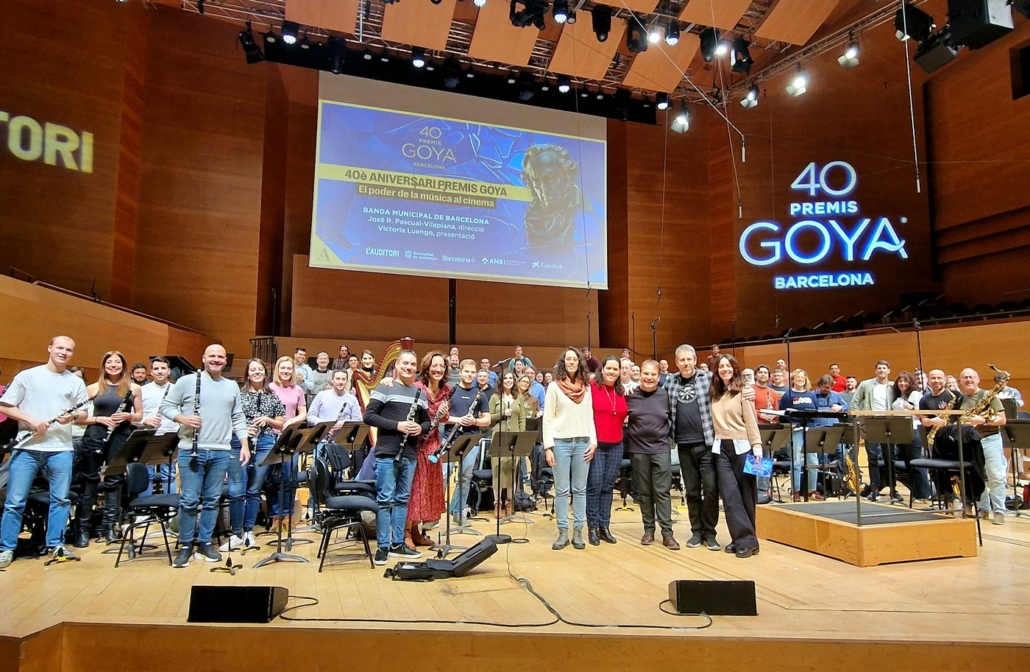
The concert was performed by the Barcelona Municipal Band (BMB) conducted by José R. Pascual-Vilaplana, with actress Victoria Luengo as host. Our friend and colleague Coque Cano attended the concert and has written a wonderful, detailed article exclusively for SoundTrackFest.
![Concert ‘40th Anniversary of the Goya Awards’ in Barcelona [SPECIAL ARTICLE]](http://soundtrackfest.com/wp-content/uploads/2026/02/40PremiosGoya-ConciertoBCN-Banner-Web.jpg "Concert ‘40th Anniversary of the Goya Awards’ in Barcelona [SPECIAL ARTICLE]")
THE POWER OF MUSIC IN FILM – by Coque Cano
Barcelona has been decked out for days to celebrate a very film-loving anniversary with the Goya Awards taking centre stage, with the 40th edition held in less than a week in the city. From the presence of seven giant sculptures of the famous ‘Cabezón’ (tender nickname for the statuette) scattered around various emblematic points of the city, as part of an urban tour, to an elegant Walk of Fame at the end of Diagonal Avenue dedicated to Catalan Goya winners from the previous 39 editions, and even a photocall and statuette at the City Hall, which social media has, of course, made go viral.
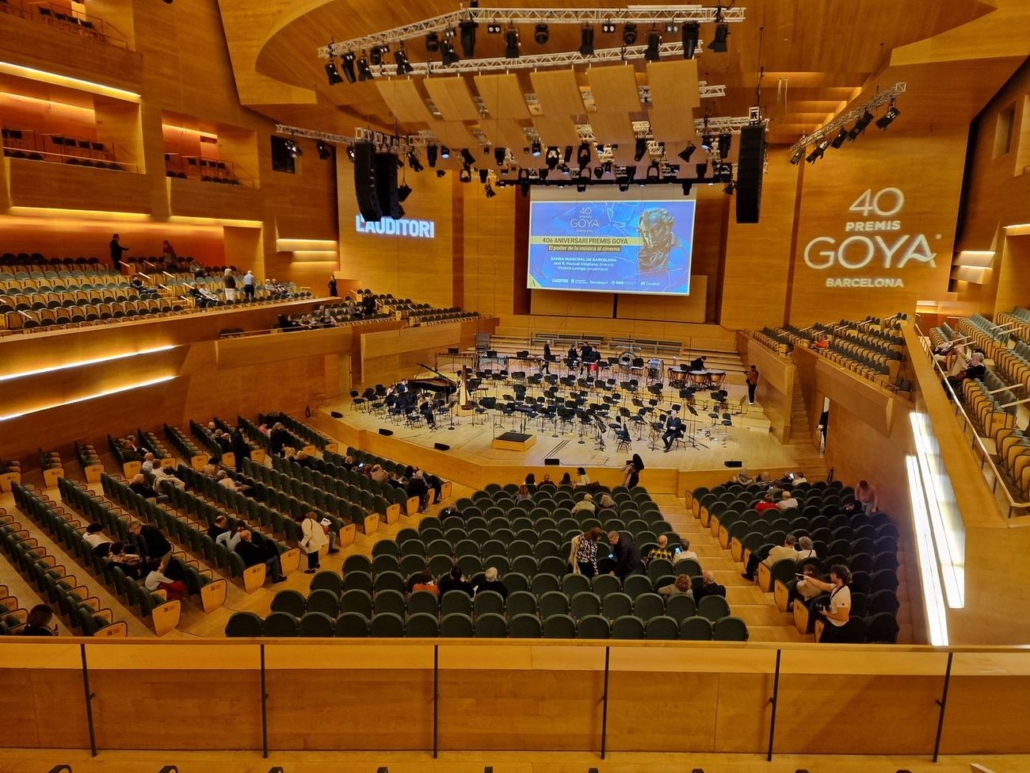
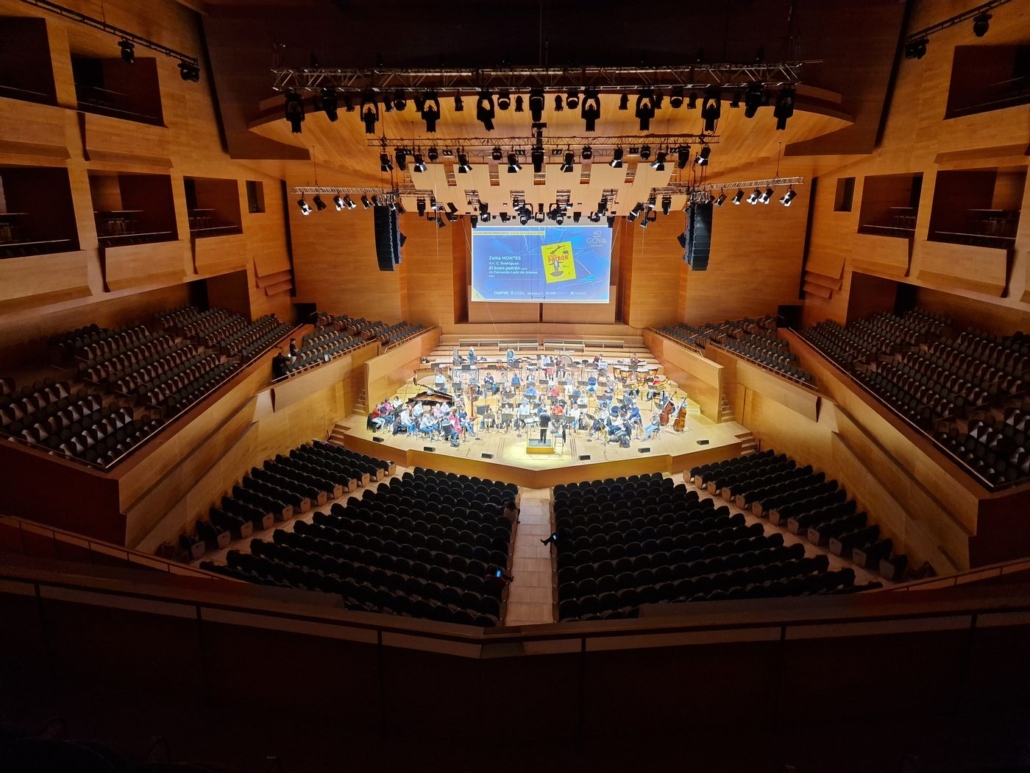
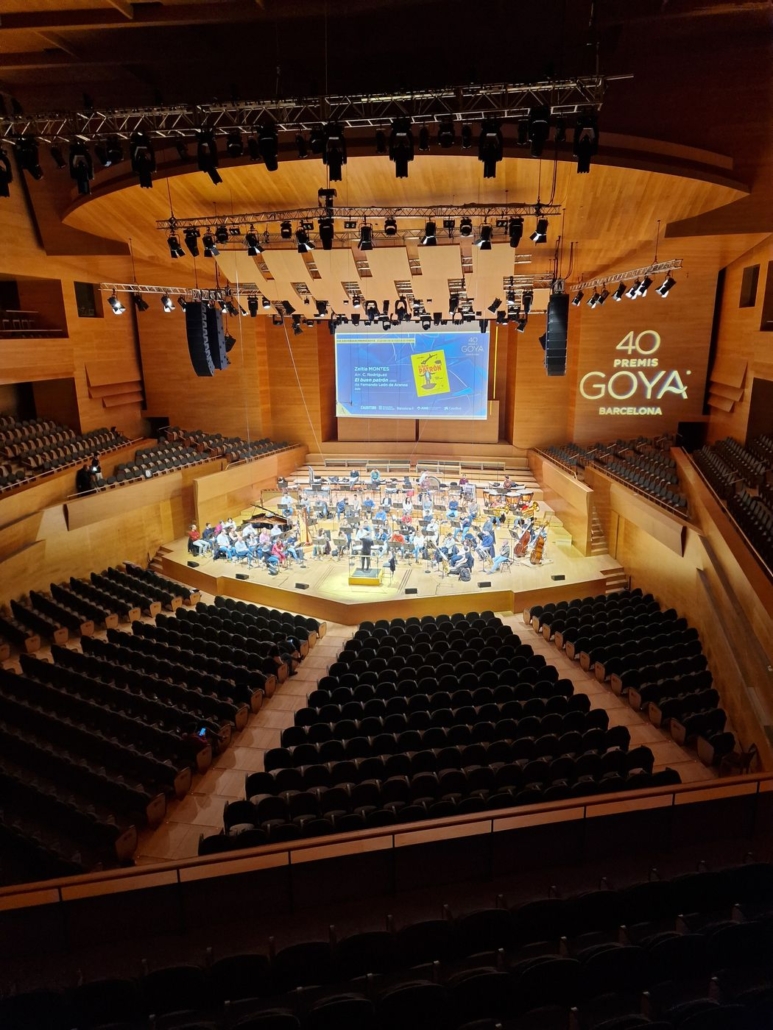
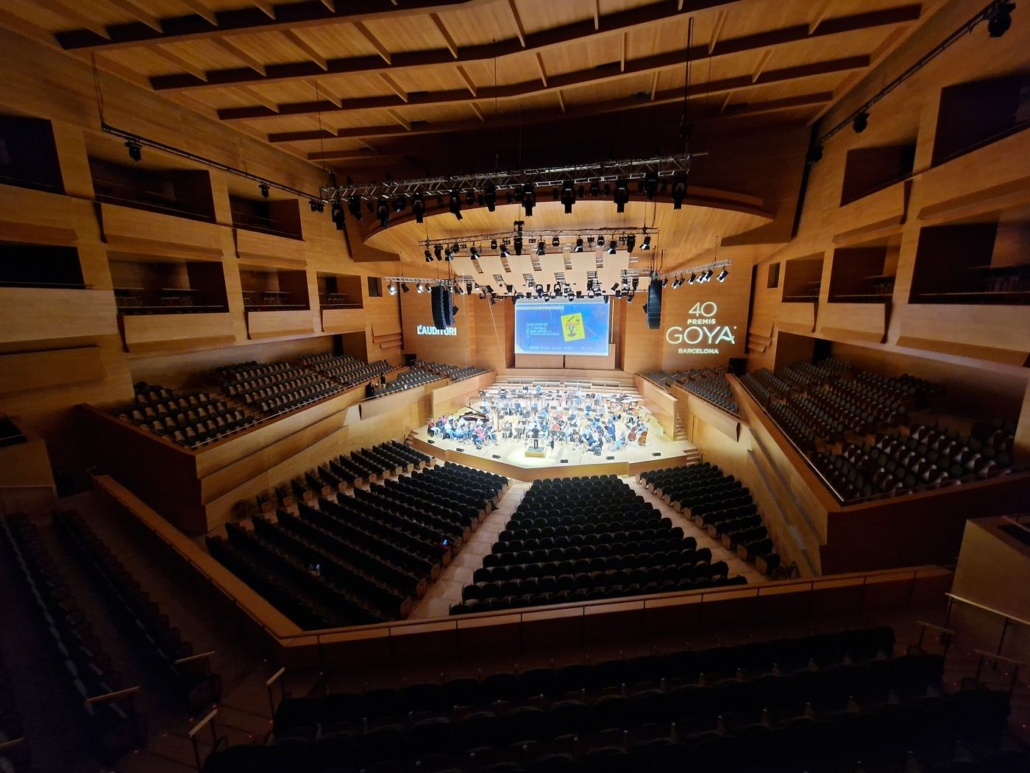
An event such as this has deserved special attention from the Spanish Academy of Motion Picture Arts and Sciences, which has also given us, just one week before the gala to be held on Saturday 28 February 2026 at the Auditori del Centre de Convencions Internacionals de Barcelona (CCIB), a concert dedicated to film music which, I can already tell you, was magnificent.
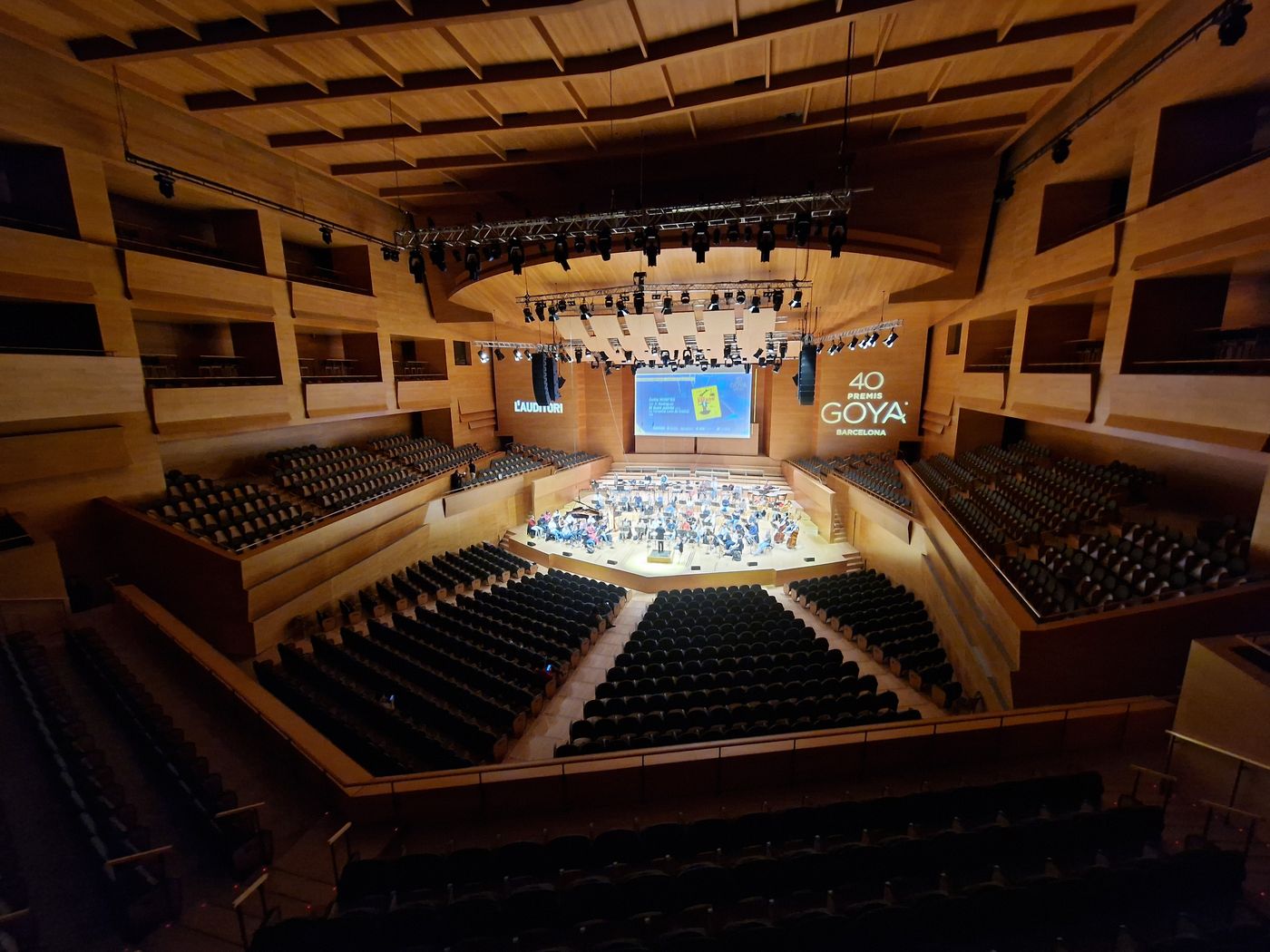
Scores that, to a greater or lesser extent, have been related to or featured in the Goya Awards and which, without any intention (or possibility) of being even remotely exhaustive, were an accurate, versatile and representative sample of the history of music in Spanish cinema.
As is often the case with this type of concert, the selection could have been different and would have been just as valid, meaning that some works and composers have been left out, either because they have already been featured in previous concerts (read more-Madrid 2020, read more-Seville 2023) or because they will be featured on future occasions.
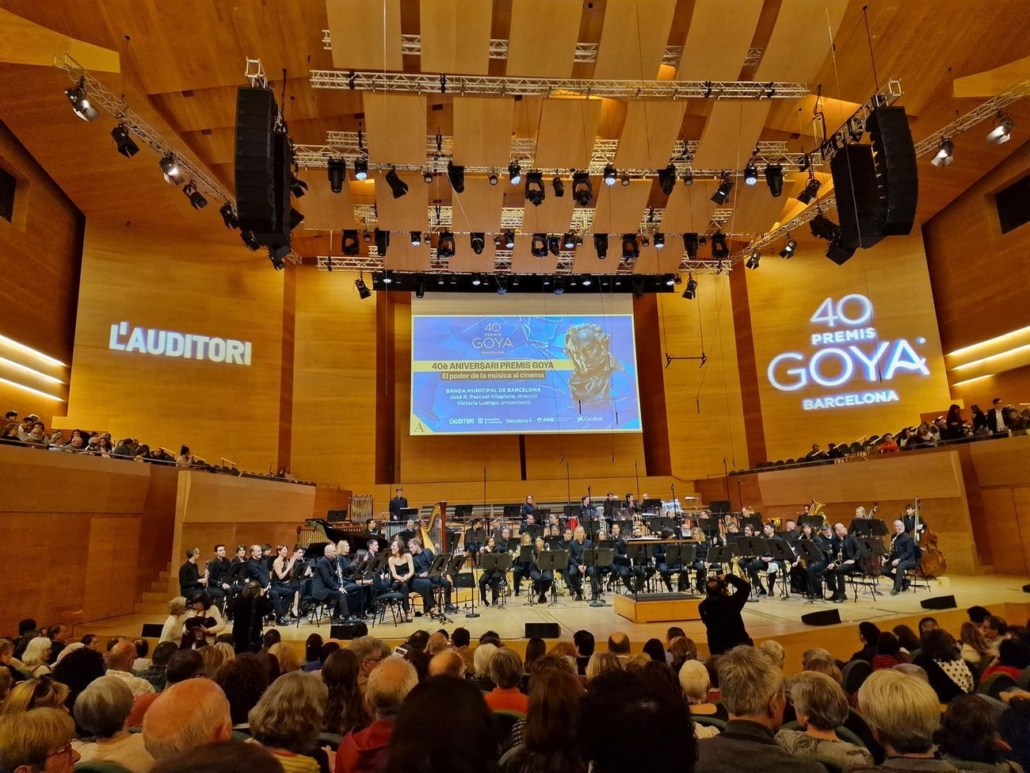
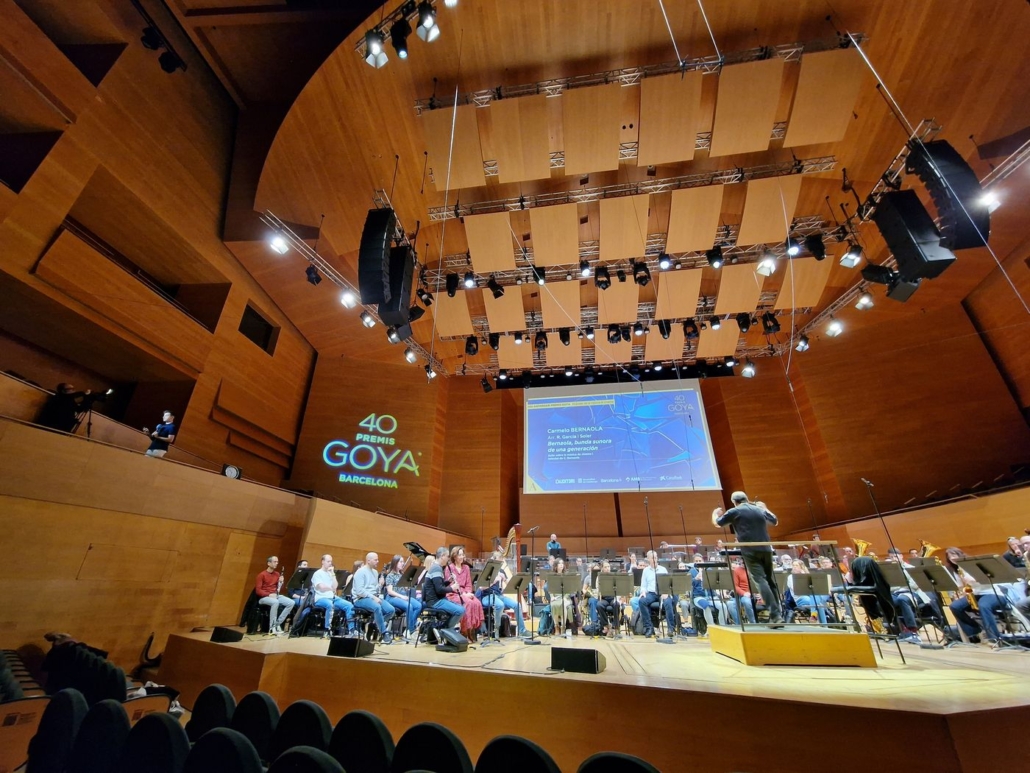
But the programme was not only appropriate and entertaining, it was also coherent both in terms of time period (classical and contemporary composers) and in that it suited the chosen orchestra perfectly: instead of a symphony orchestra, we had the pleasure of enjoying the mastery of the Barcelona Municipal Band (hereinafter BMB), which coincidentally will celebrate its 140th anniversary on 2/3/2026, meaning that its centenary and the birth of the Goya Awards came together 40 years ago and have now come together again for this very special celebration.
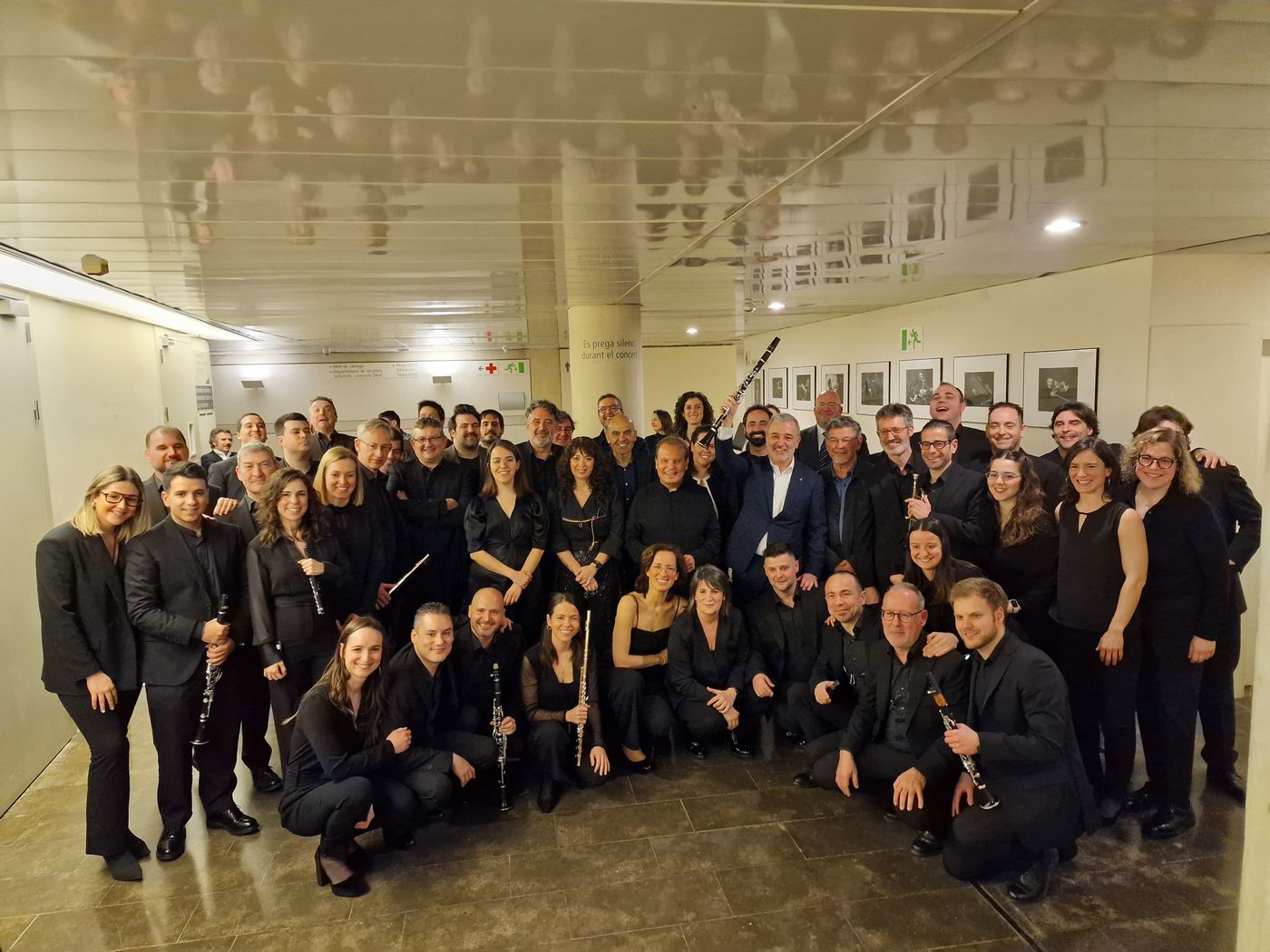
Coincidences and poetic justice aside, the truth is that the pieces were perfectly suited to the particularities of the band, thanks to the wonderful arrangements by various musicians who could not have had better credentials, given their extensive experience in this type of ensemble, as well as having worked as orchestrators or composers on short and feature-length films (Eduard Betes, Ramón García i Soler, Carmen Rodríguez, Guillermo Ruano, and Laura Beele), and even on a couple of works thanks to the involvement of the composers themselves, as in the cases of Arnau Bataller and Roque Baños.
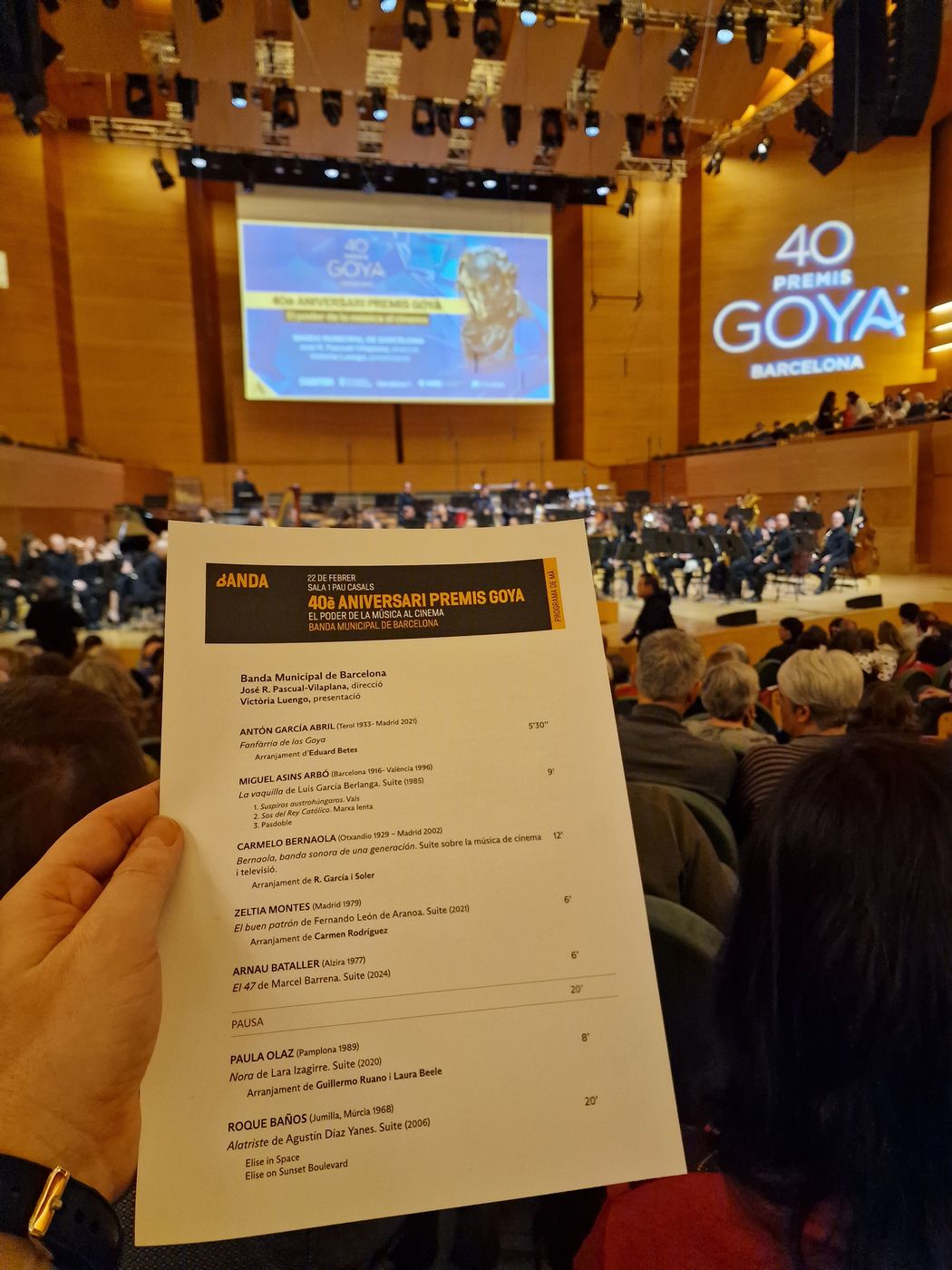
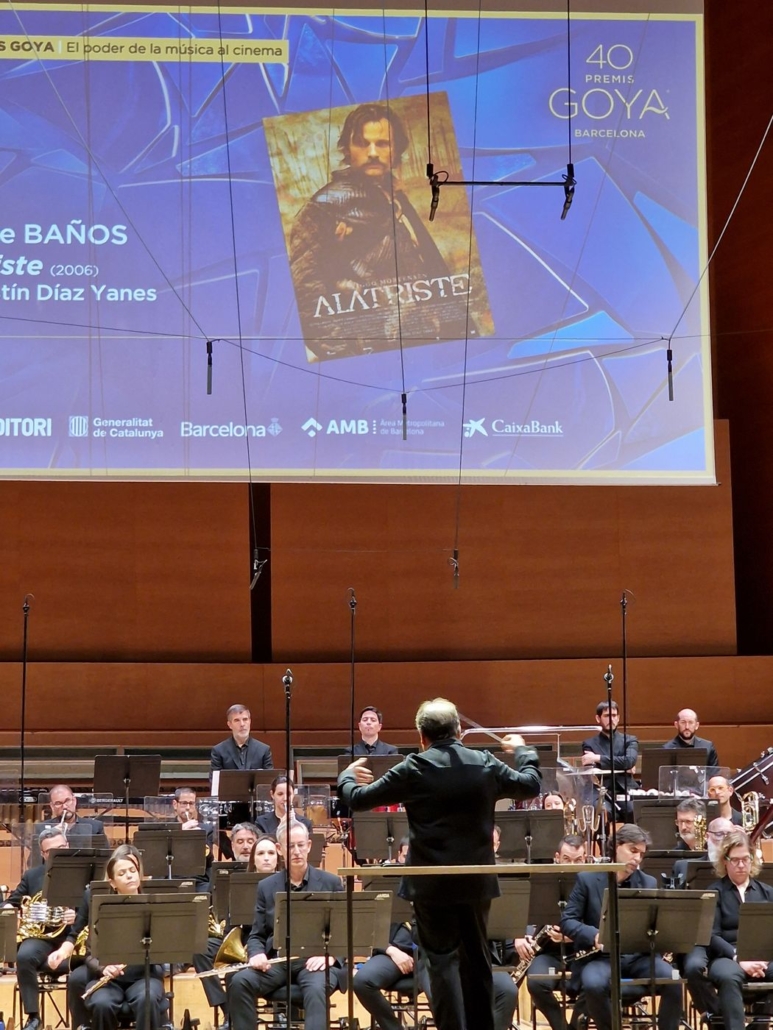
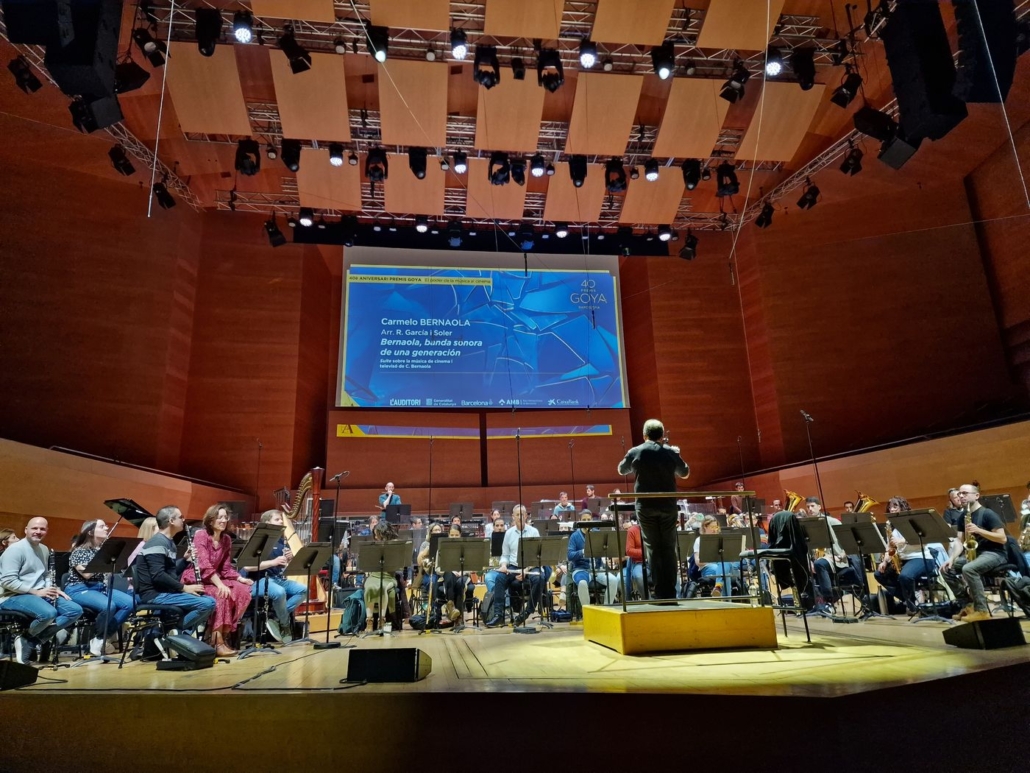
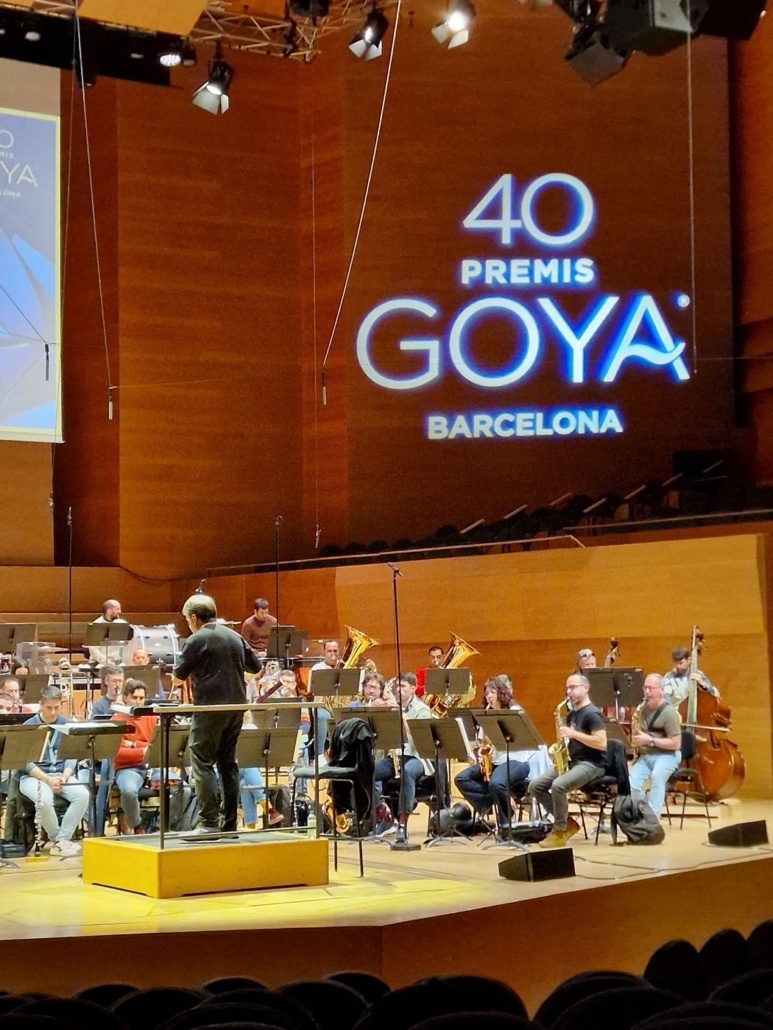
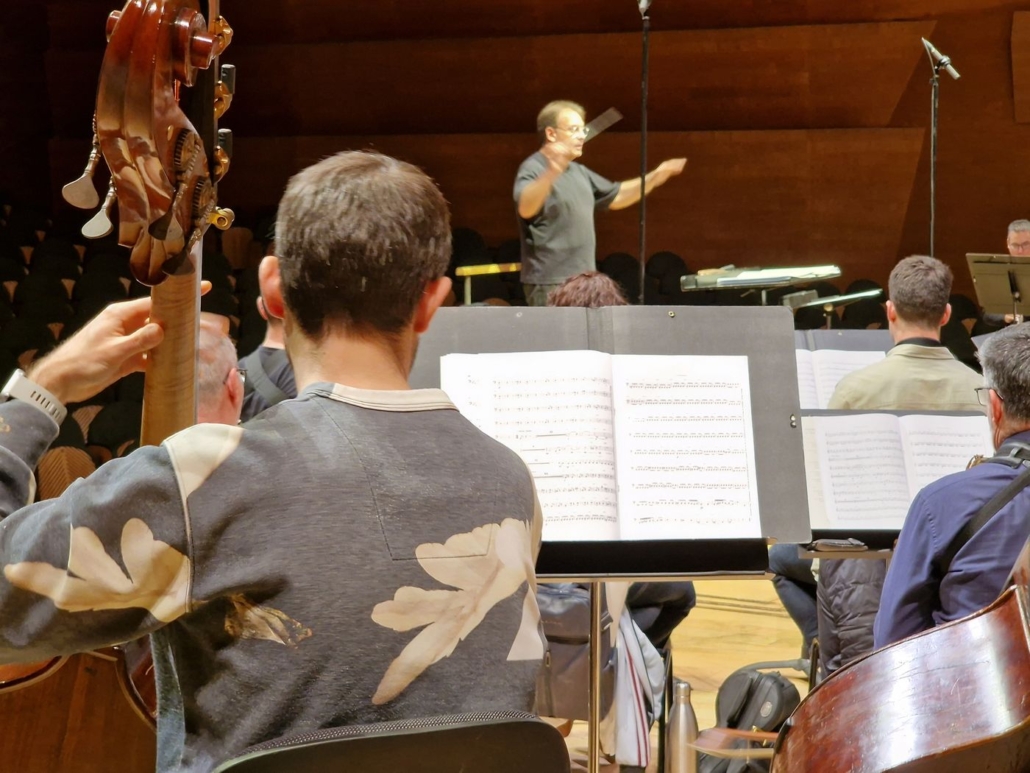
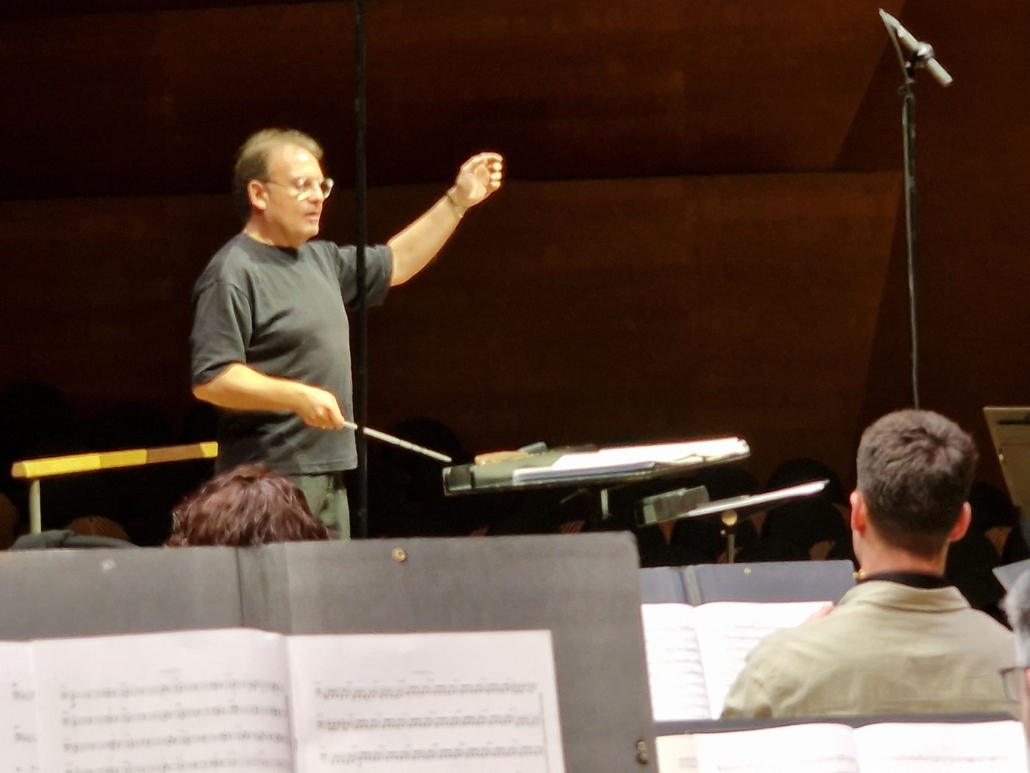
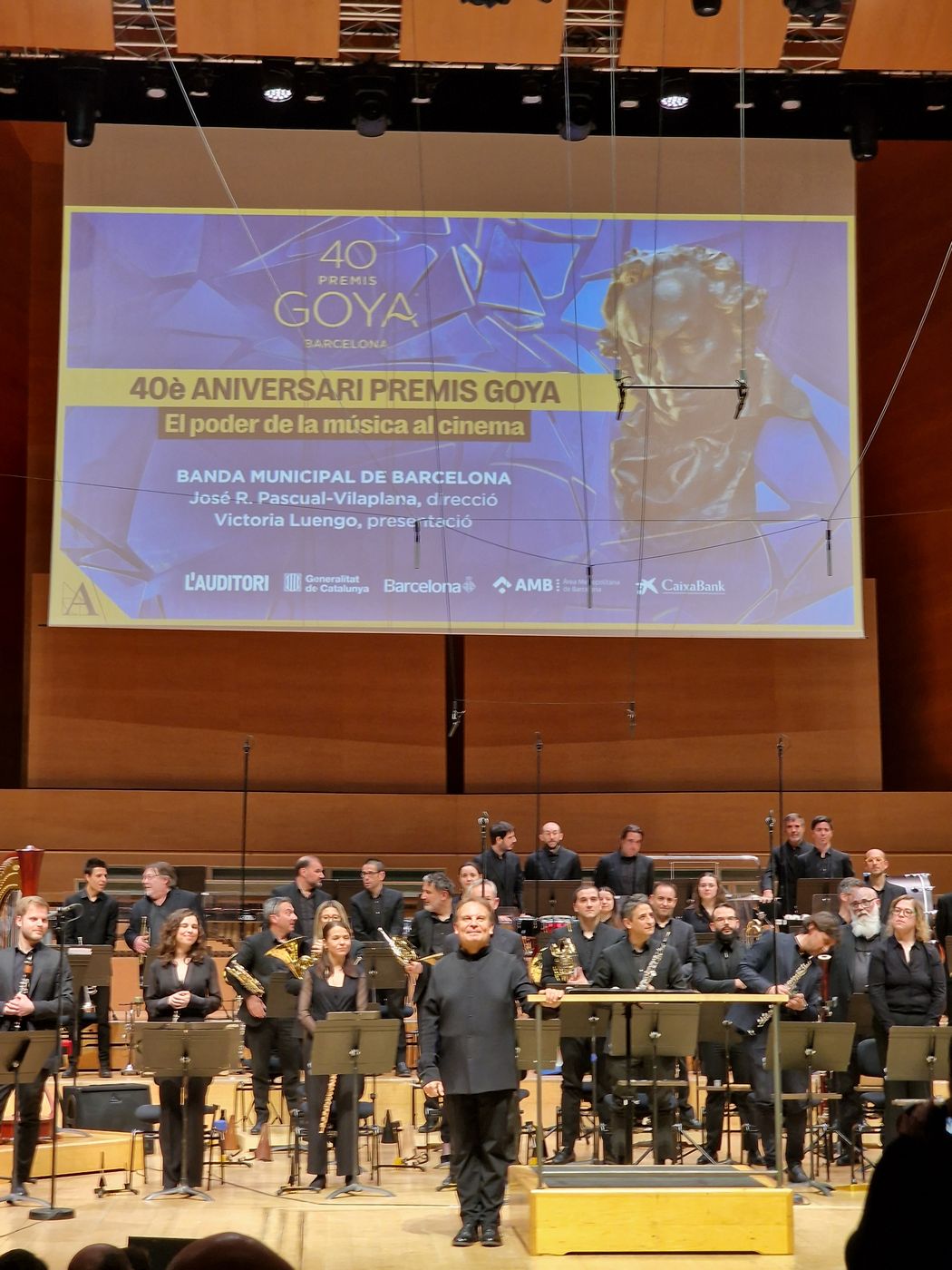
The BMB was conducted by its principal conductor, José Rafael Pascual-Vilaplana, who exuded charisma and skill, even lending himself to some very funny moments, and above all demonstrating total control of the ensemble, knowing how to move with equal mastery from the intimacy of Paula Olaz‘s work to the force of a brutal and demanding Roque Baños.
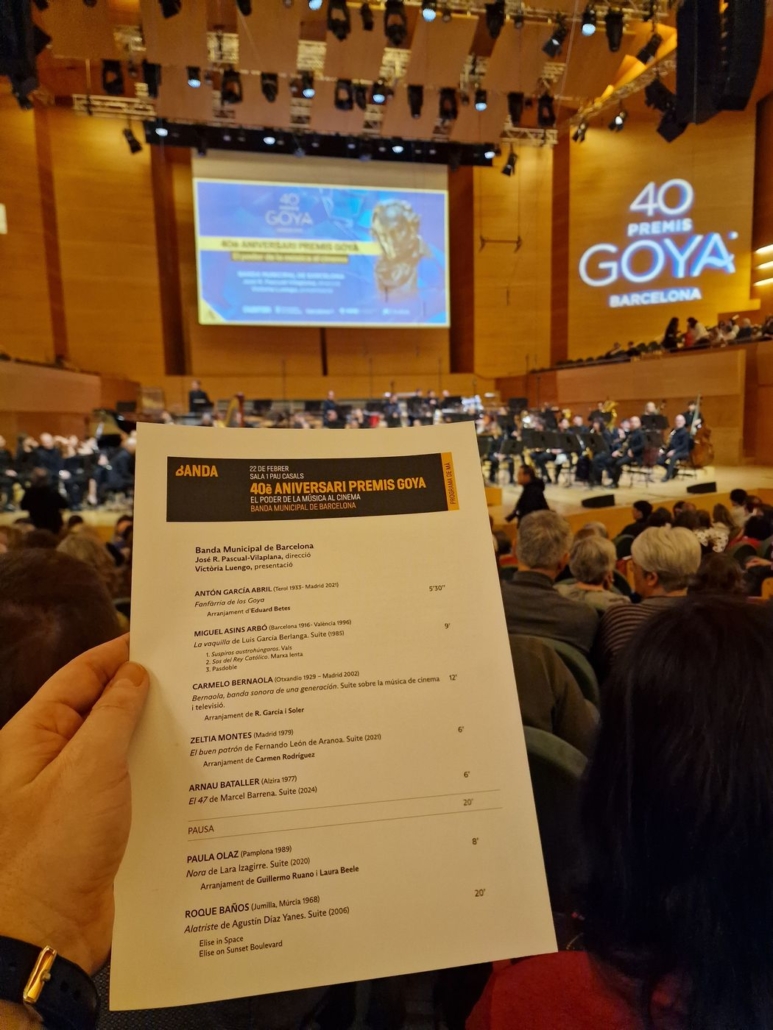
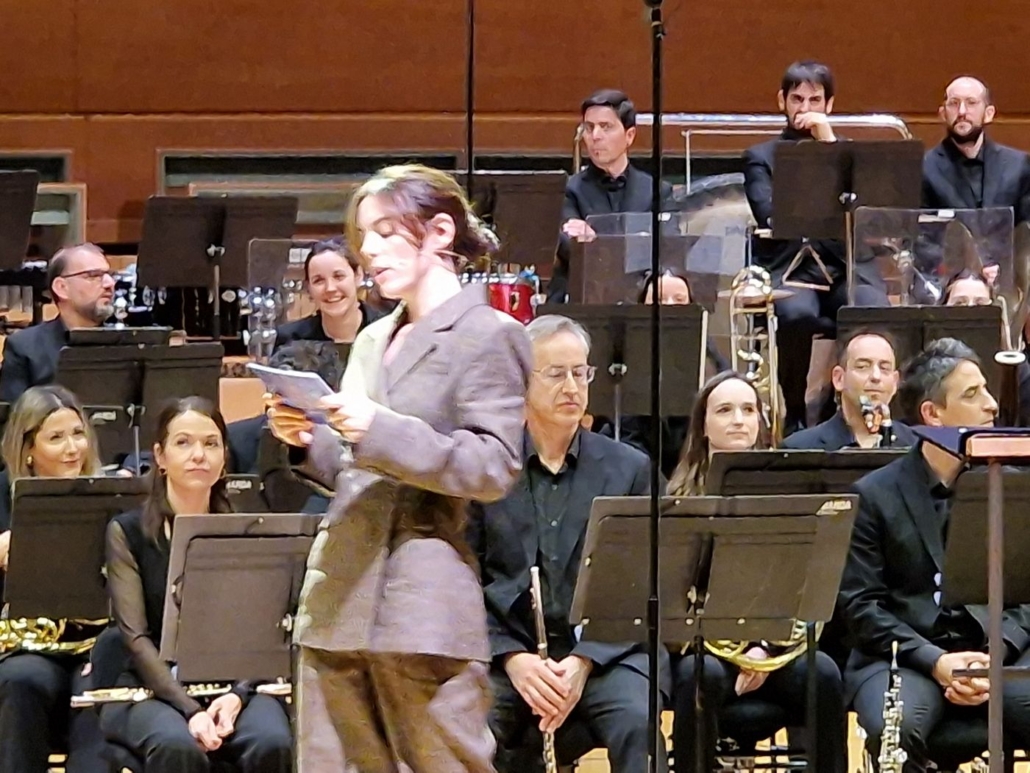
But let’s not get ahead with the repertoire and what the concert had to offer, because first we must also highlight two other important parts of the event: the impeccable and lively script written by Gorka Oteiza, who is ideally suited to this task as a member of the Academy, expert in film music, and the person responsible for SoundTrackFest, and the presentation by actress Victoria Luengo, who, in addition to participating by adding a personal touch to the script, was radiant and approachable, funny and elegant, with constant nods in Catalan to an audience that felt especially welcomed and educated, before giving way to the pieces that appeared in the concise, but practical programme (NOTE: see full programme at the end of this article).
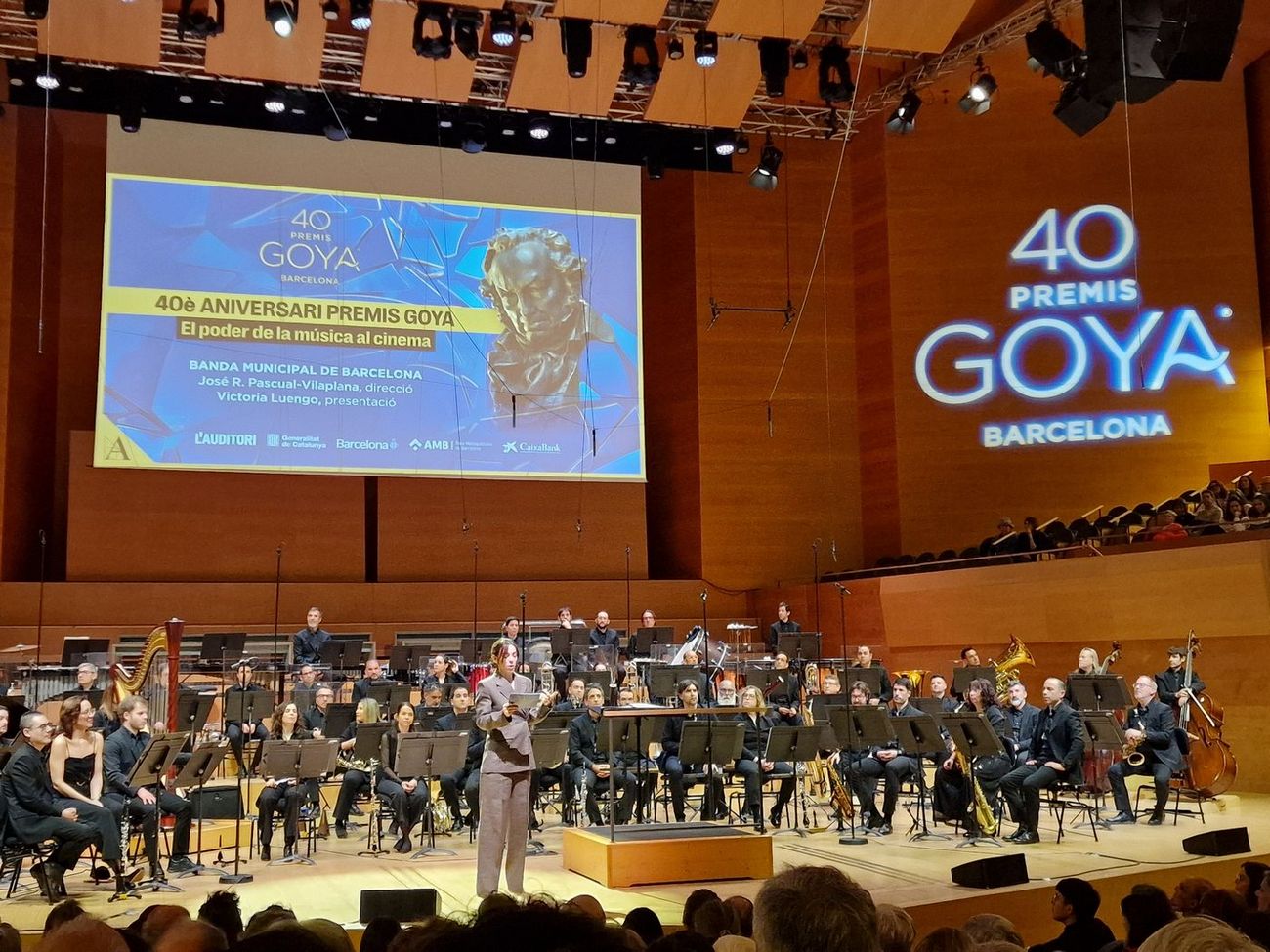
The concert began with a brief introduction by the presenter and her connection to the city of Barcelona, followed by acknowledgements to all the people and organisations that made this concert possible. It was curated by the Music Branch of the Spanish Film Academy, headed by Juan Carlos Cuello and Vanessa Garde, together with maestro José Rafael Pascual-Vilaplana, and organised in collaboration with Barcelona City Council, L’Auditori de Barcelona and the Municipal Band, together with the Generalitat de Catalunya, the Barcelona Metropolitan Area and the sponsorship of Caixabank.
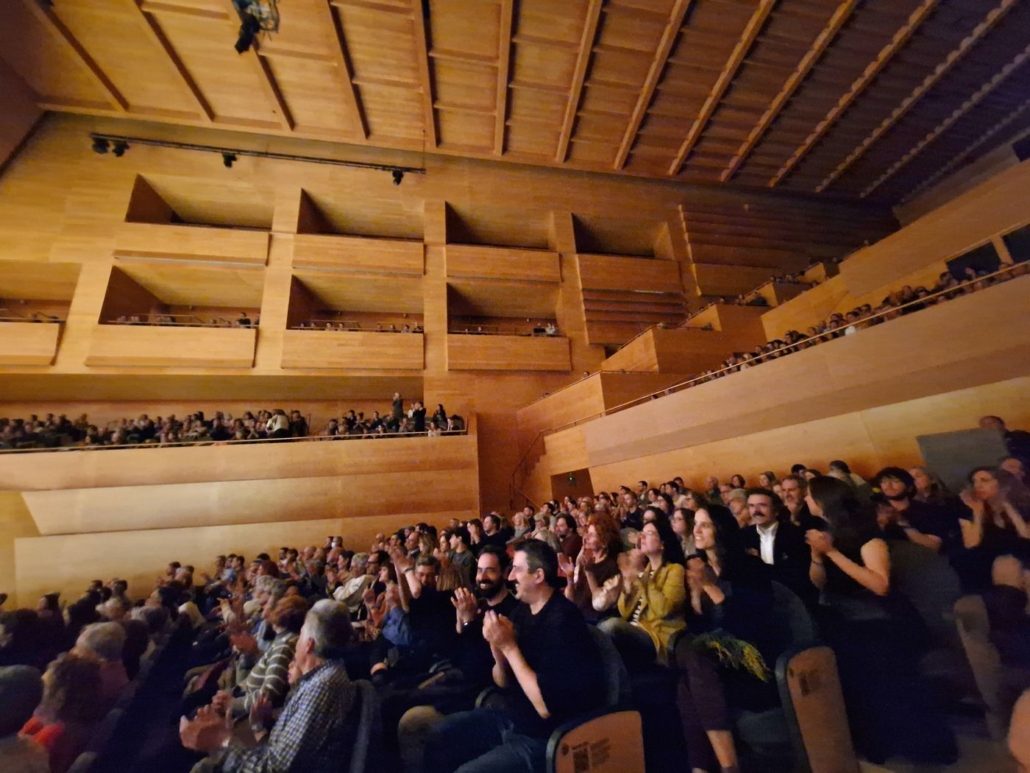
The actress then got straight down to business in front of a sold-out Auditori, with a speech that highlighted the importance of music in cinema, involving the audience in what she described as an ‘exercise’ to separate the music from the images for a day and ‘see’ the films solely through the narrative power of the music.
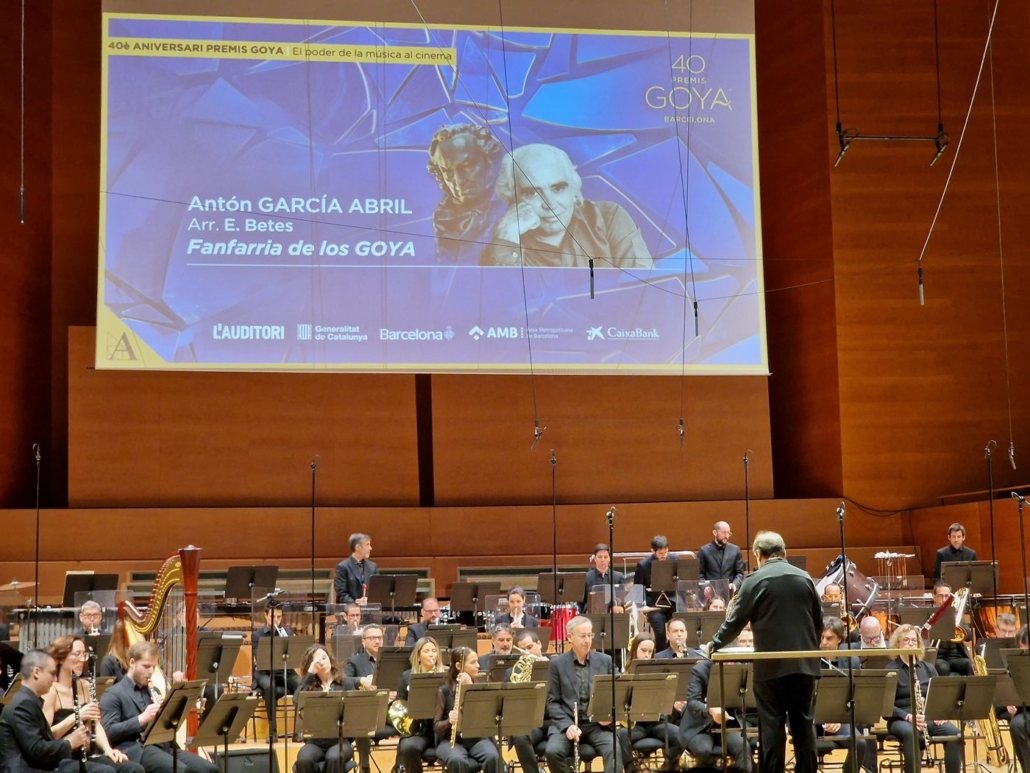
It was a great success and a statement of intent that kicked off a vibrant concert which began, as is customary in cinema, with a magnificent fanfare. None other than the one composed by maestro Antón García Abril for the Goya Awards.
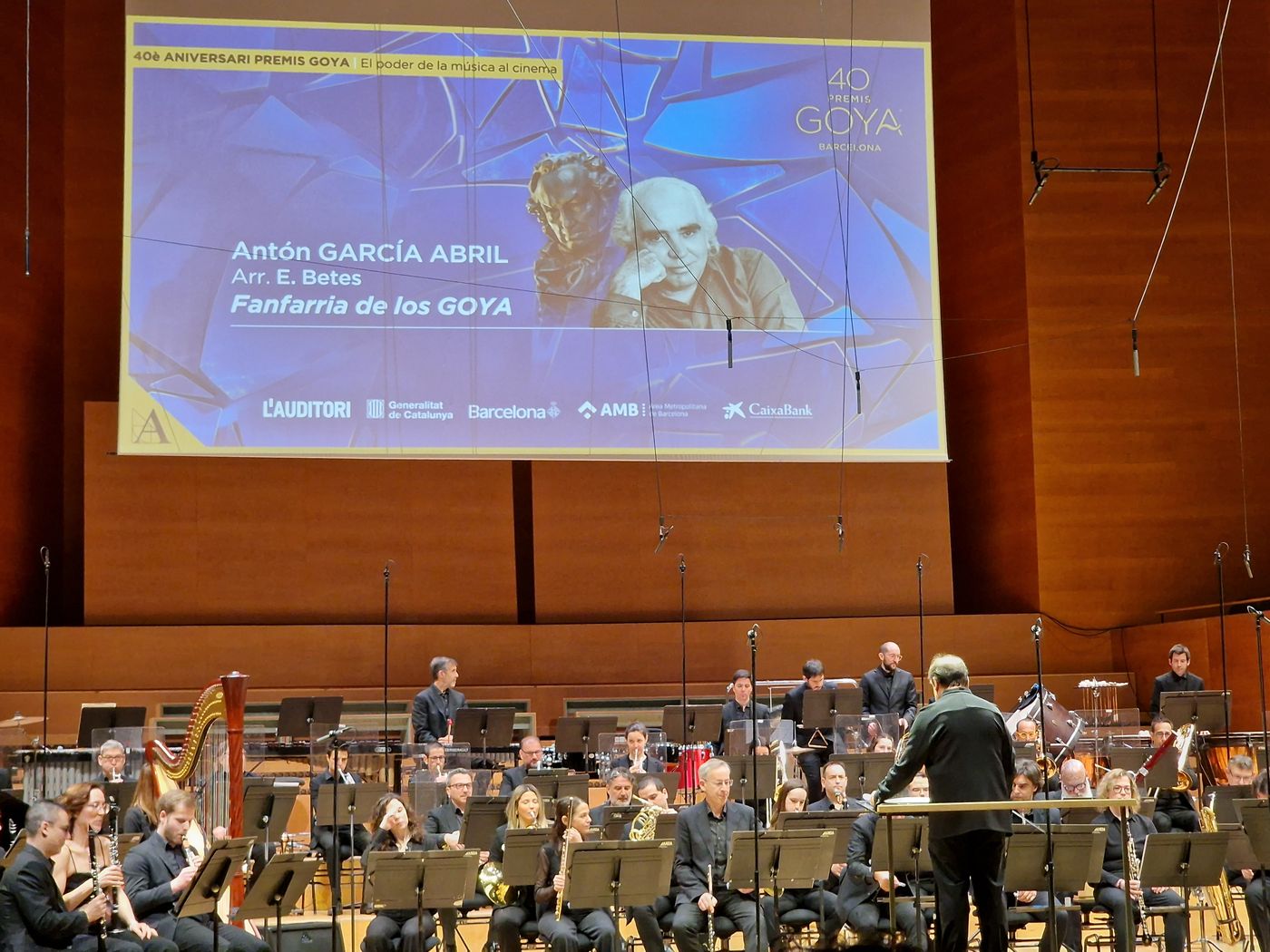
Although the author of ‘El hombre y la tierra’, ‘Fortunata y Jacinta’ and ‘Curro Jiménez’ composed this work in the late 1980s, coinciding with the early years of the ceremony, the truth is that, unless I am mistaken, it has traditionally been performed since at least the 2004 gala, when a tribute was paid to the composer, and has remained a hallmark of subsequent galas.
It is a piece lasting just over five minutes, but with a grandeur and energy that is on a par with the best fanfares ever composed, a work that demonstrates that Spain has always had composers of enormous quality writing for cinema, with García Abril as the leading exponent.
And it sounded perfect. With an adaptation to the band format by Eduardo Betes that enhanced the power of the brass section, played with tremendous force, something that was repeated in the last piece of the official concert programme.
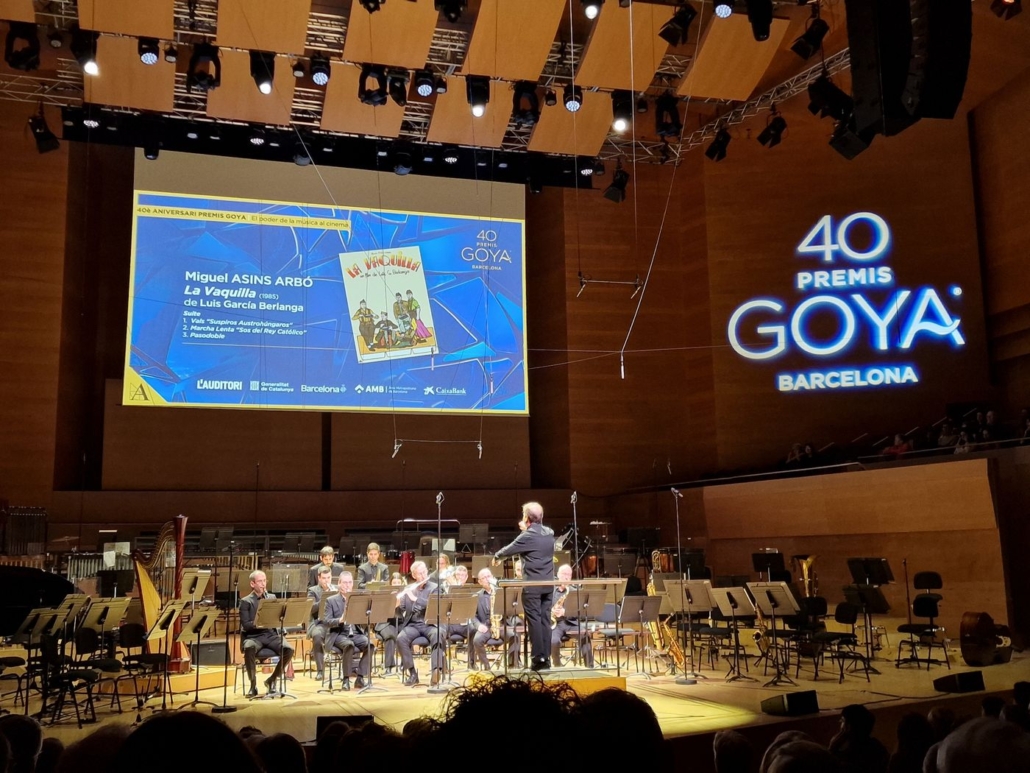
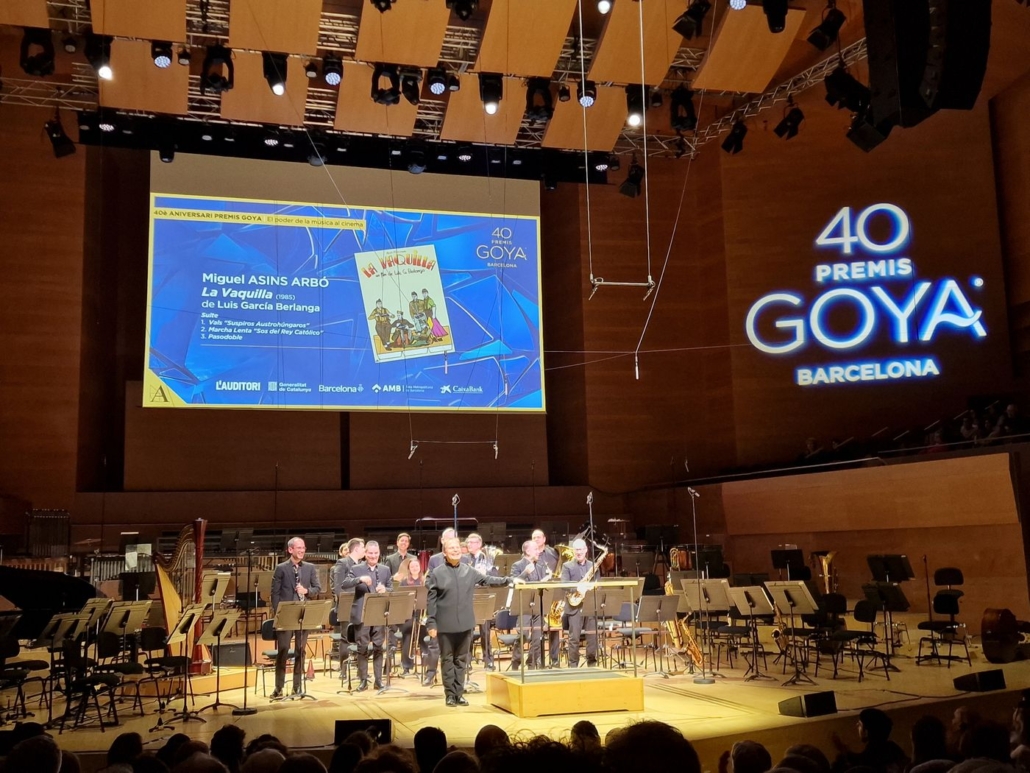
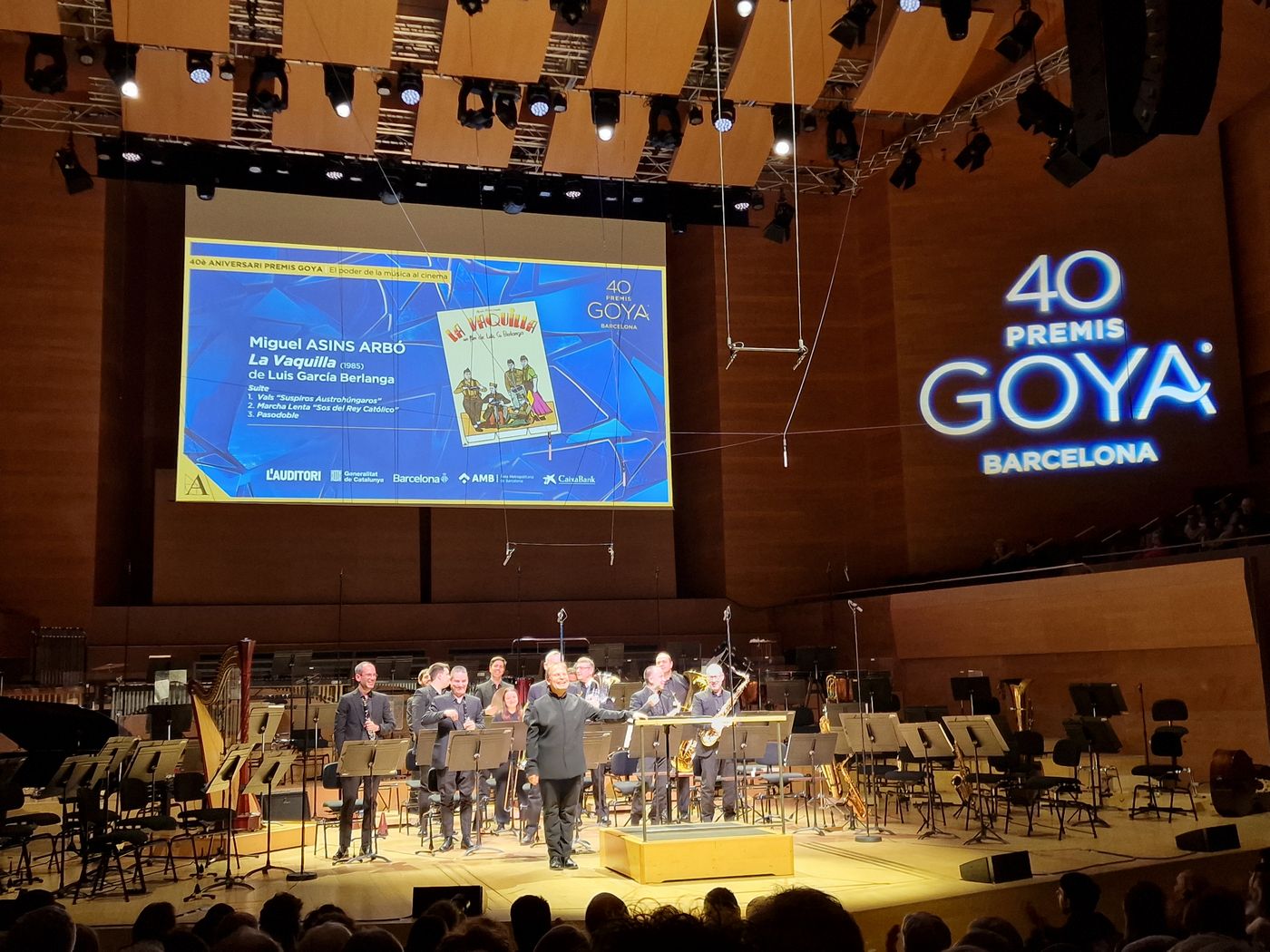
The classical and ceremonial style of the fanfare gave way to more traditional and festive music, almost like a town festival, for which most of the band left the stage, followed by a piece performed by a smaller ensemble, true to the original score. Divided into three movements (waltz, slow march and pasodoble), a suite from the soundtrack of Luís García Berlanga‘s iconic film ‘La vaquilla’, composed by Miguel Asins Arbó, was performed. The humorous tone of the work, perfect for performance by a band (no arrangements were necessary here), provided the funniest moment of the afternoon, with maestro Pascual-Vilaplana stepping up and down from the lectern to “perform” a comic sketch with the musicians, whom he was warning of supposed inaccuracies in their performance.
The audience laughed and applauded the performance, just as they thoroughly enjoyed the trip down memory lane that was the next piece in the repertoire: a suite of various themes by Basque composer Carmelo Bernaola, a household name in Spanish cinema and especially television in the 1980s. Again, in suite format, although here structured continuously, the regression to the EGB era was complete, not surprisingly as the piece began and ended with the famous notes of ‘Verano Azul’.
This wonderful suite, lasting around 12 minutes, arranged by Ramón García i Soler and already performed in concert on 9 October 2021 at the Centre Cultural de la Vila de Muro, also included other famous works by Bernaola, such as the theme tune for the programme ‘La Clave’, as well as excerpts from the scores of the films ‘Tormento’, ‘El jorobado de la morgue’ and ‘Espérame en el cielo’, a review of more than fifteen years of the career of one of the most representative composers of his time.
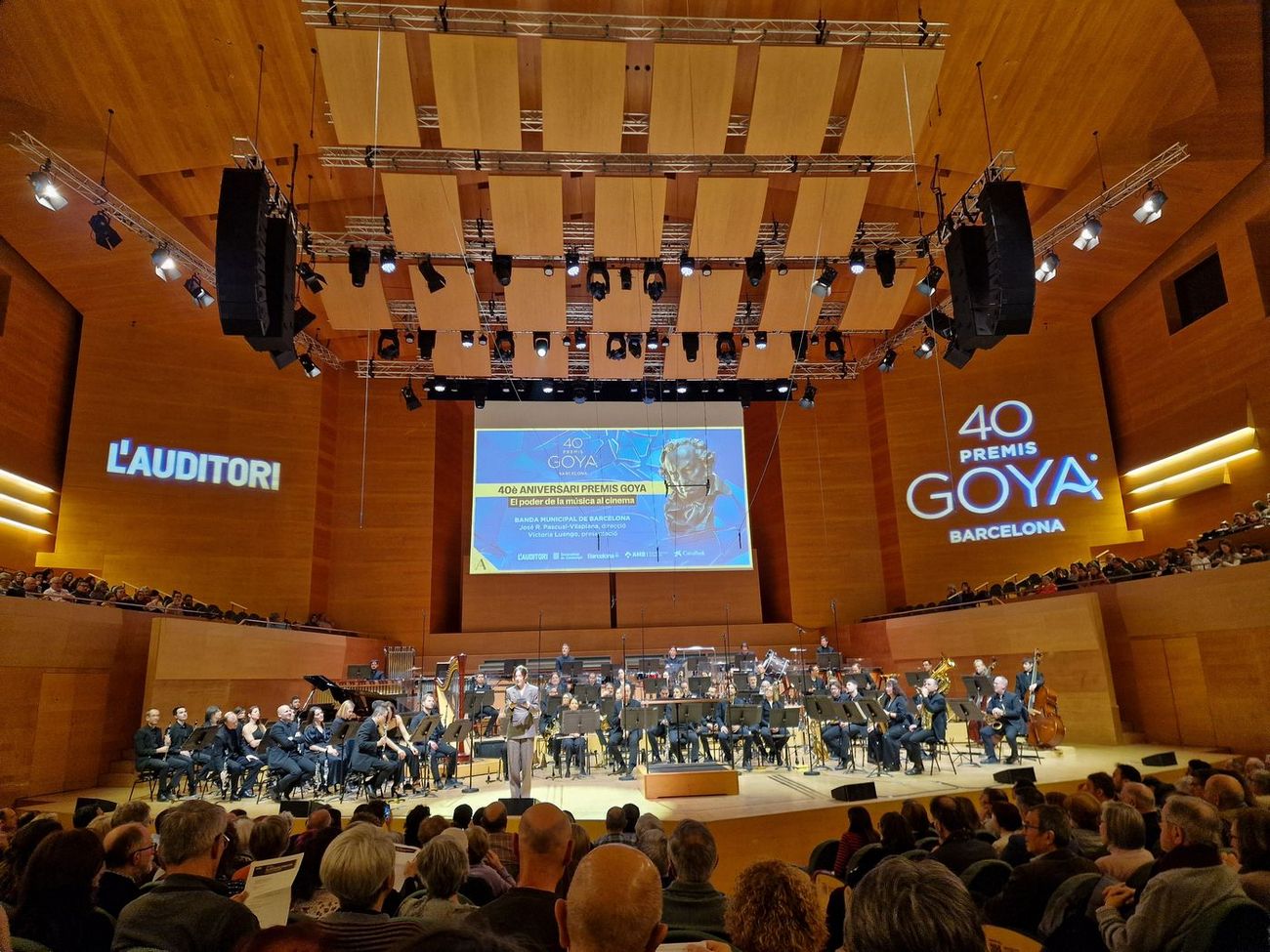
After this first block of the concert, characterised by nostalgia, we took a huge leap forward in time with contemporary scores ranging from 2006 to 2025.
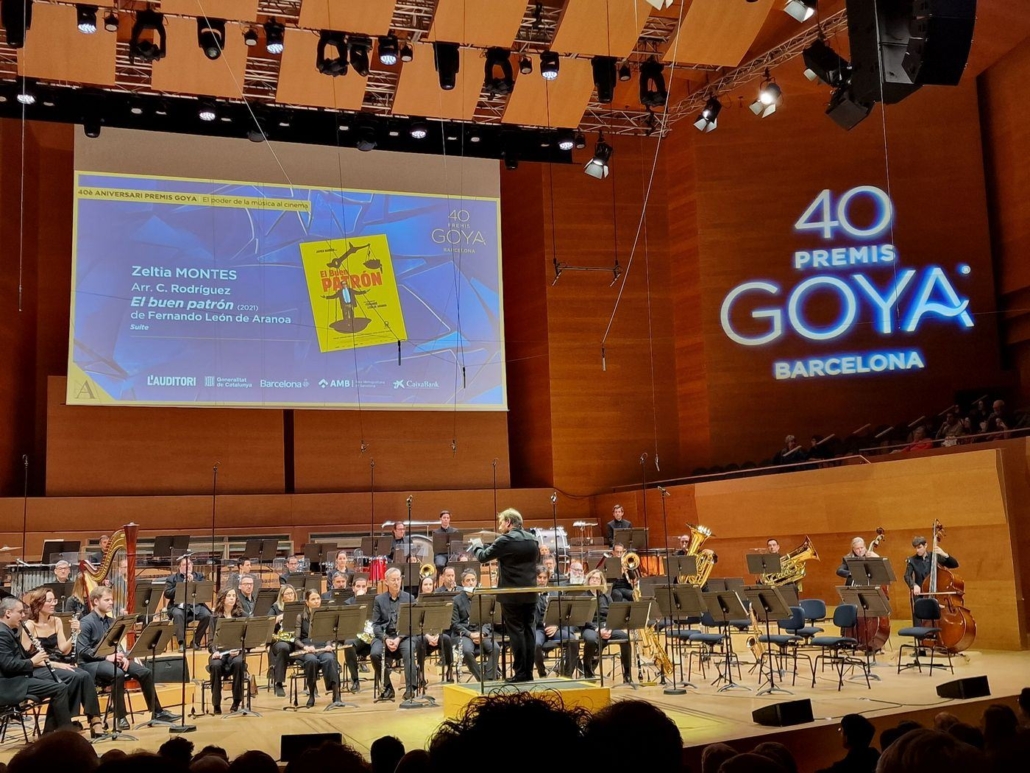
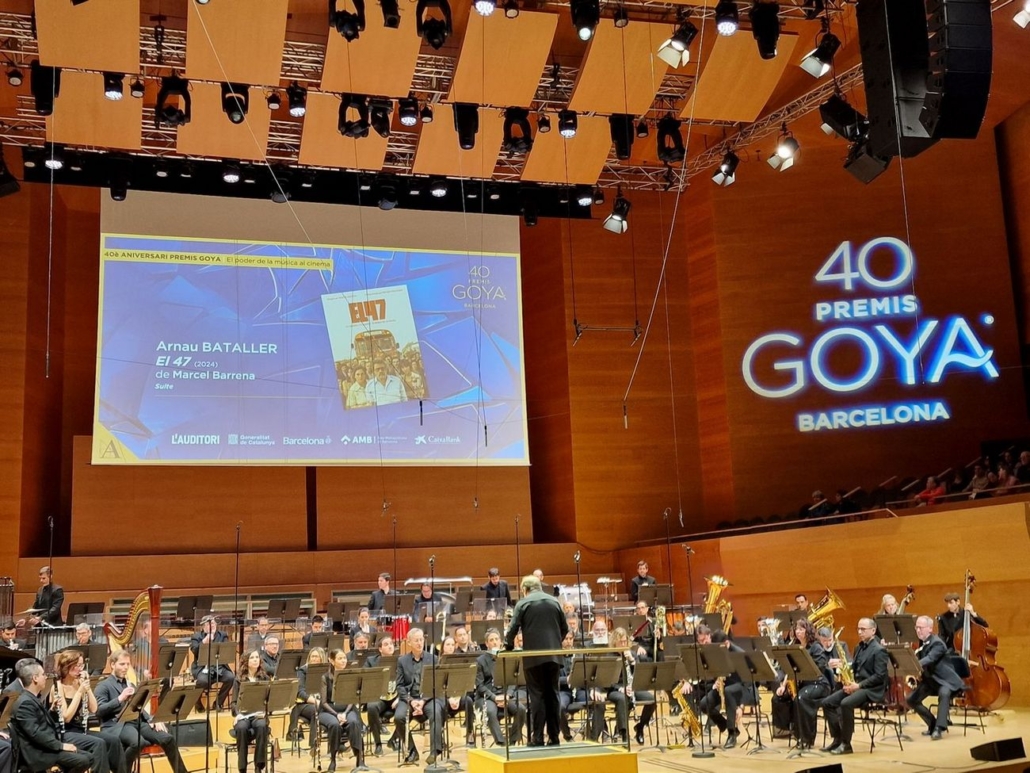
Thus, just before a twenty-minute intermission, two works with very different purposes were performed: El buen patrón (The Good Boss) by Zeltia Montes and El 47 (The 47) by Arnau Bataller. The former won the 2022 Goya Award, and the latter was nominated in the 2025 edition.
From the award-winning score by Zeltia Montes, who was absent from the gala for work reasons, as was Roque Baños, a short suite was performed that gave a good example of the minimalist and elegant style of a work that combines irony and classicism and offers particularly playful moments from a wind section that was sensational.
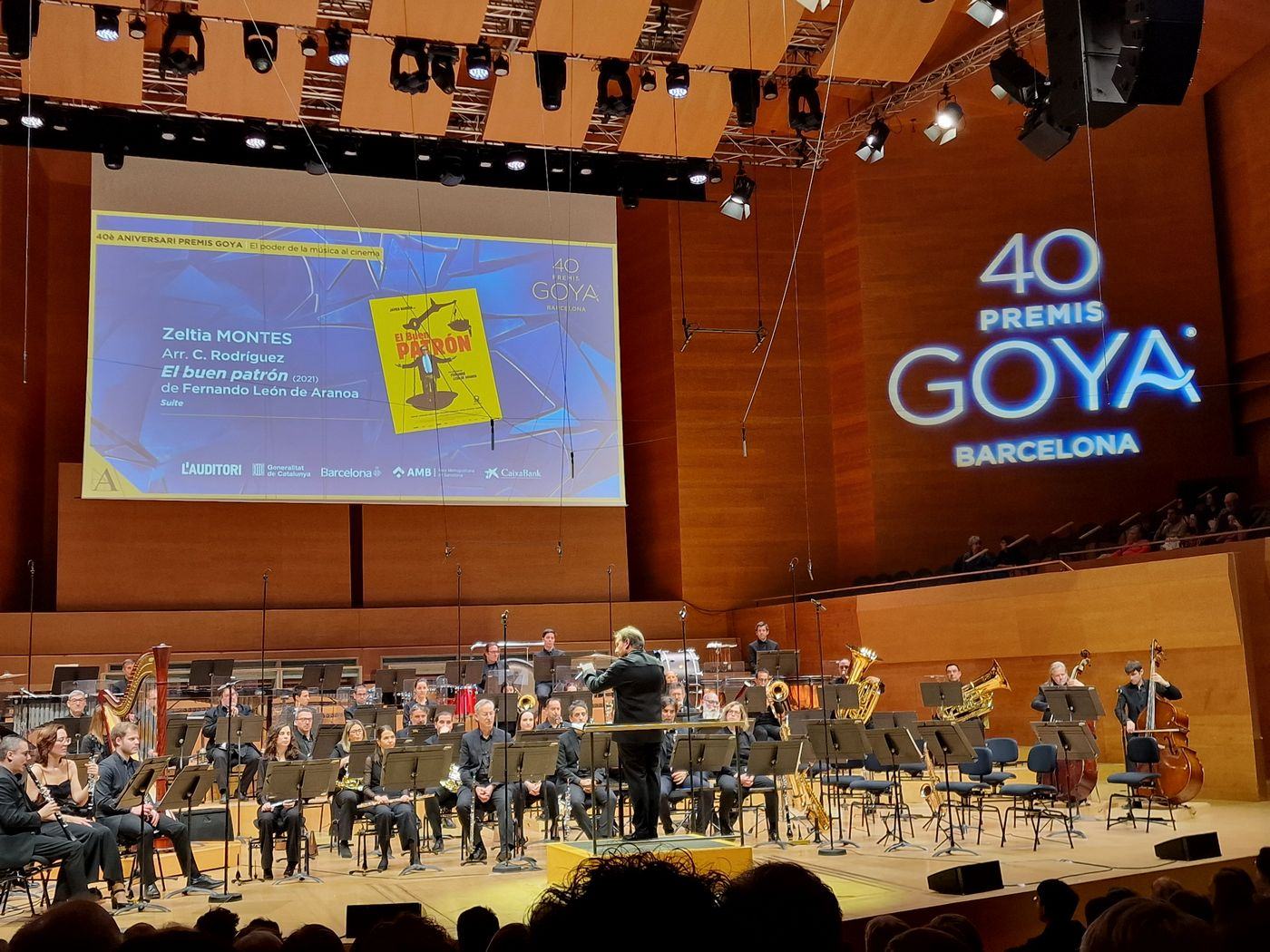
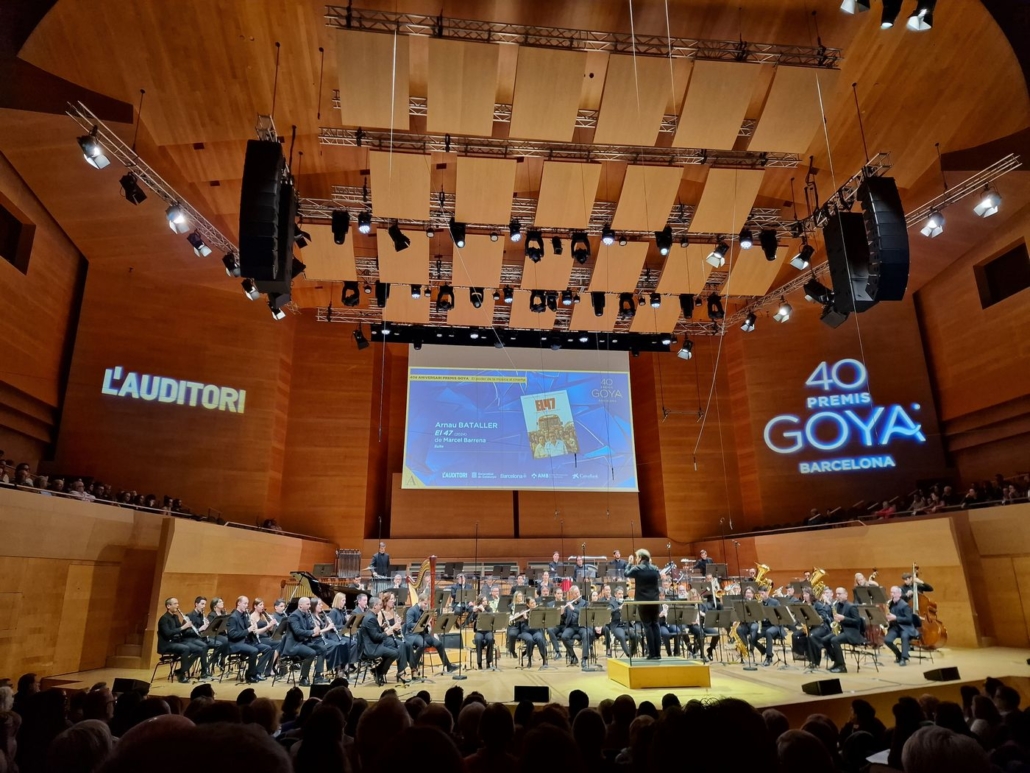
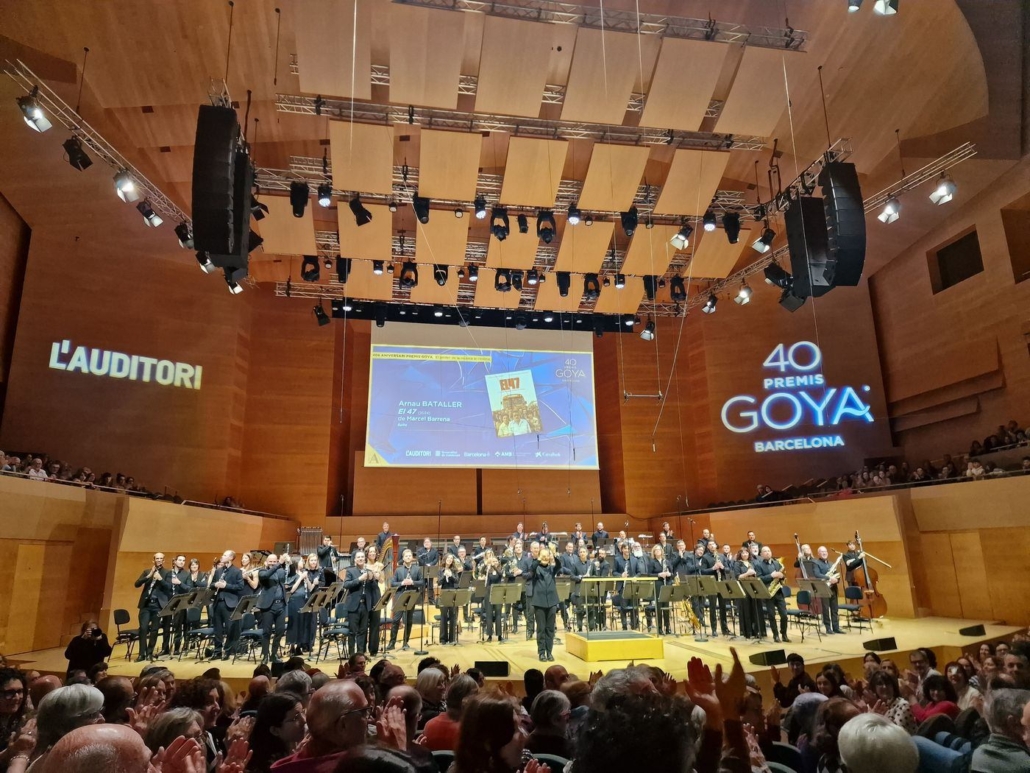
The second suite before the interval was probably the highlight of the afternoon, at least for this reviewer. Arnau Bataller has been one of the country’s most gifted and versatile composers for years, and his third Goya nomination for El 47 (after those for Mediterráneo and La paradoja de Antares), unlike his other works, which are clearly symphonic and grandiose in nature, is an intimate and restrained score, which featured members of the BMB among the performers on the original recording.
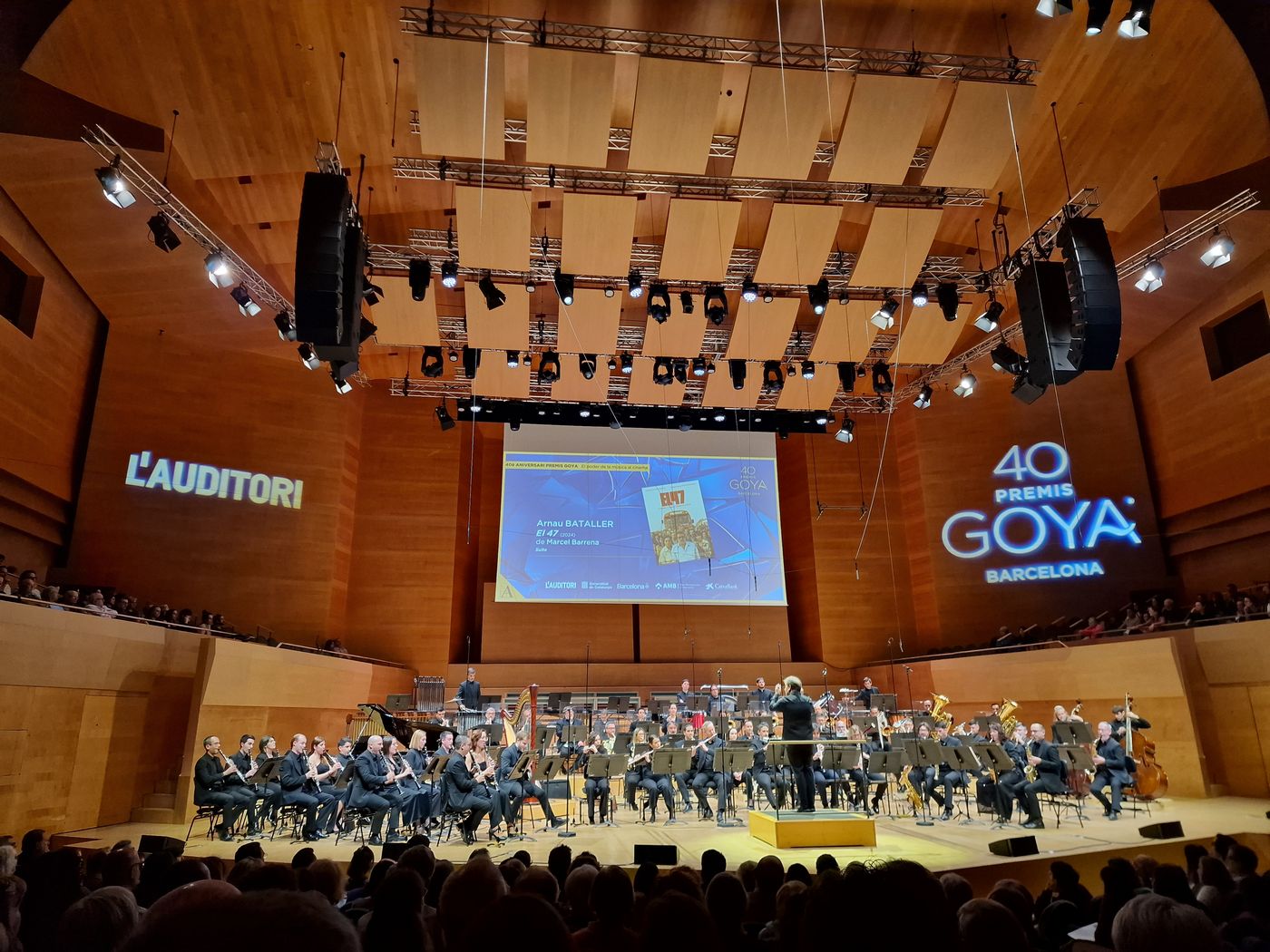
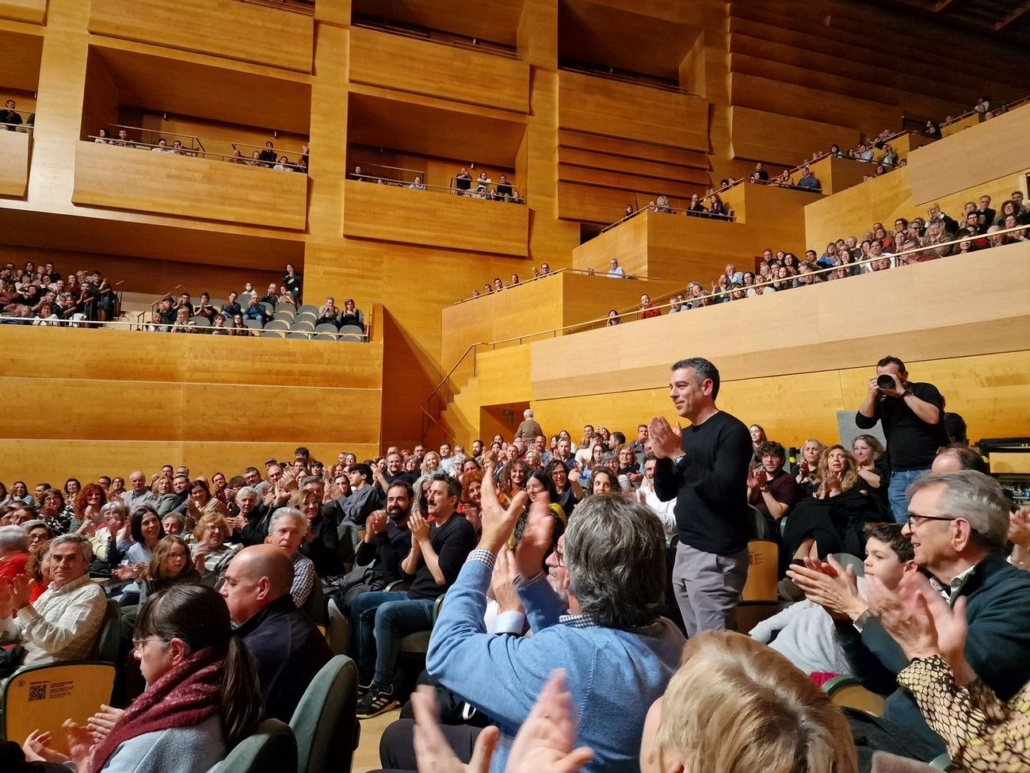
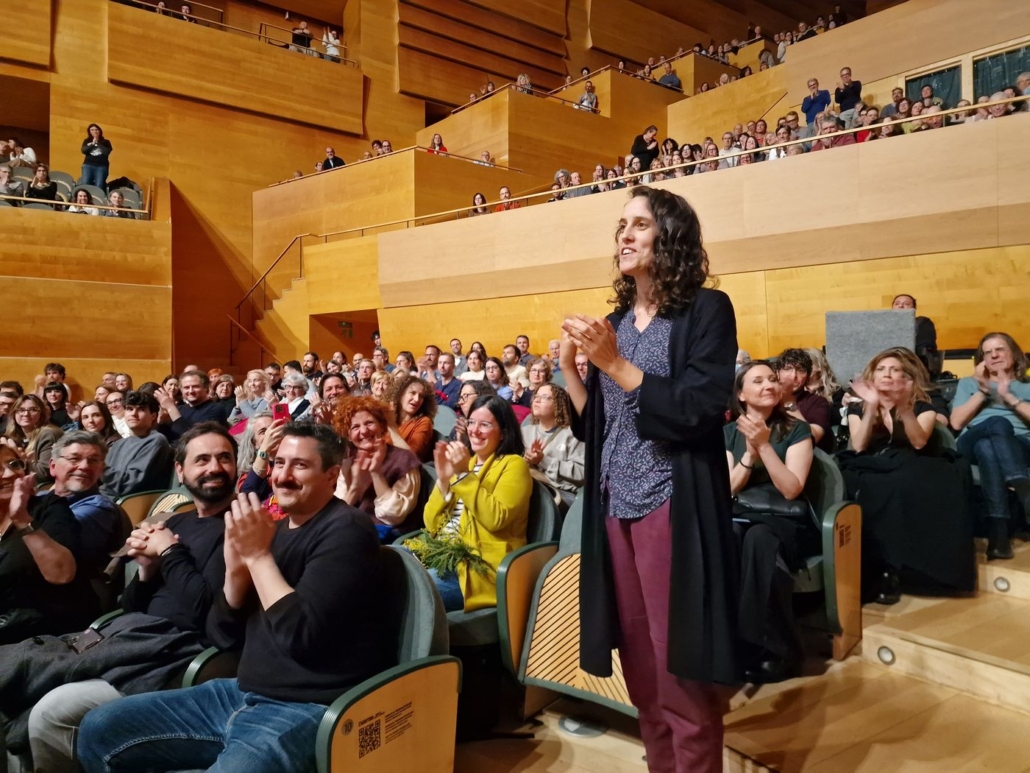
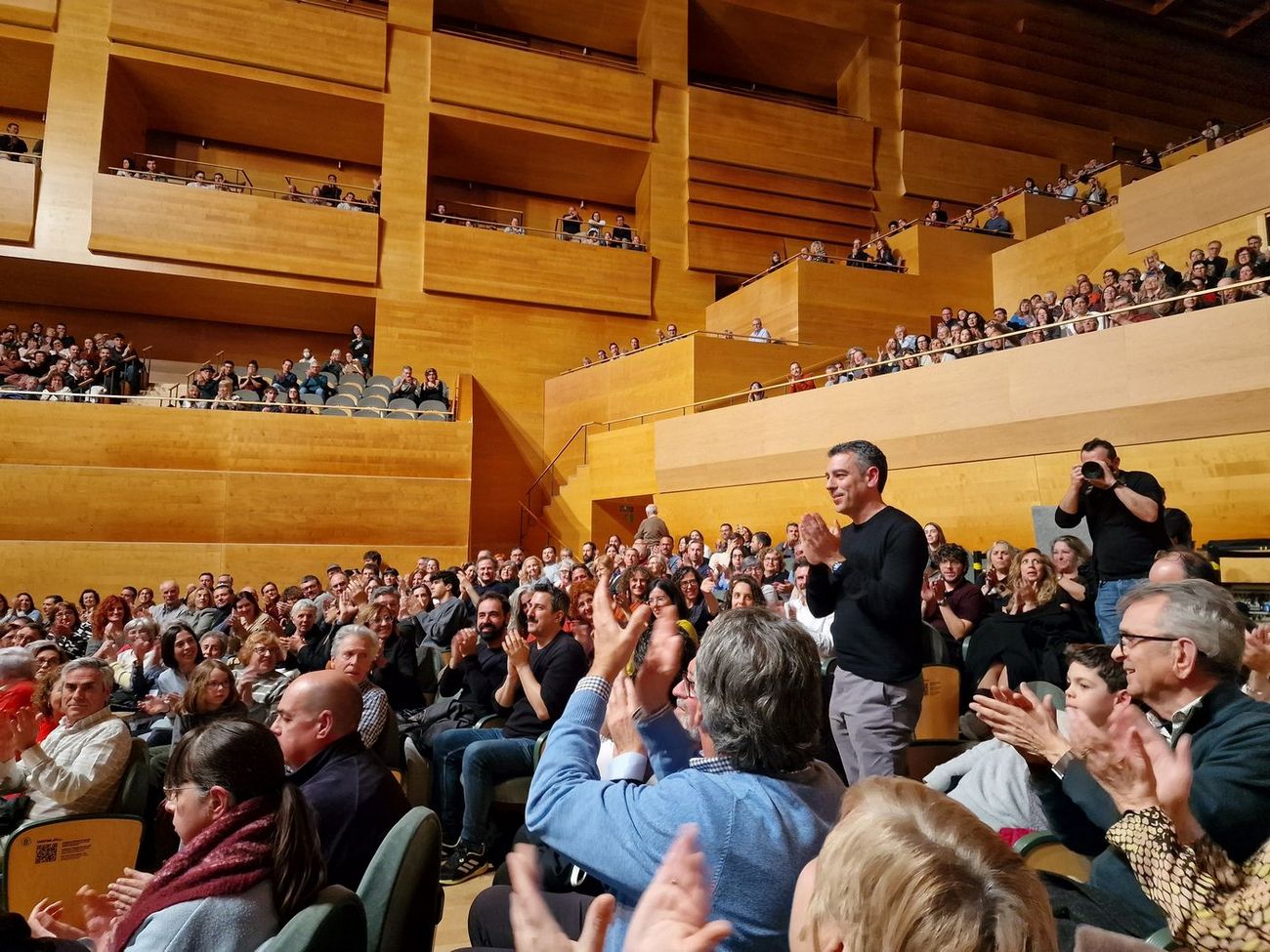
Perhaps for this reason, and because it was performed here by the entire band, the suite achieved, especially in its final crescendo, a moment of such emotional intensity that it moved an audience marvelling at such beauty. It was a sublime performance that the composer himself appreciated, and he was asked to stand up and receive one of the evening’s well-deserved ovations.
Incidentally, it was a nice touch on the part of the organisers to park the bus from the movie ‘El 47’ in front of L’Auditori, where people couldn’t stop taking photos and visiting the interior before going into the concert. A piece of history that helped us get into the right mood.
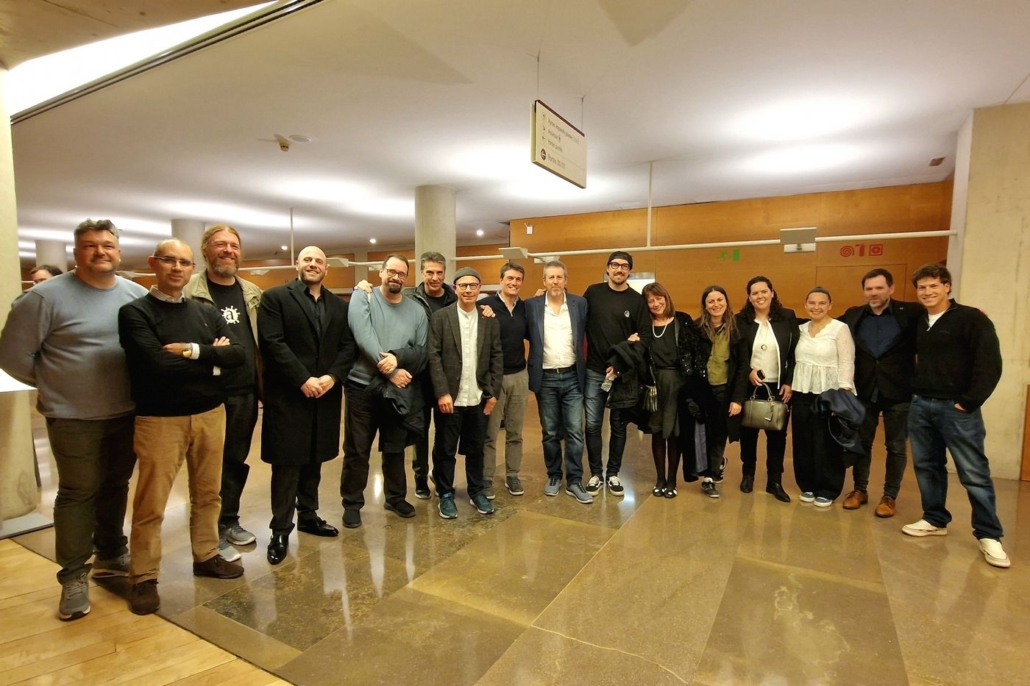
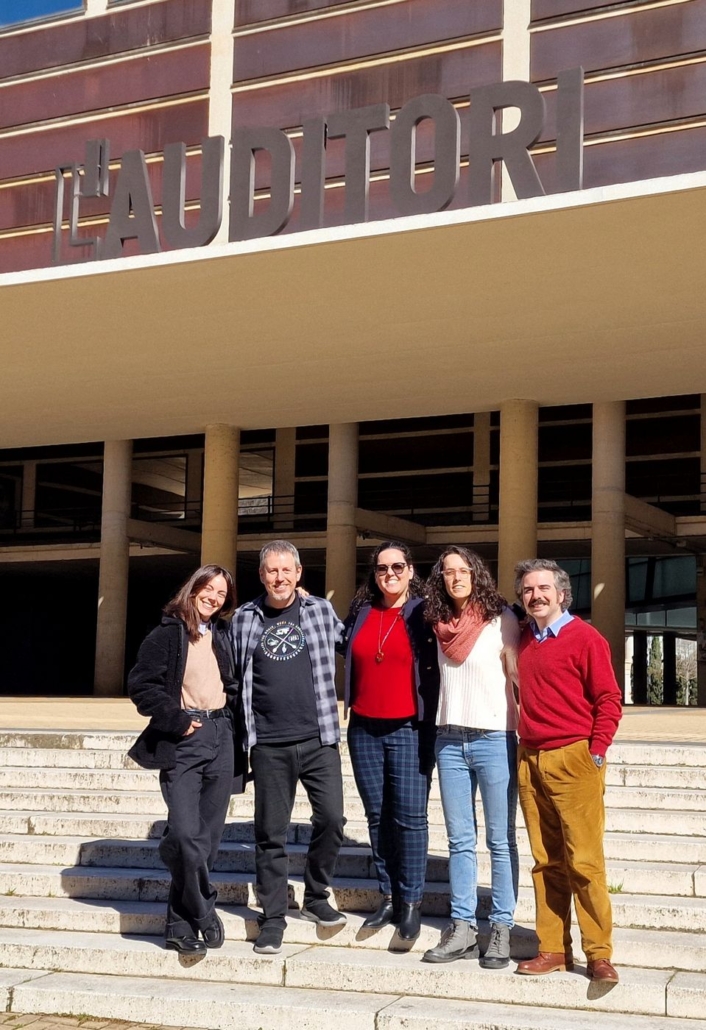
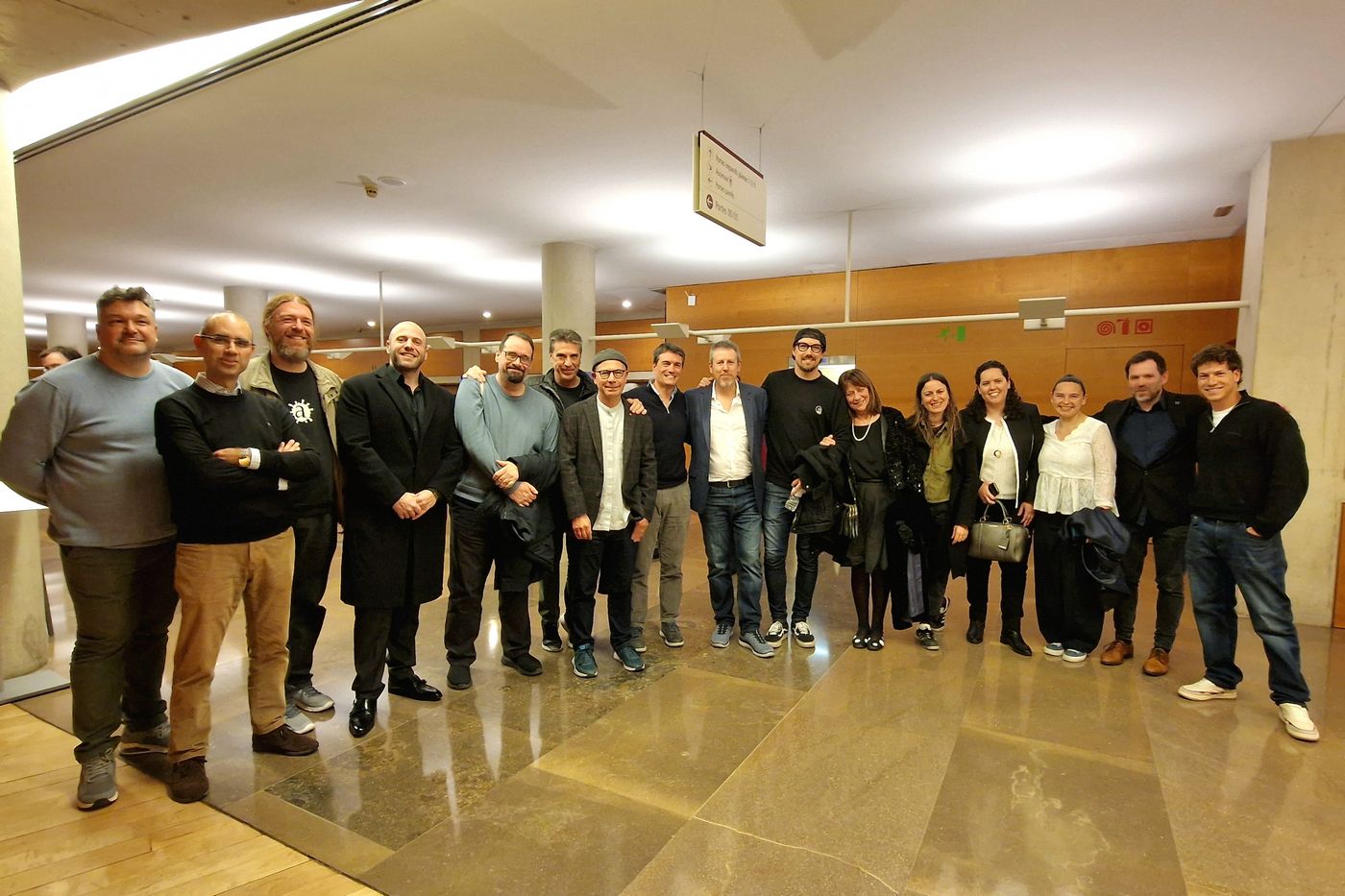
This beautiful end to the first part of the concert gave way to a well-deserved break for the musicians, which we attendees took advantage of to greet each other, given the presence of many fellow enthusiasts, composers (Vanessa Garde, Xavier Capellas, Dani Trujillo, Joan Vilà, Arnau Bataller and Paula Olaz themselves, etc. were there), actors and even directors such as Jaume Balagueró.
Making the most of those minutes, we returned to the hall to enjoy a second half focused on two works that, once again, could not be more different from each other.
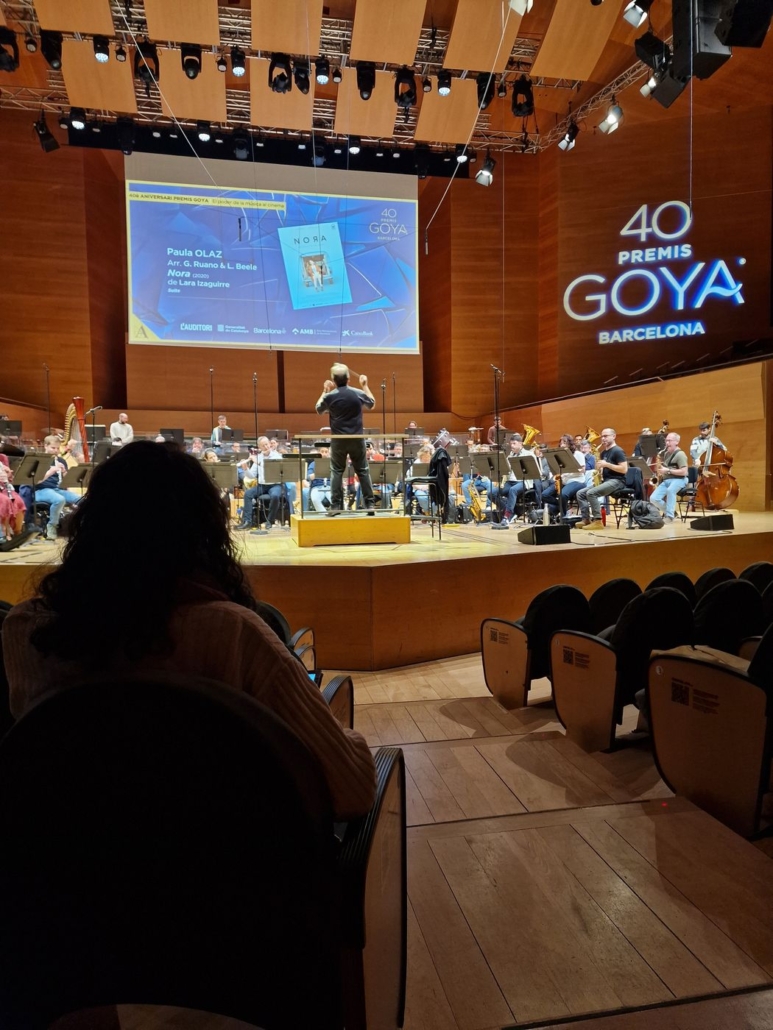
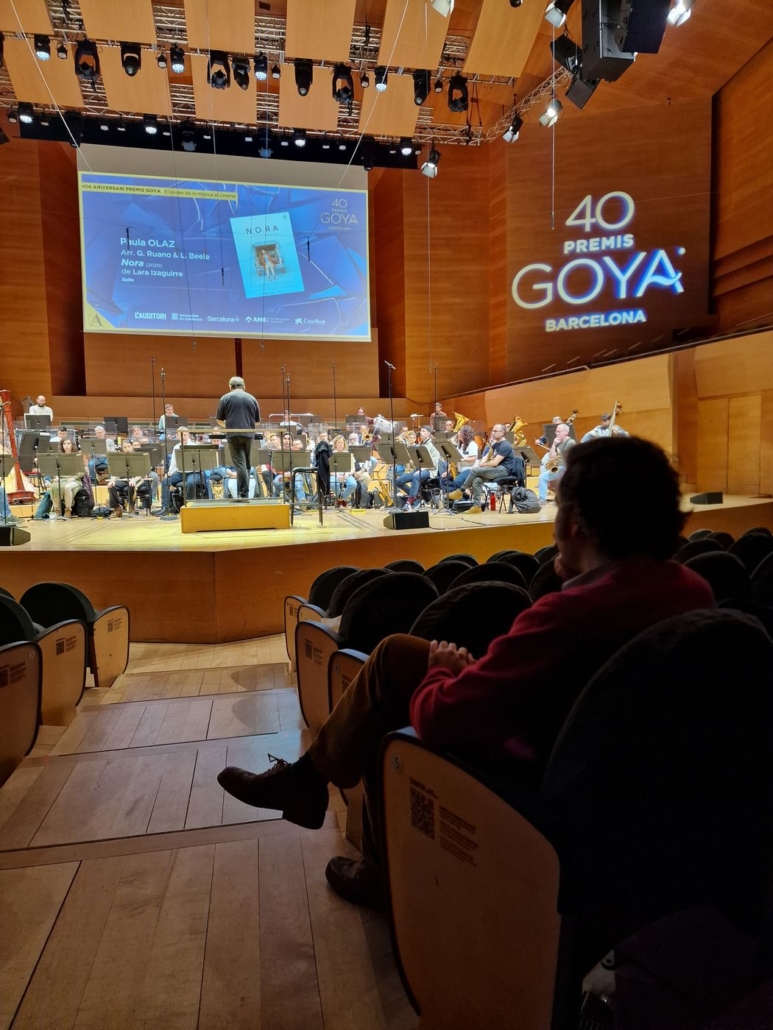
The first, the delicate Nora, composed by Paula Olaz (together with Pascal Gaigne), was the most intimate and melancholic moment of the programme. A suite performed in a restrained manner, which contrasted with the opulence of the following work. The calm before the storm.
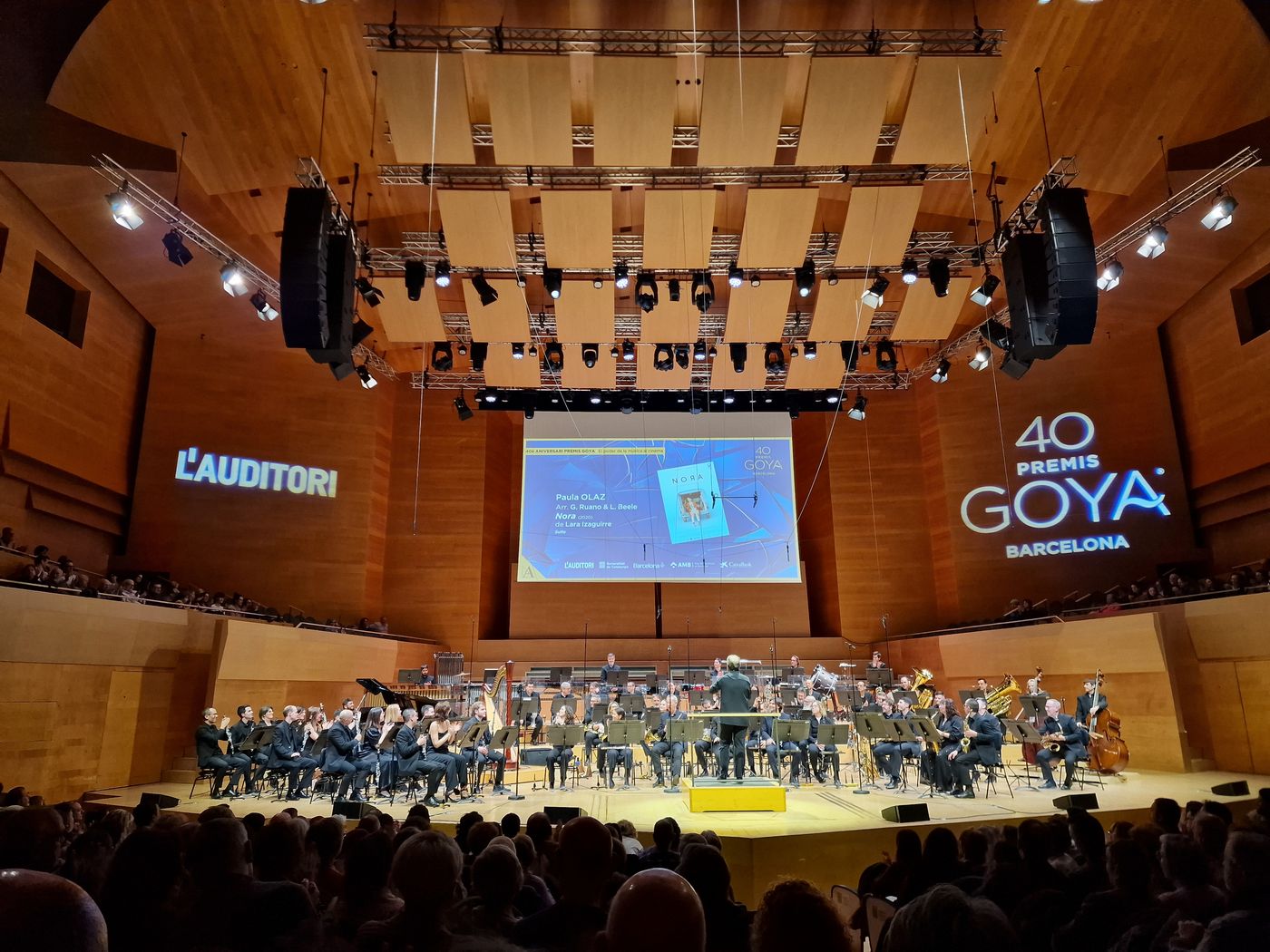
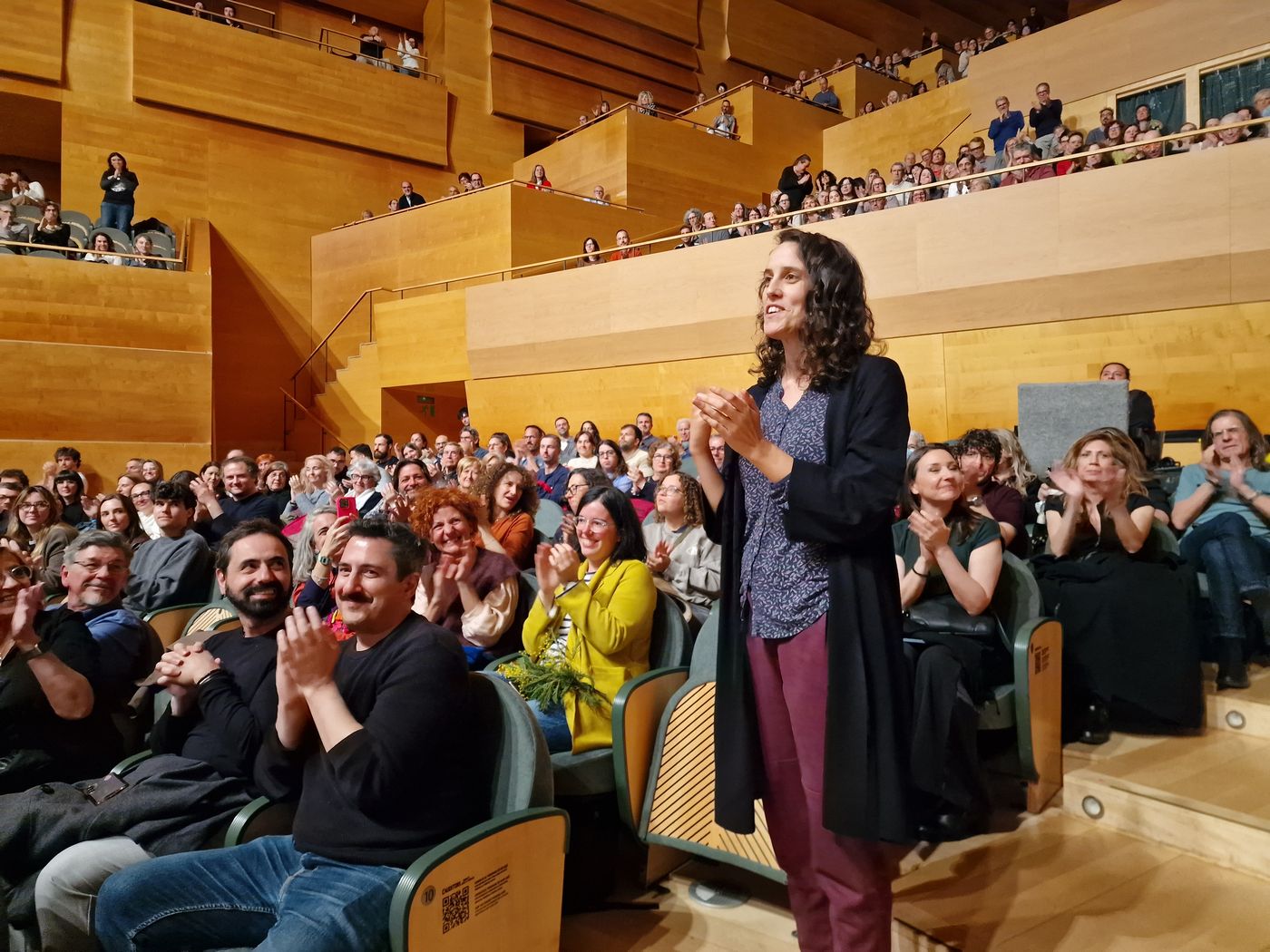
The composer, who was also present in the hall and received well-deserved applause, showed why she is one of the leading emerging figures in film music in Spain, with such accomplished works as La Cima, El bus de la vida and Alguien que cuide de mí.
The other score planned for this second part of the concert is one that justifies any ticket price, and its length (around 20 minutes) made it logical to have only two pieces after the interval.
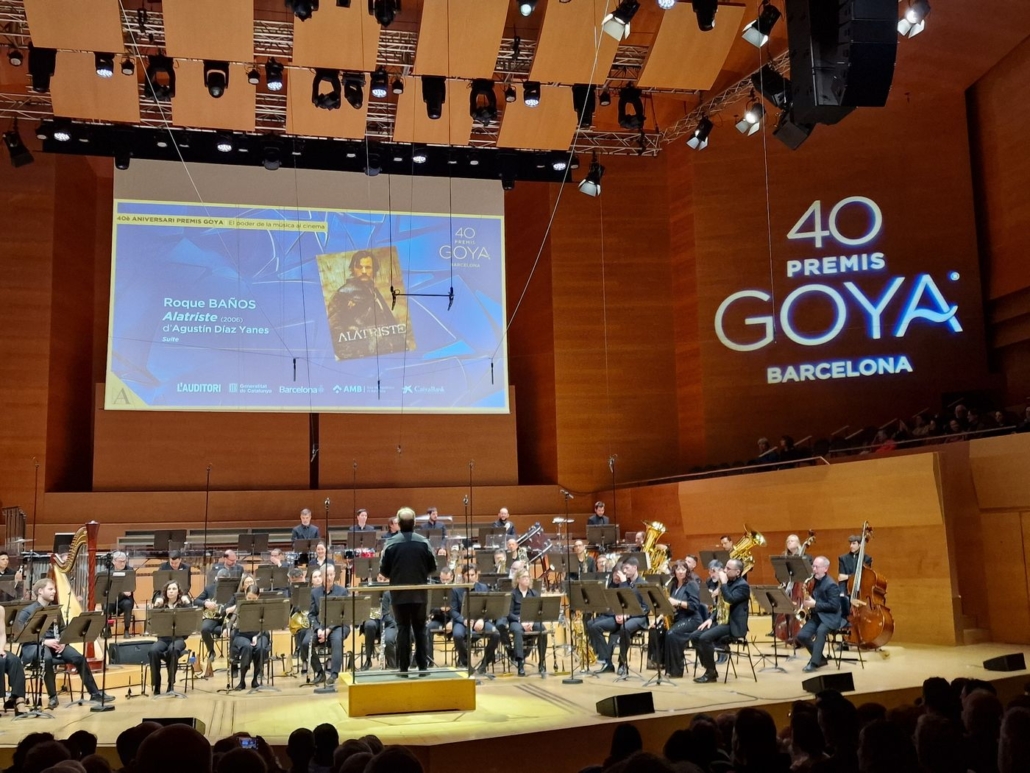
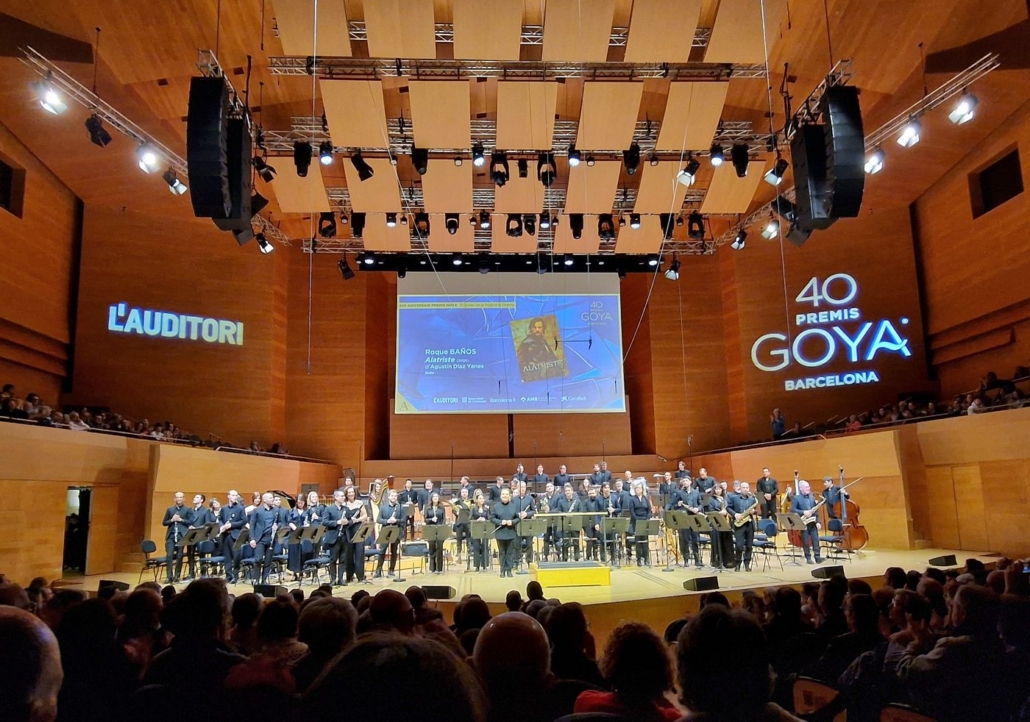
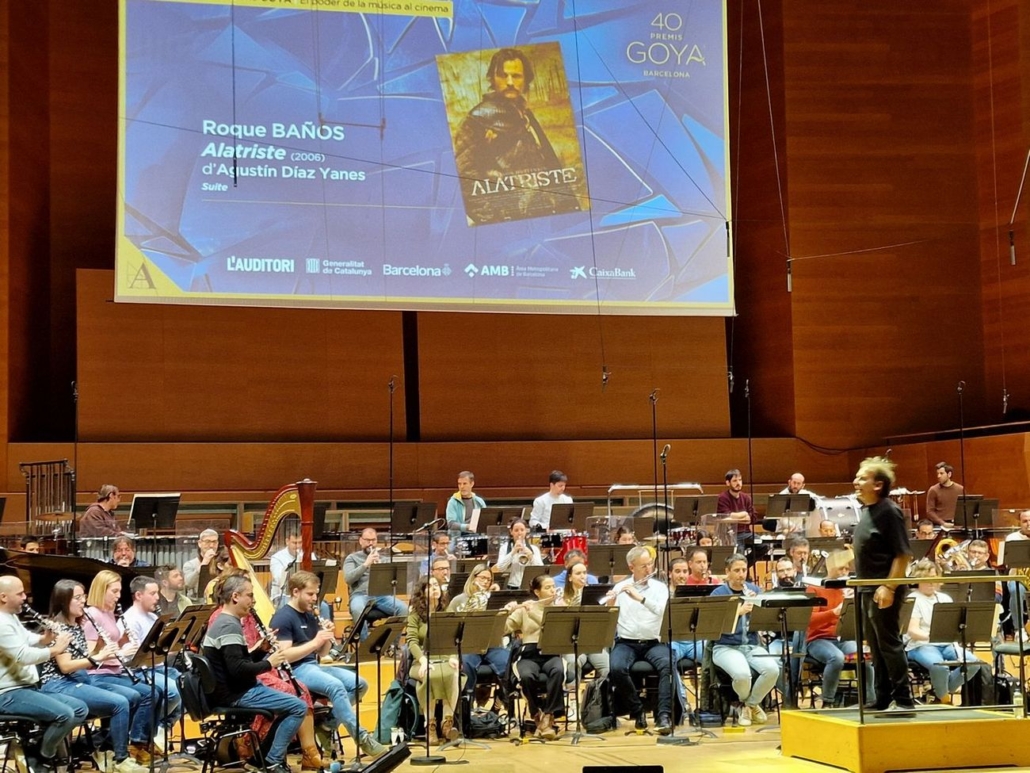
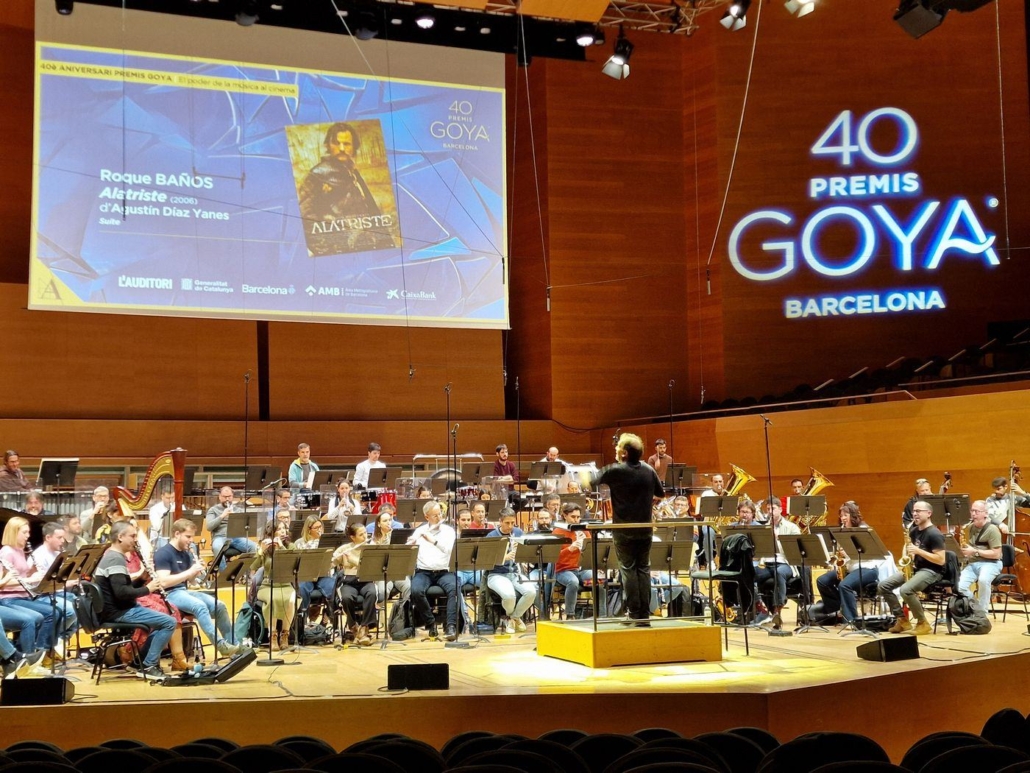
Roque Baños, from Murcia, has been one of Spain’s greatest composers for years, and his suite from Agustín Díaz Yanes’ film Alatriste is now part of the concert repertoire of many orchestras, such is its quality. It is an immeasurable work, with moments of overwhelming power and epicness, beautiful romantic interludes and a fanfare as accomplished as that of maestro García Abril, which turned the programme into a kind of perfect musical palindrome.
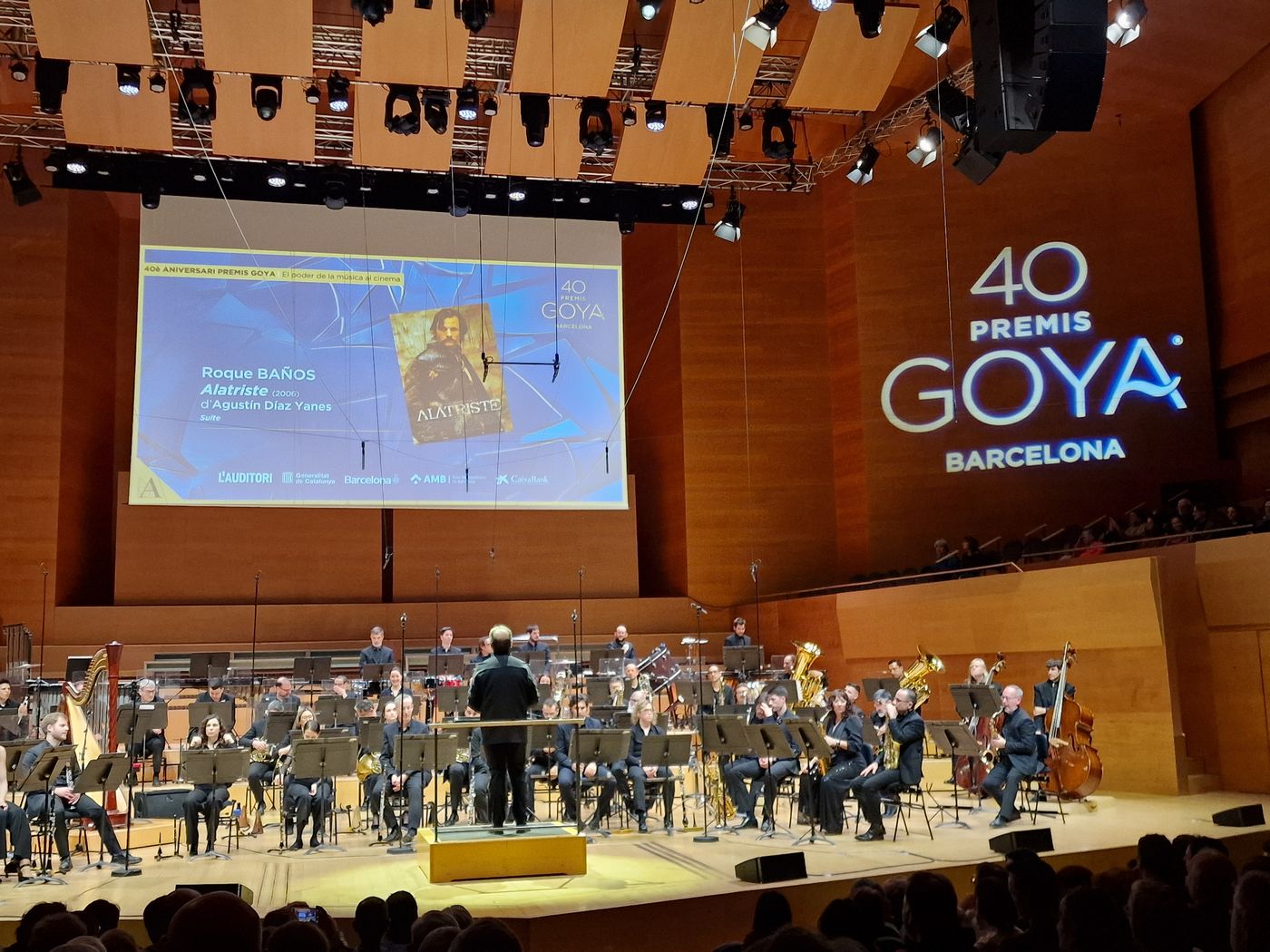
So much so that, in 2011, a fanfare from the suite was performed at the Teatro Monumental in Madrid by the RTVE Orchestra and Choir, on the 25th anniversary of the Film Academy.
The fact that such a profoundly symphonic and grandiose work was performed by a band was not a problem or seem strange, far from it, as Baños himself arranged a version designed for this ensemble sometime after premiering the original symphonic suite in Úbeda in 2007. In fact, in October 2013, the Asociación Jumillana Amigos de la Música performed this new version for band at the Teatro Vico in the composer’s hometown of Jumilla.
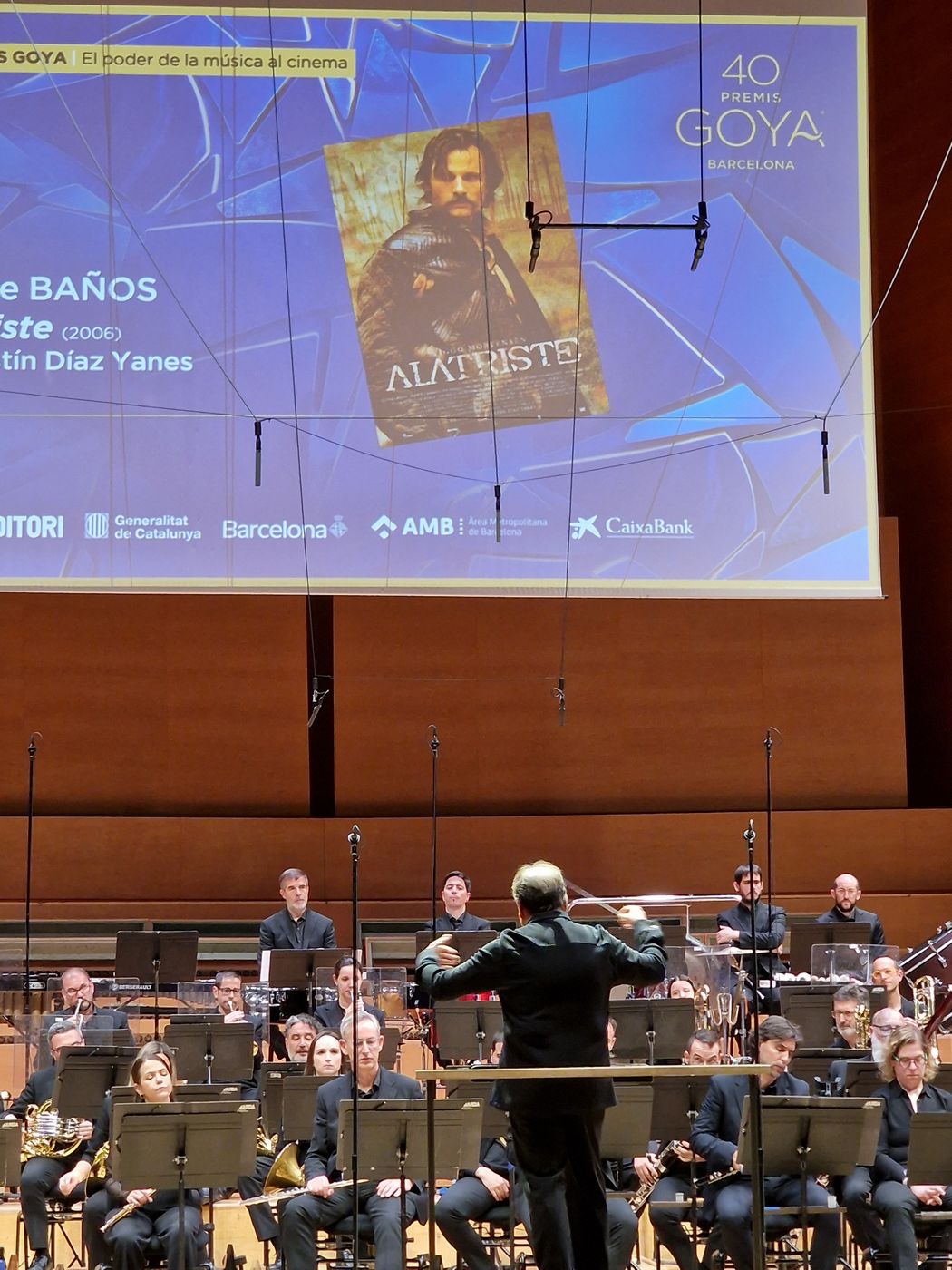
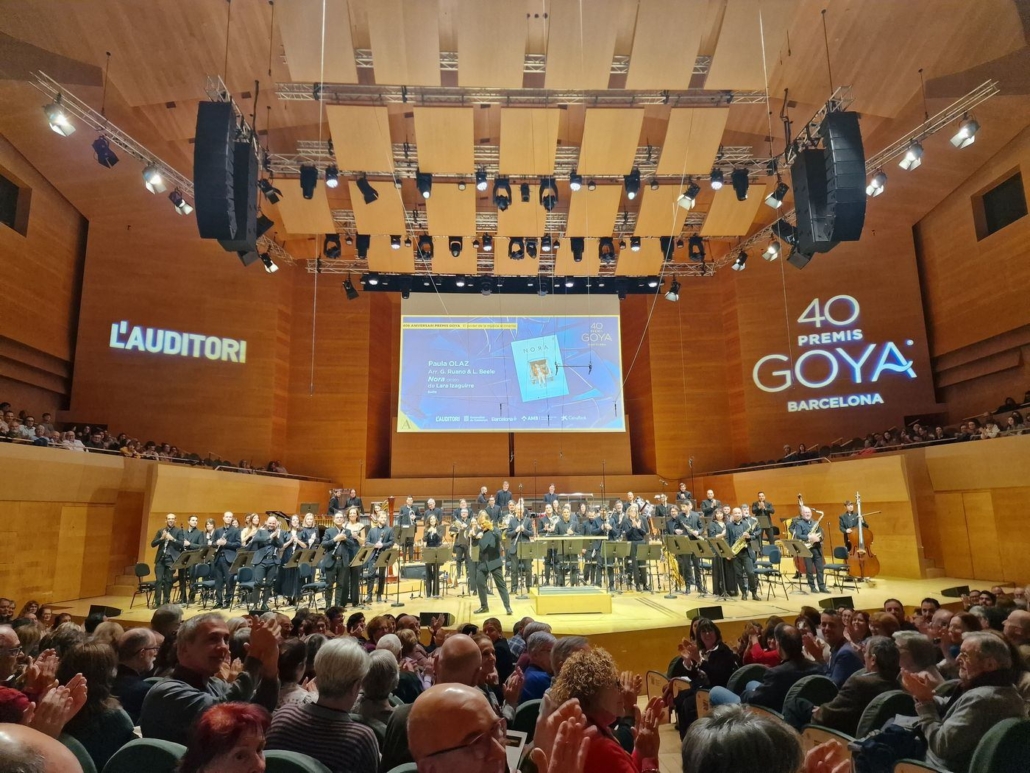
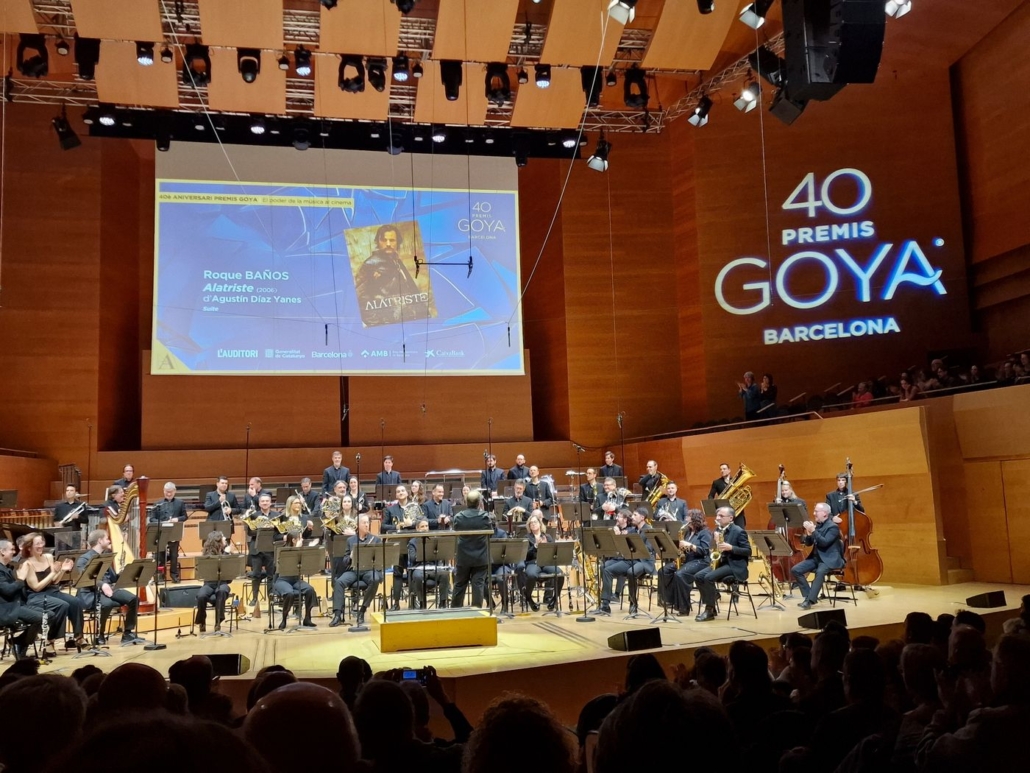
Obviously, without the choirs and the string section, it is somewhat different, although equally enjoyable, and in any case, it goes without saying that the Barcelona Municipal Band (allow me to use its full name again, by way of recognition) showed off its memorable power, with special mention for the brass and percussion sections. Its dazzling finale was followed by thunderous applause from an audience devoted to the greatness of one of the masterpieces of Spanish film music.
Was the concert going to end with Roque Baños? Yes, but not in the way planned in the programme, as at least one encore was needed to round off the performance.
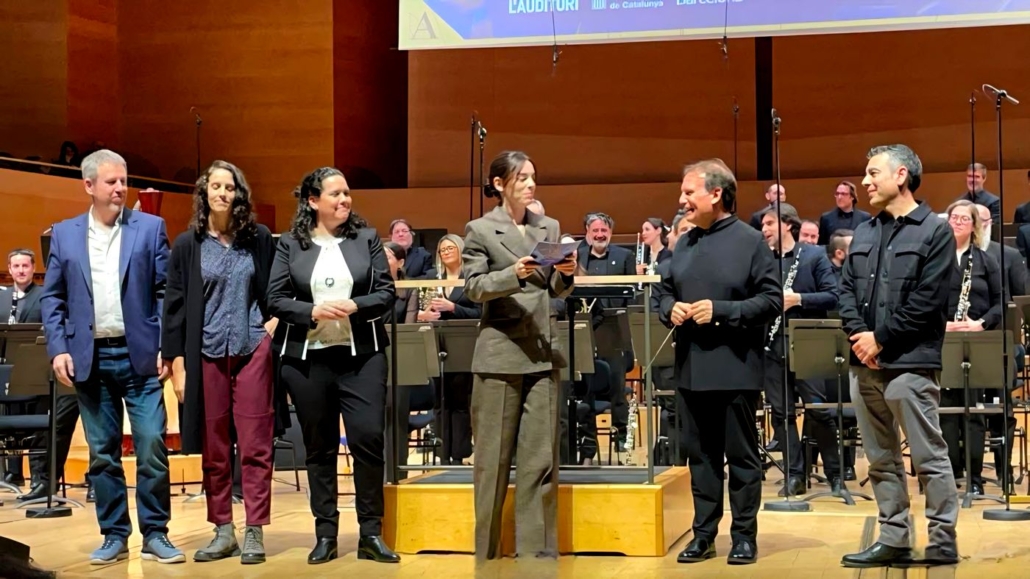
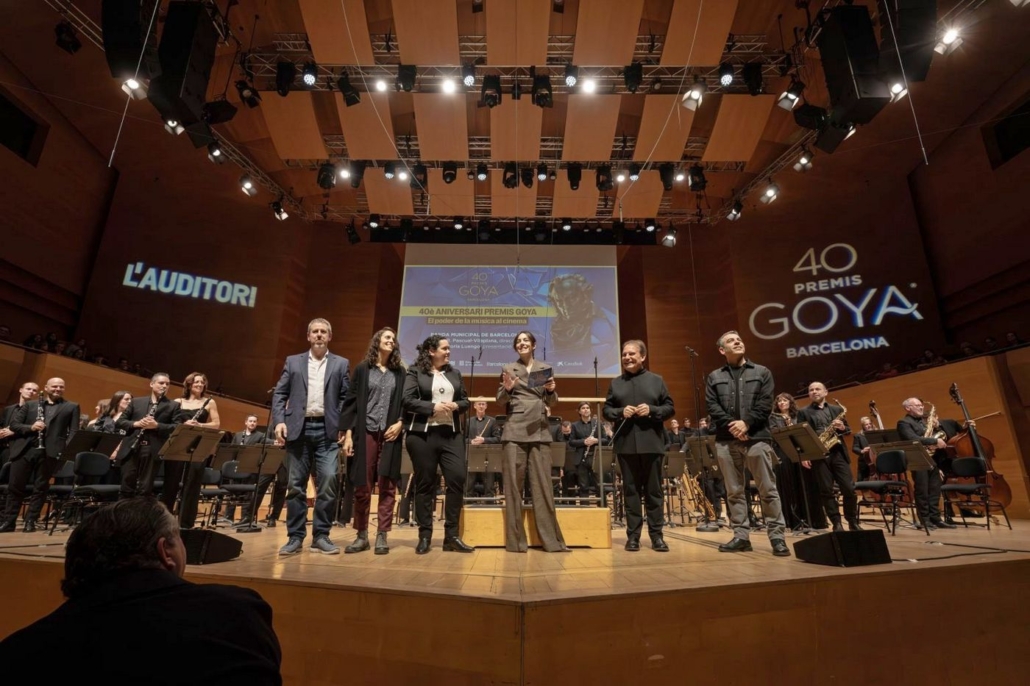
Before that, Victoria Luengo made her final appearance to close her speech (she had previously returned to the stage to announce the second block of the first part of the programme, as well as at the beginning of the second), so that, after a fitting reference to the collective experience of going to the cinema to see a film, which can be extrapolated to the experience we had just witnessed at the magnificent concert, and which represents an act of collective resistance against individuality and dependence on screens that seem to dominate every corner of our lives these days, Luengo invited all the composers present and some of the people responsible for the concert on stage, where they received the audience’s affection and gratitude.
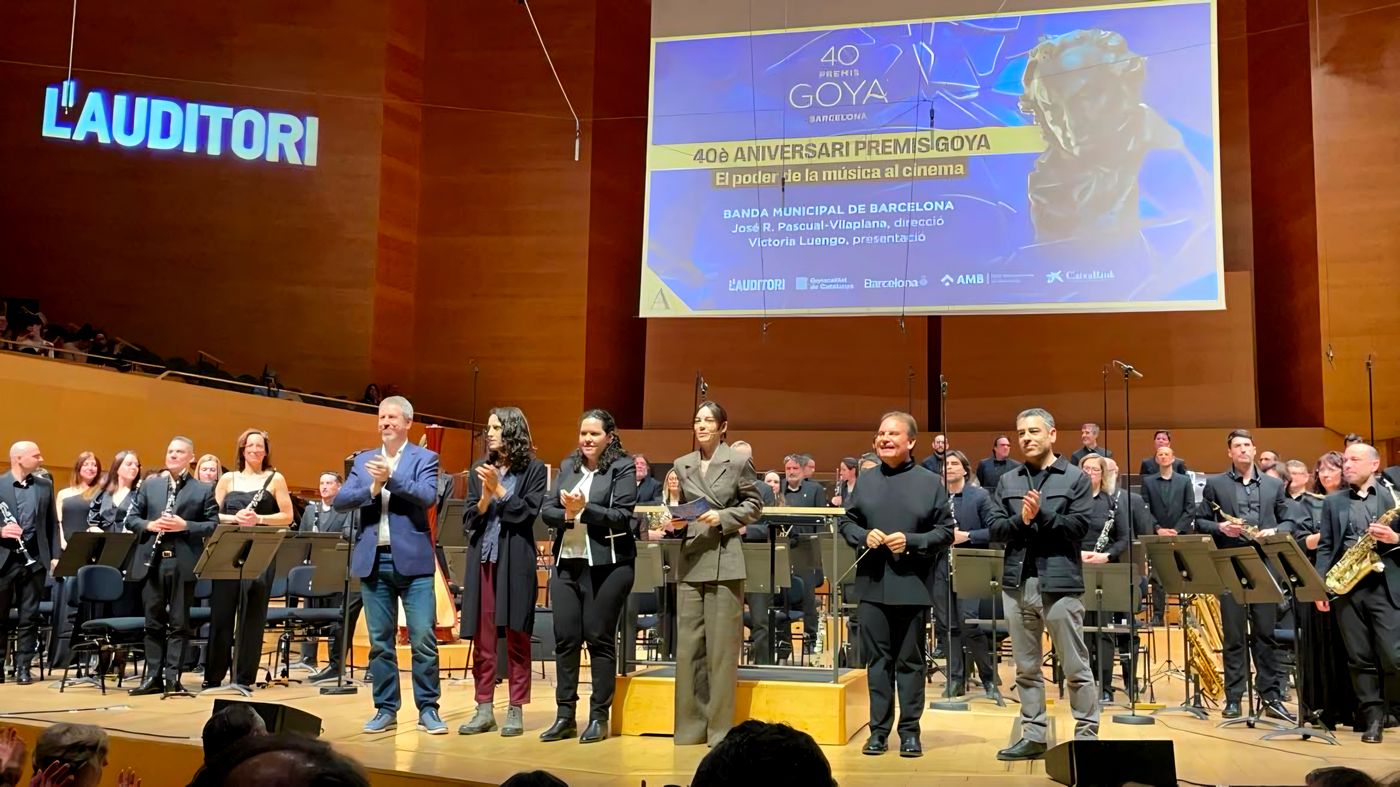
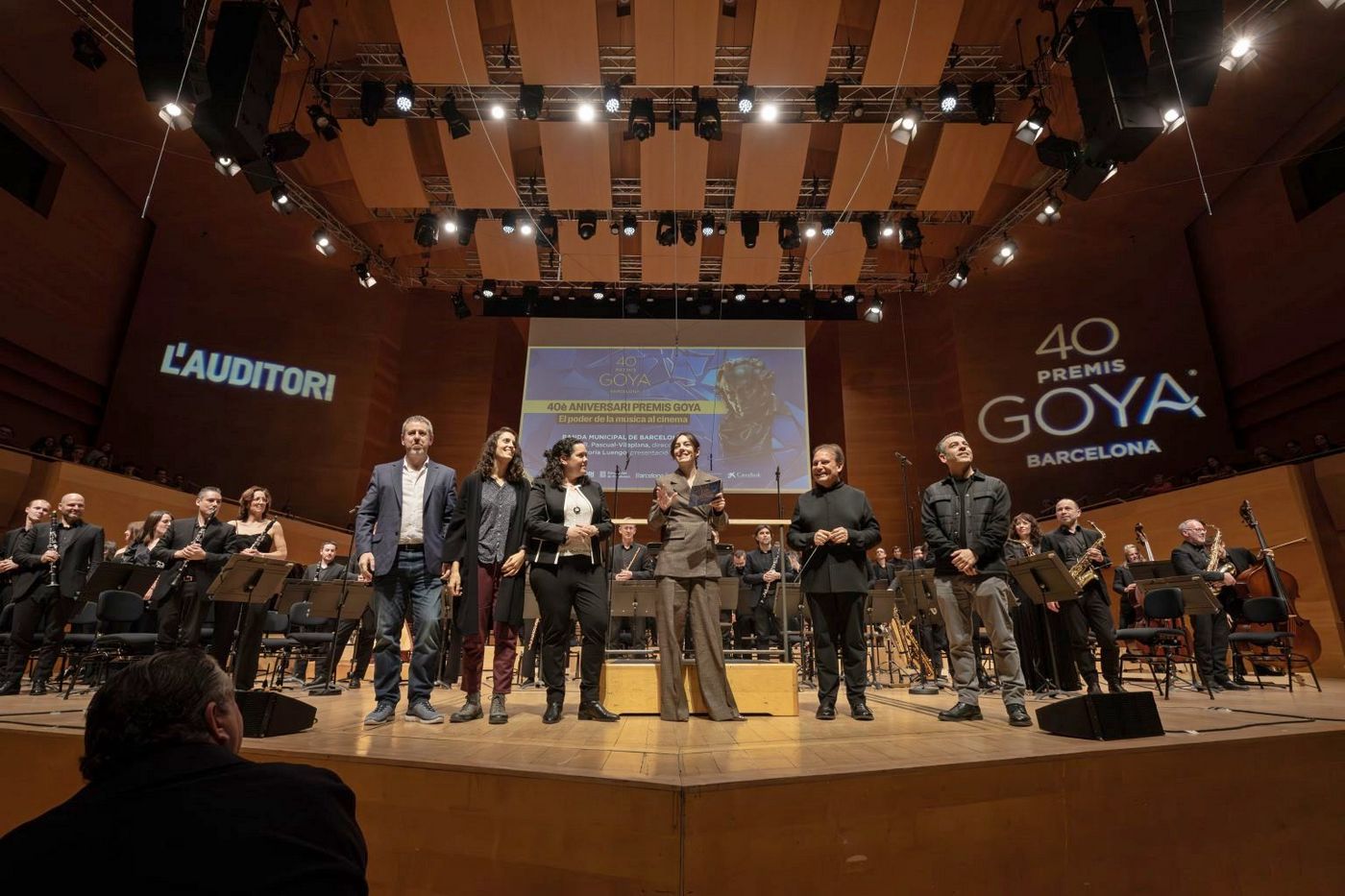
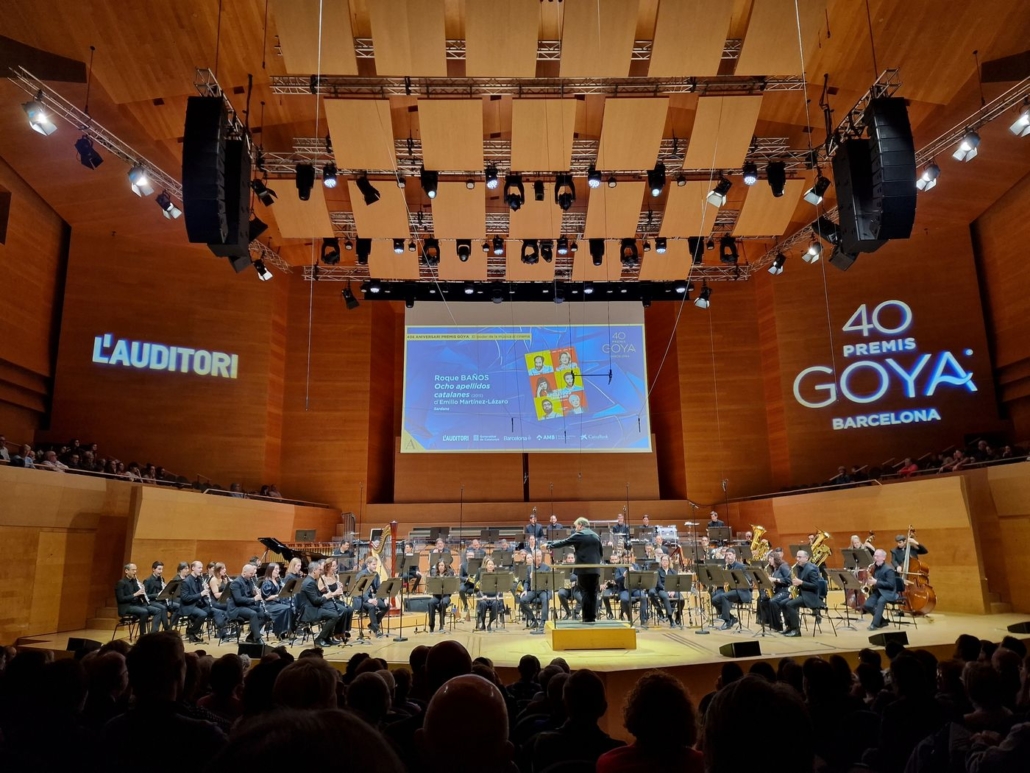
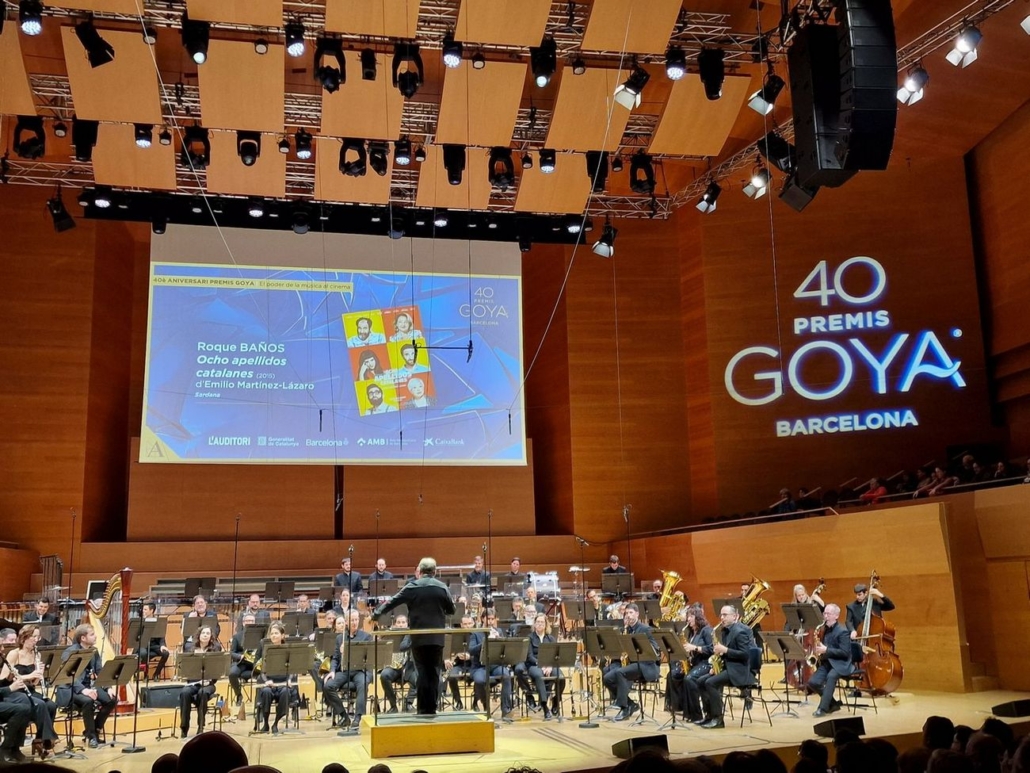
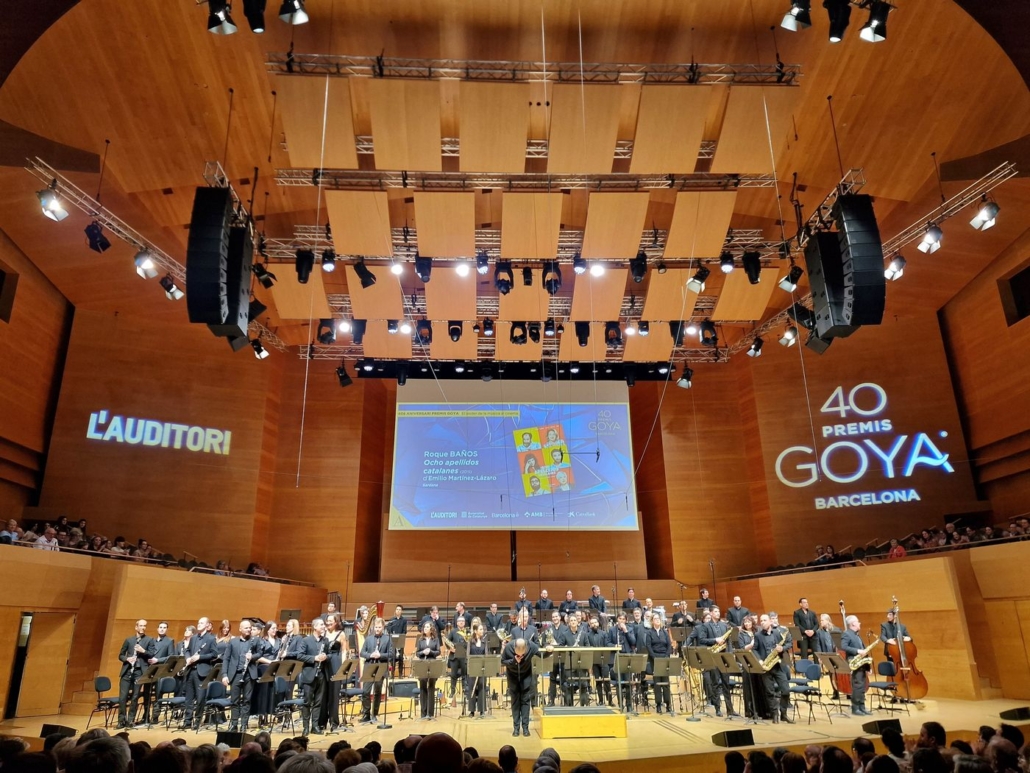
At the end, when everything seemed to be over, the presenter herself turned to maestro Pascual-Vilaplana to ask him if, given the enthusiasm of the audience, there might be an encore, emphasising the possibility that it might be something related to Catalonia. The maestro agreed and the BMB treated those present to the entertaining ‘Sardana’ composed by Roque Baños for the sequel ‘Ocho apellidos catalanes’, a successful piece that emphasises the comic tone of the film, adding certain touches of pasodoble to the popular traditional dance of Catalonia.
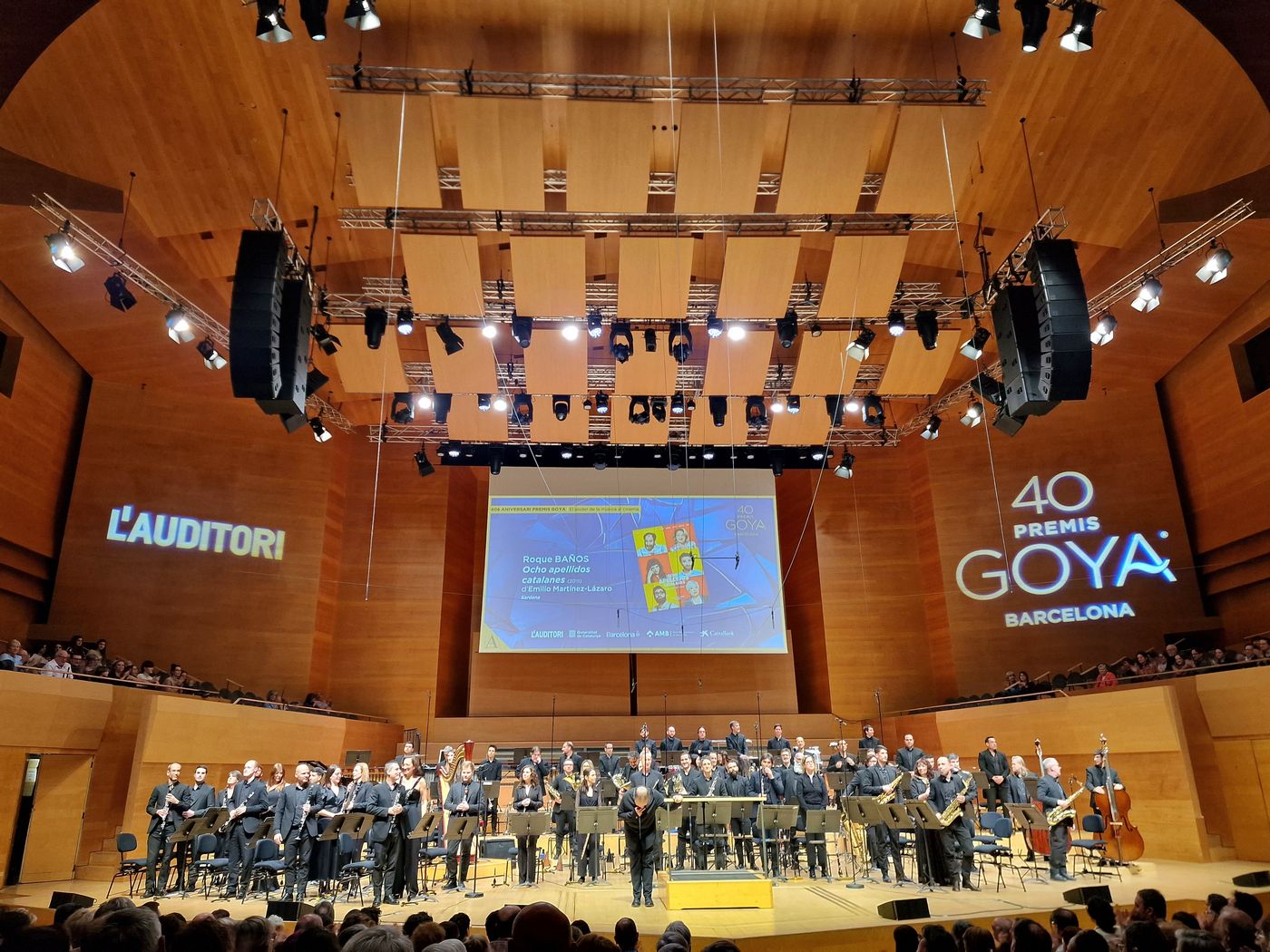
Another success on an unforgettable afternoon that allowed the audience to see cinema through music. It highlighted both the intrinsic musical quality of the scores written for cinema and their narrative power in the medium for which they were created.
A concert worthy of such a special anniversary.
Article by Coque Cano
Pictures by Gorka Oteiza