Film Music Concert at the San Sebastián Festival 2026 – SUMMARY
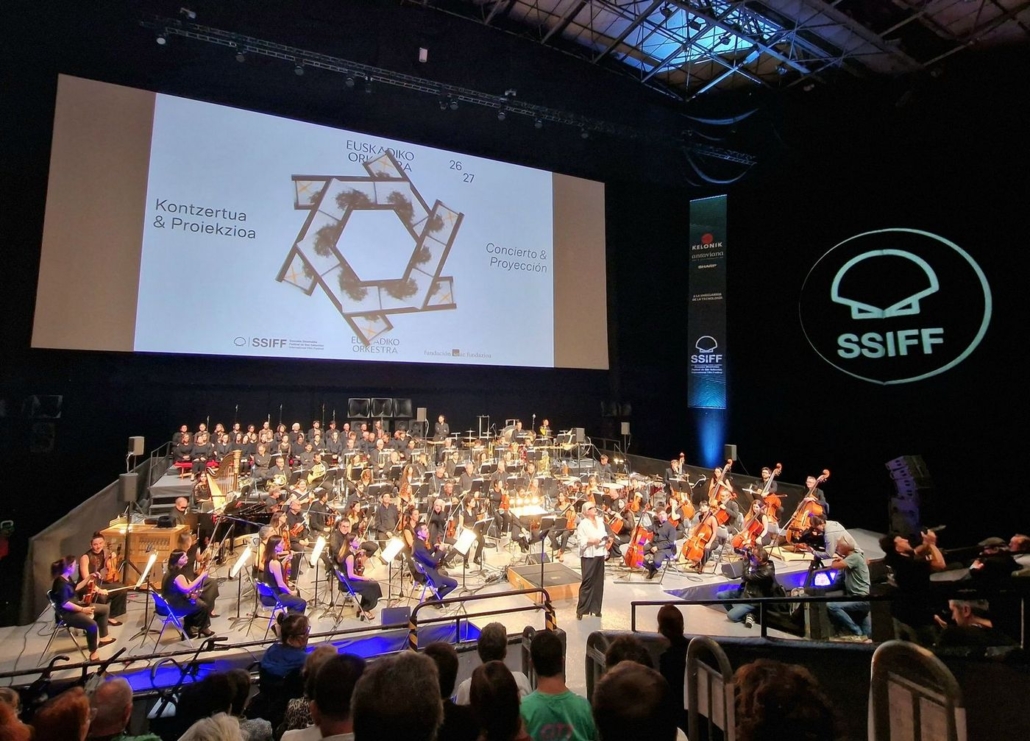
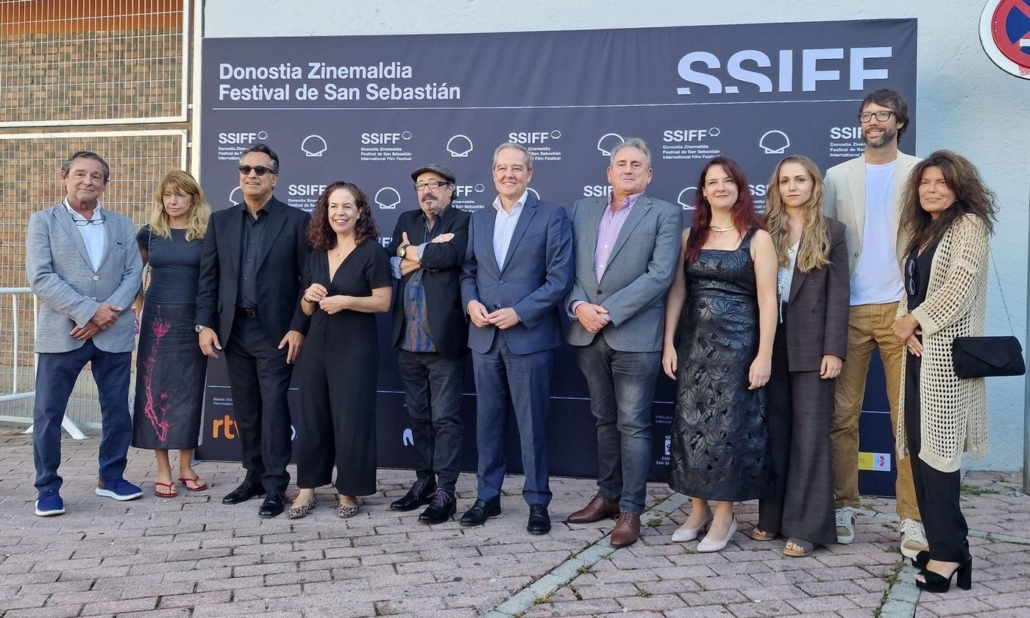
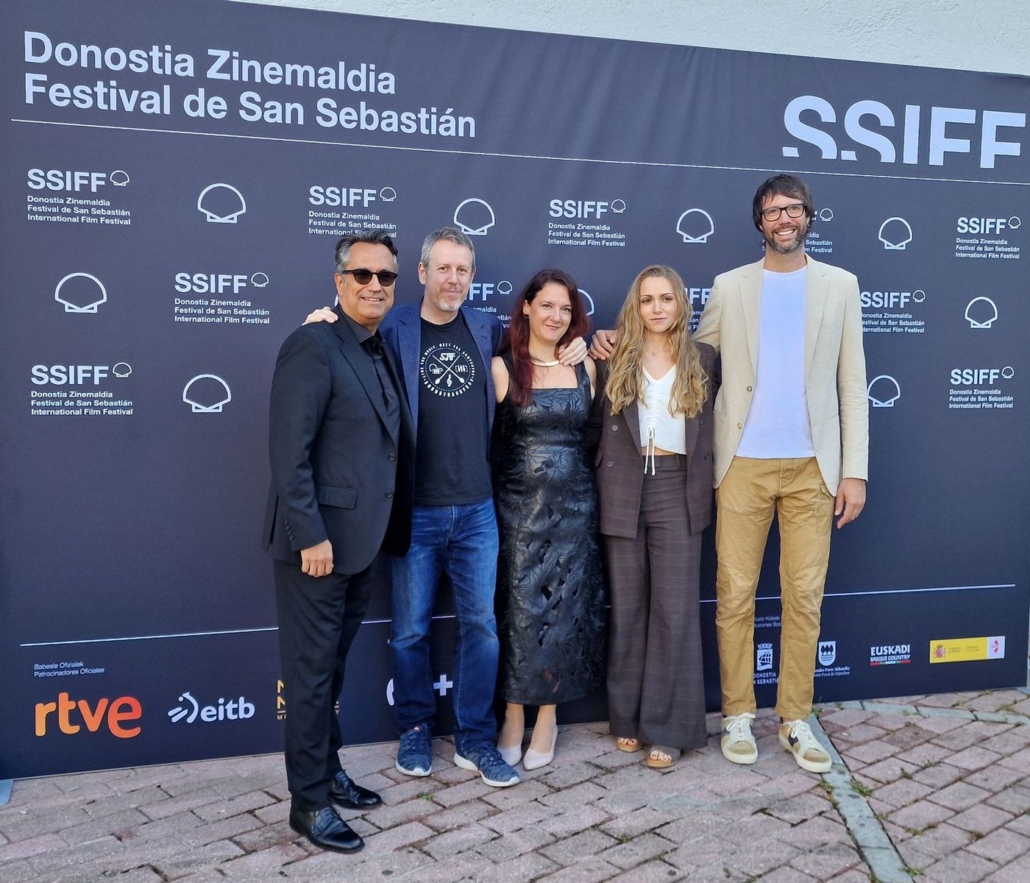
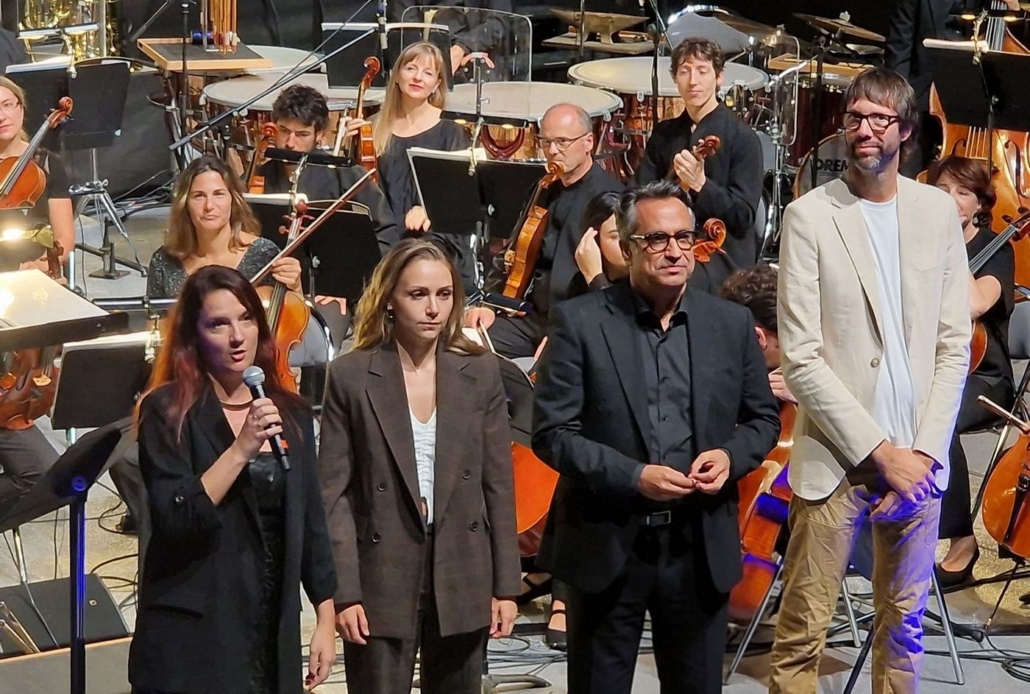
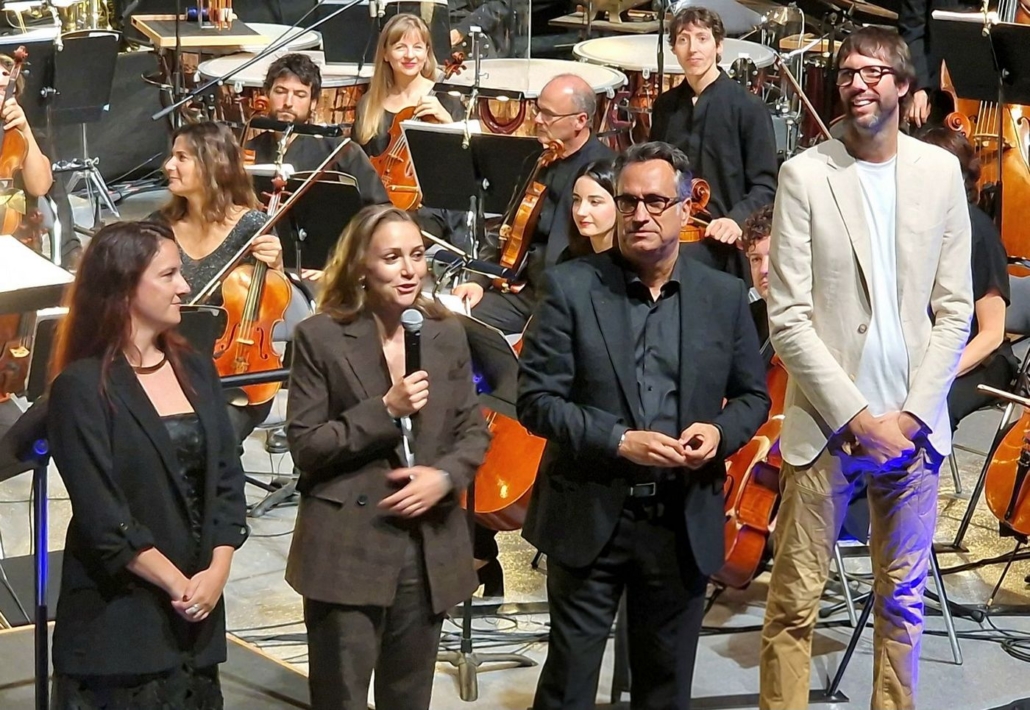
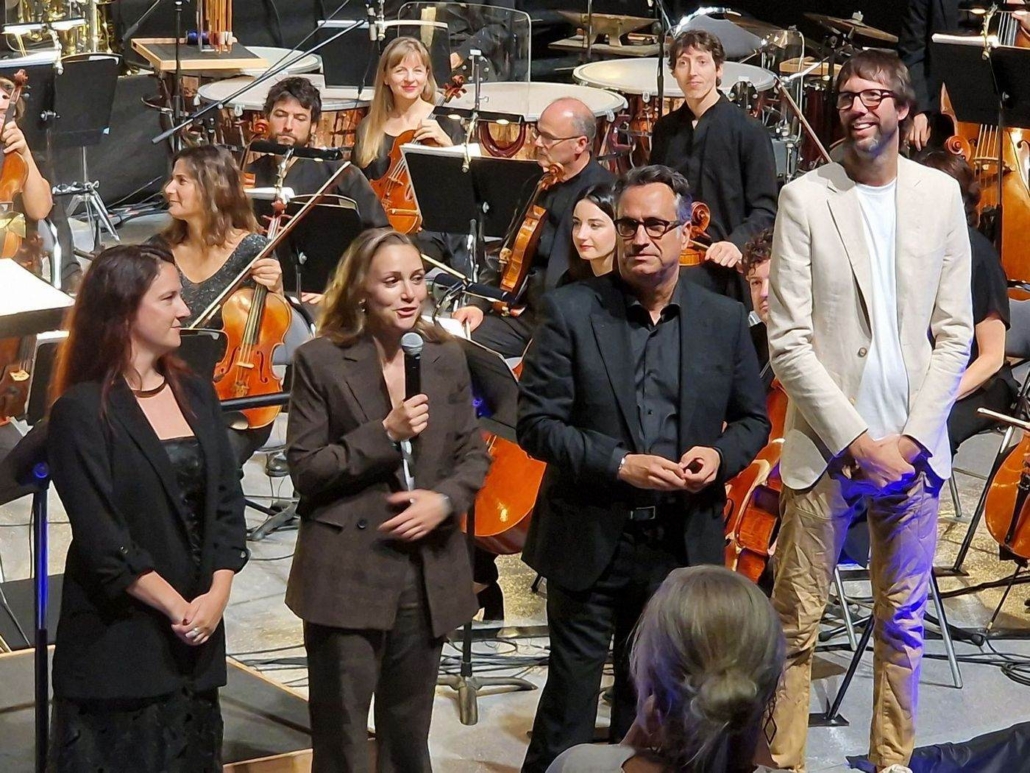
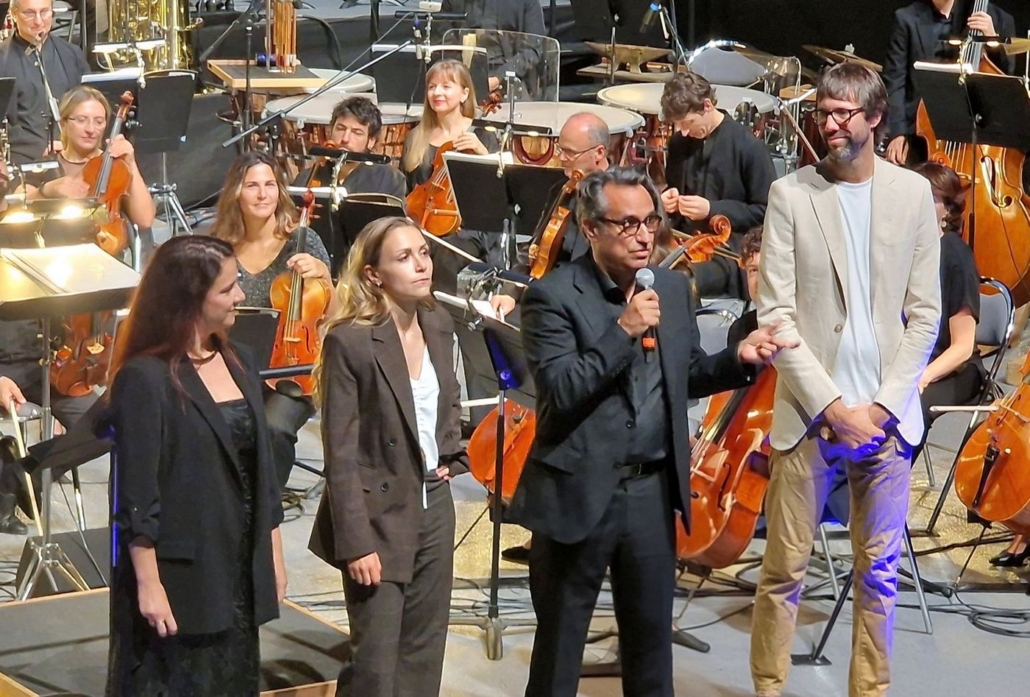
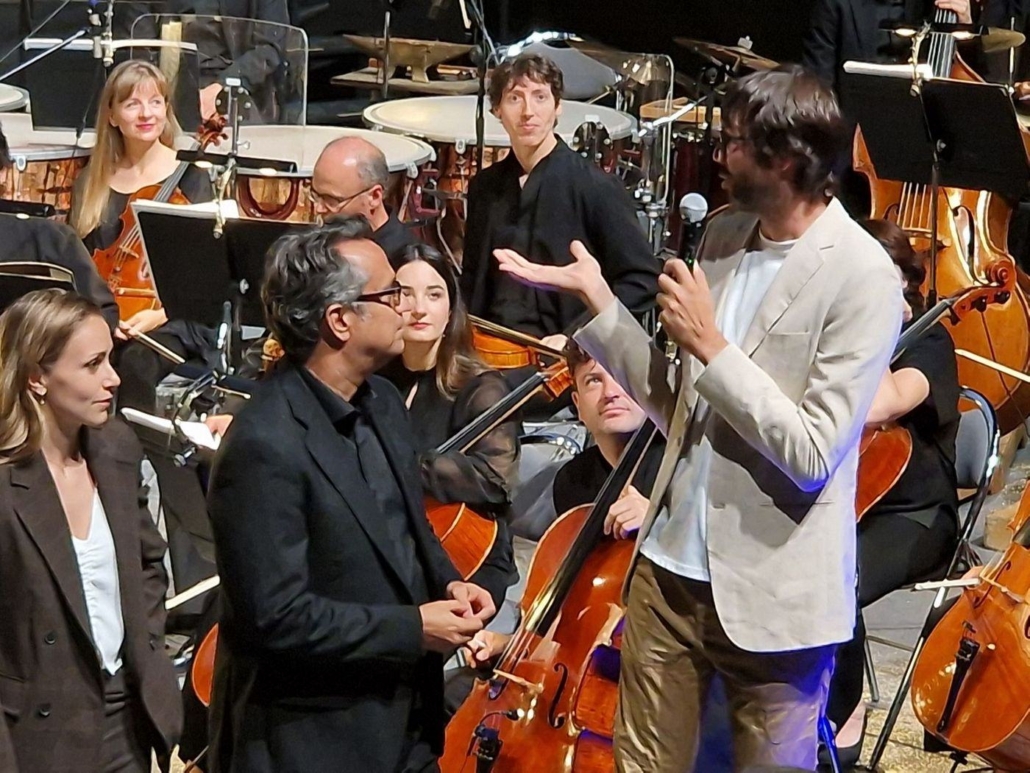
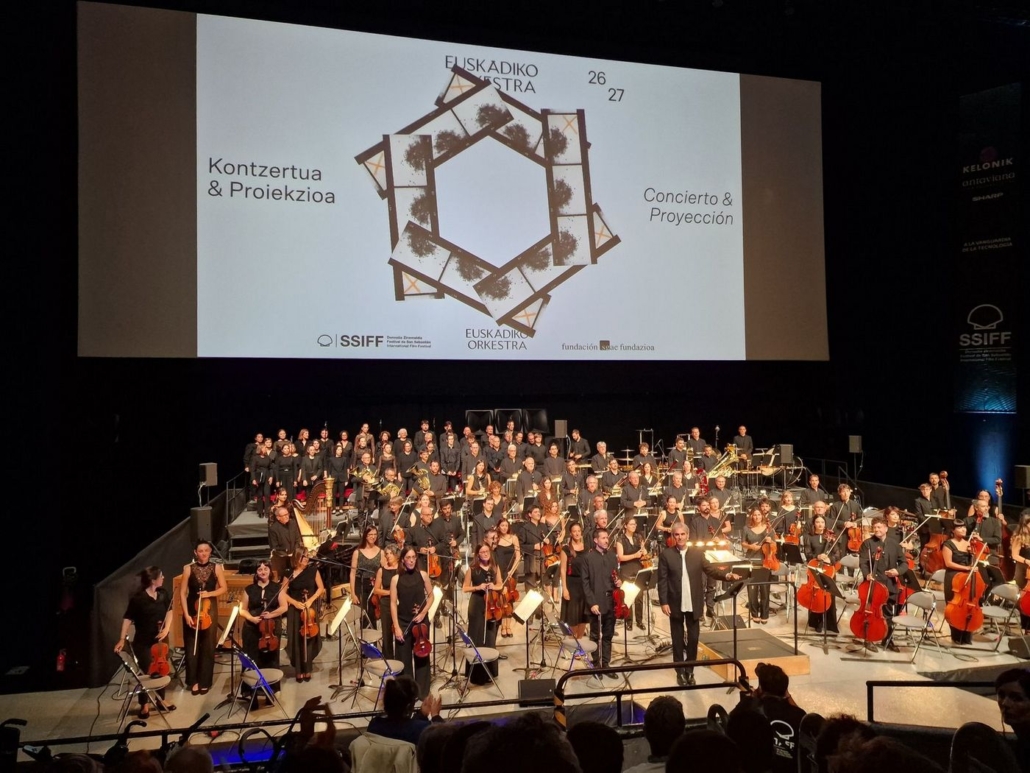
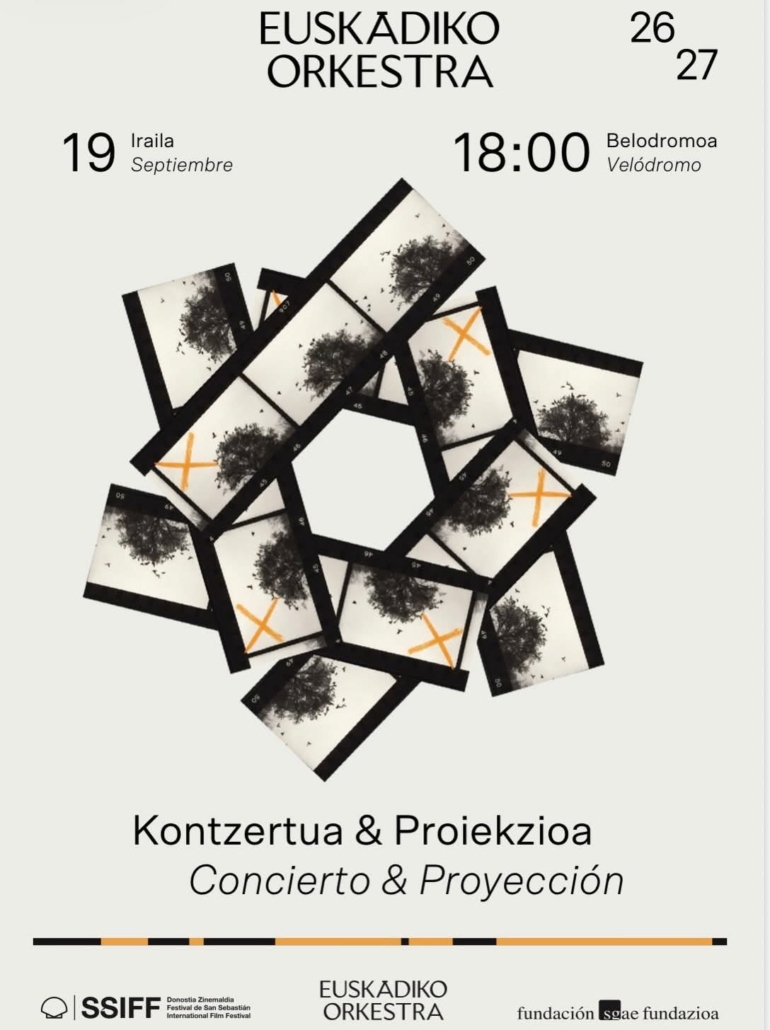
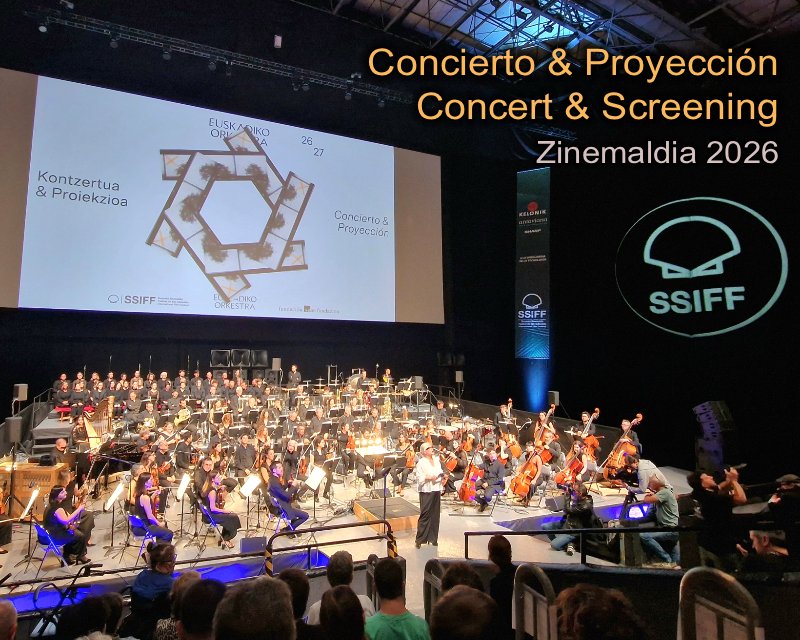
Last weekend the 13th edition of the traditional annual event ‘Concert & Screening’, was held as part of the 74th edition of the San Sebastián Festival – Donostia Zinemaldia, performed by the Euskadiko Orkestra conducted by Juanjo Ocón, with the participation of the Orfeón Donostiarra and the tenor Andoni Martínez Barañano, and the presence of Carla F. Benedicto, Beatriz López-Nogales, Diego Navarro and Alfred Tapscott.
Our friend and colleague Felipe Múgica attended the concert and has left us an excellent, detailed article, exclusively for SoundTrackFest.
Review: Concert & Screening at the Velodrome, San Sebastián Festival, 19/09/2026
It has become a tradition to attend the San Sebastián Film Festival every year, not so much to enjoy its varied and select film offering, but to attend an event that strikes a deep chord with film music enthusiasts. And this is the traditional Concert & Screening held at the Velodrome in San Sebastián, made up, as always, of a repertoire of Spanish film music (read more).
As in previous years (let us recall that these events date back to 2012), the aim of these concerts is to recognise the work of Spanish film music composers, both current and past. The work of a composer for audiovisual media (film, television series…) may appear to carry a certain glamorous aura from working for the cinematic medium, for the big screen; but nothing could be further from the truth, since the work of a soundtrack creator often consists of solitary studio work, with little recognition or awareness from their audience, and only rarely has the chance to be performed by an orchestra before a large public. On top of all this comes the ever-growing shortage of recorded releases of these works, which would allow audiences to enjoy the work of these artists in the shadows.
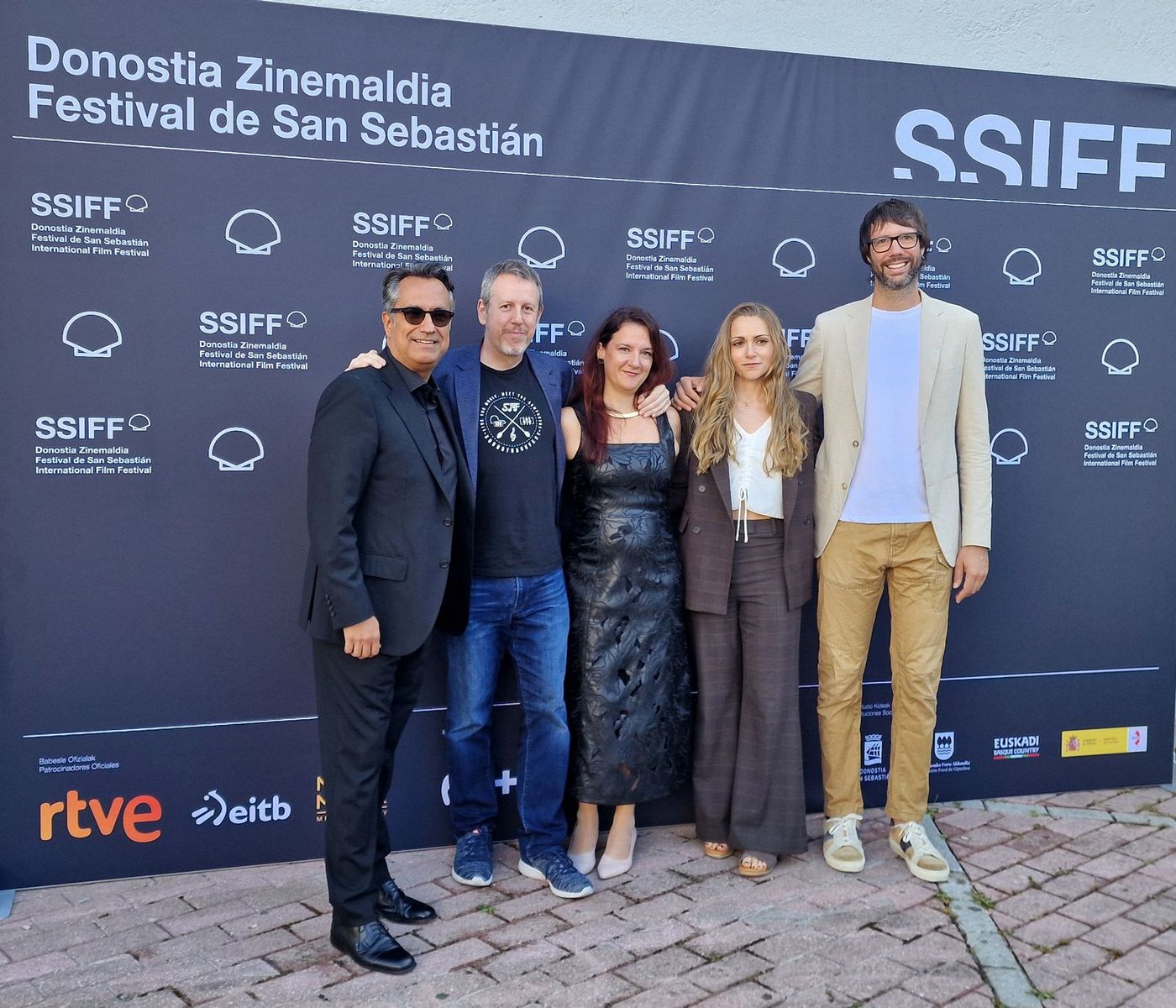
This year, and deservedly so, this concert-based recognition is joined by the creation, by the Fundación SGAE and the Festival itself, of a new award to honour the best score among the feature films in competition (read more). This award has come to be known as the SGAE Award for Best Original Music and has a jury made up of the following three members: Eva Gancedo, as chair of the jury, together with composers Aranzazu Calleja and Olivier Arson. A category that needed this recognition and a necessary award, although, it must be said, one that has been far too long in coming.
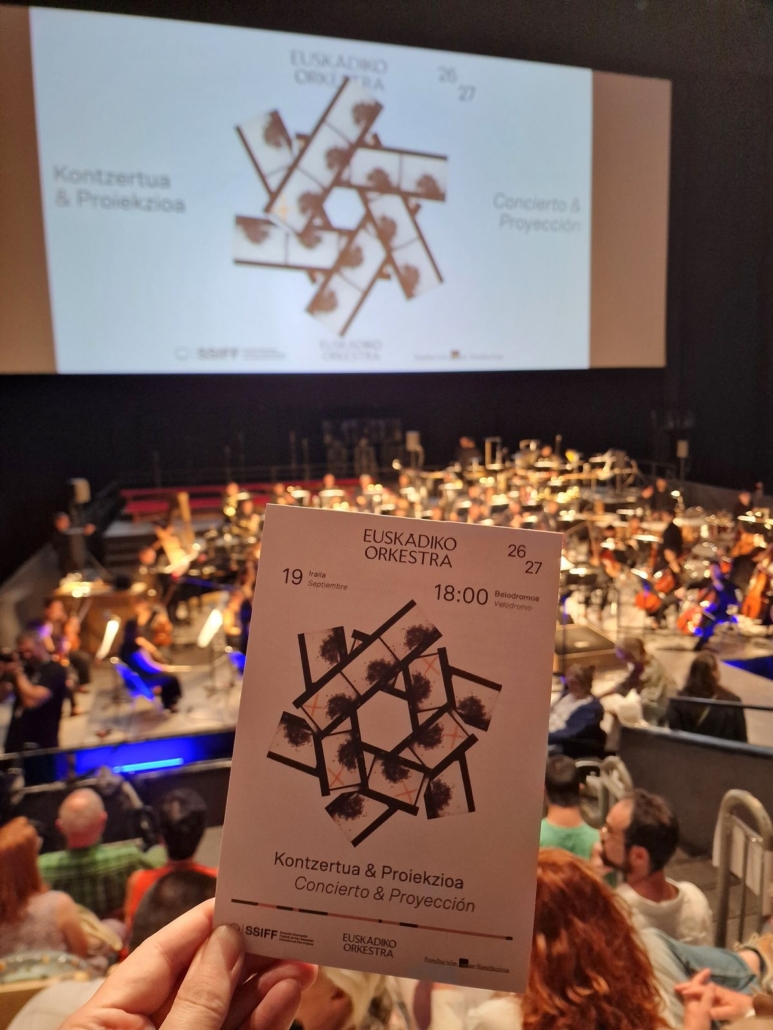
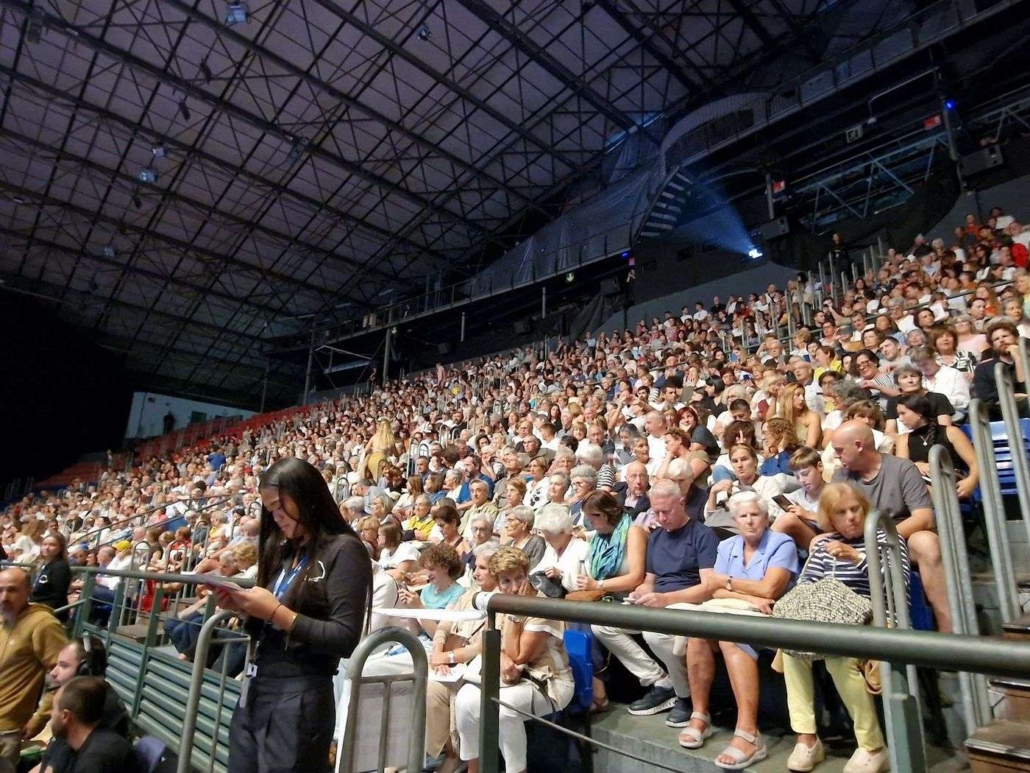
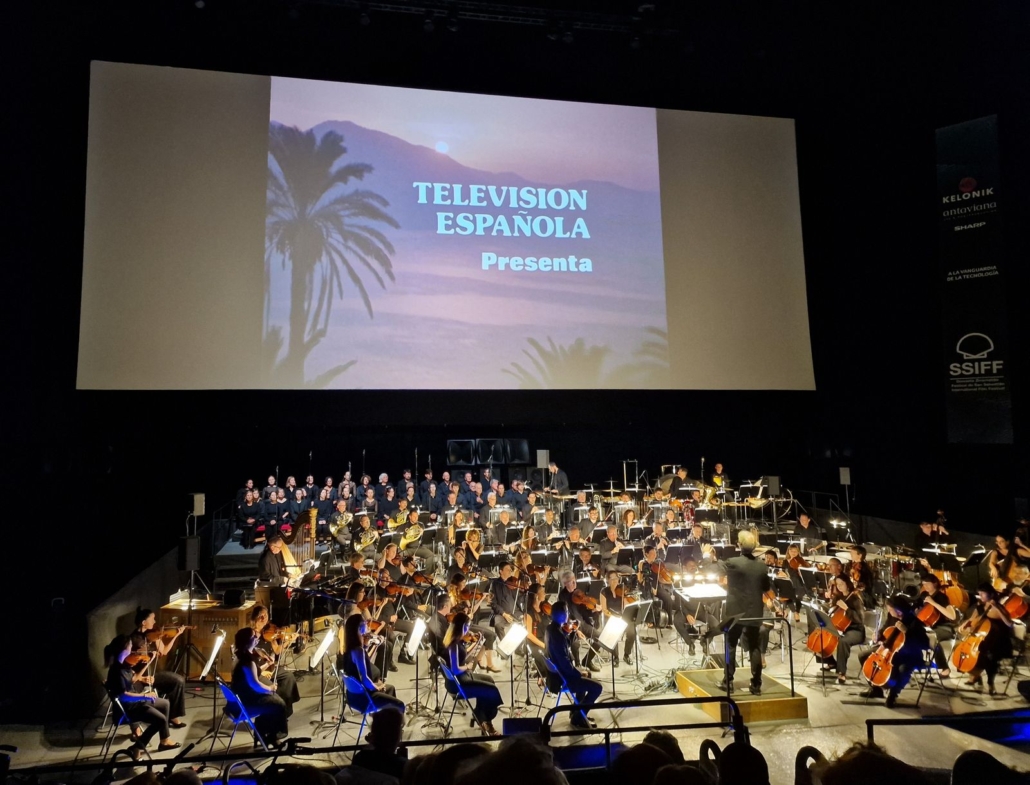
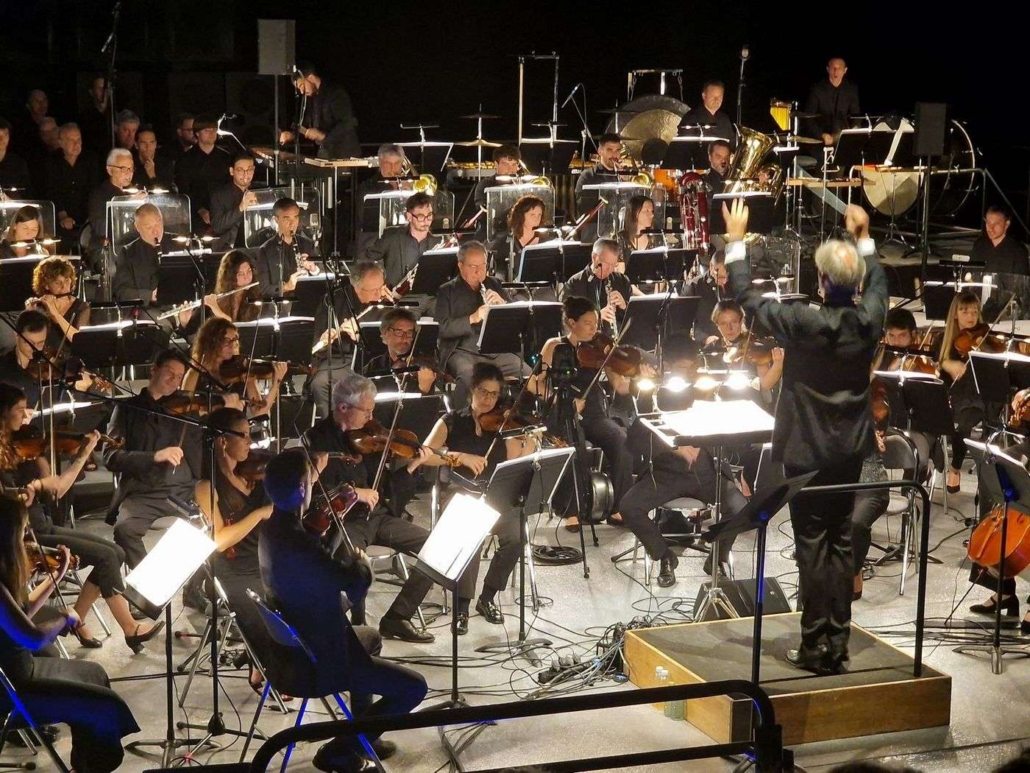
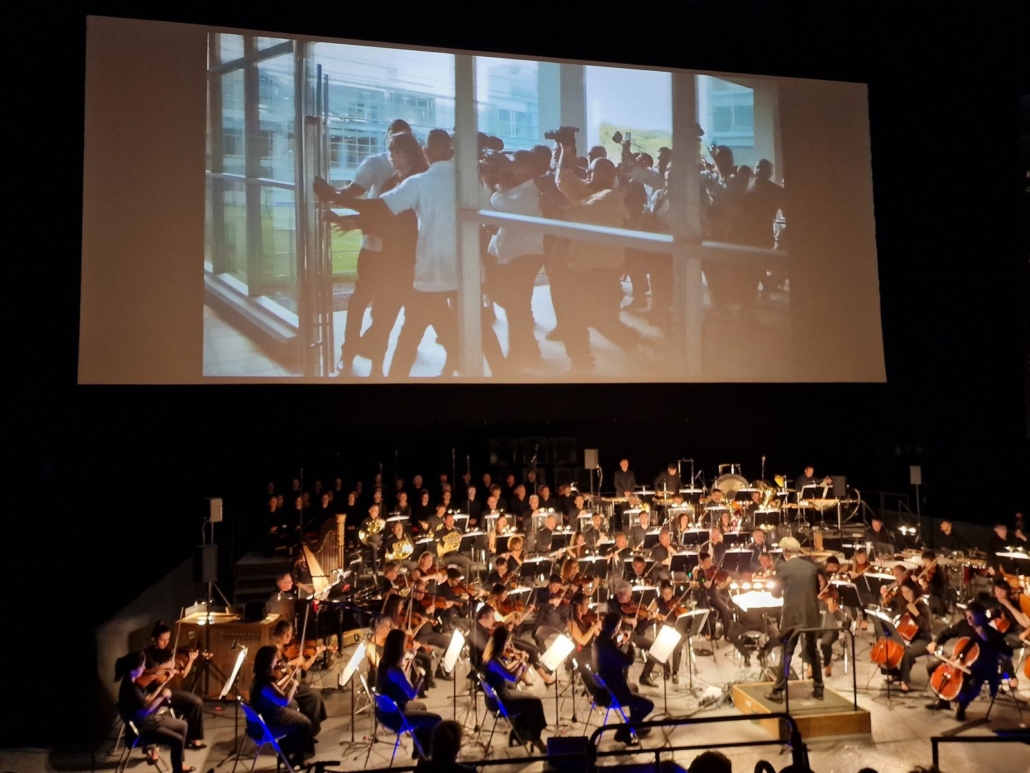
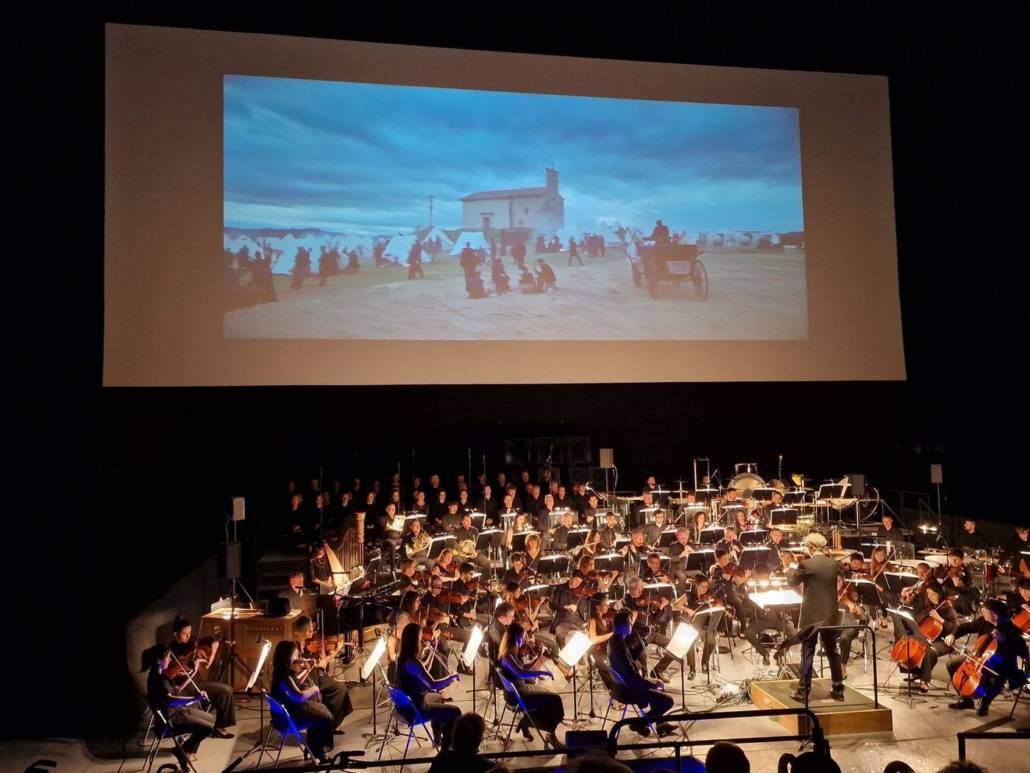
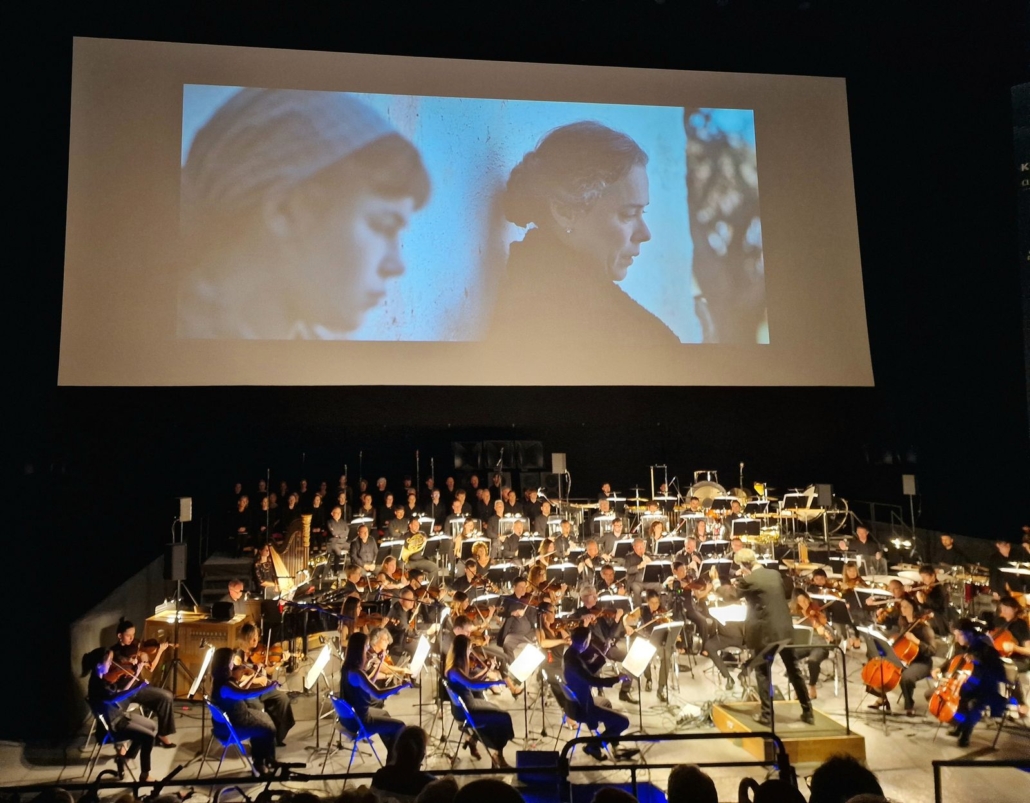
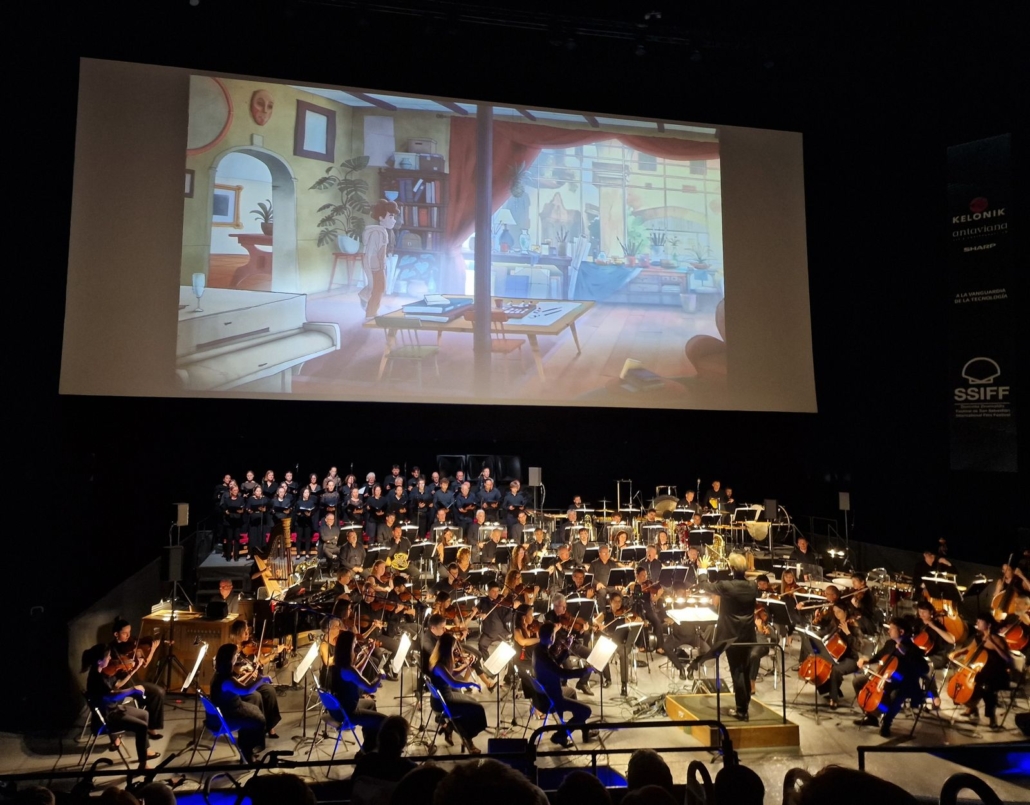
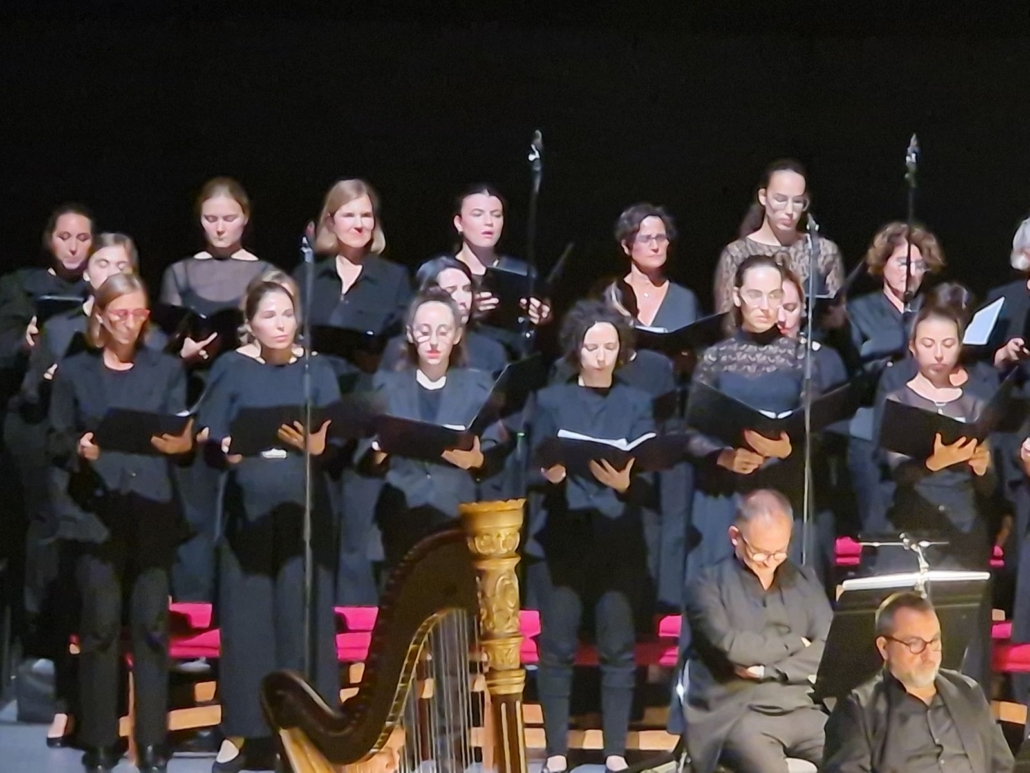
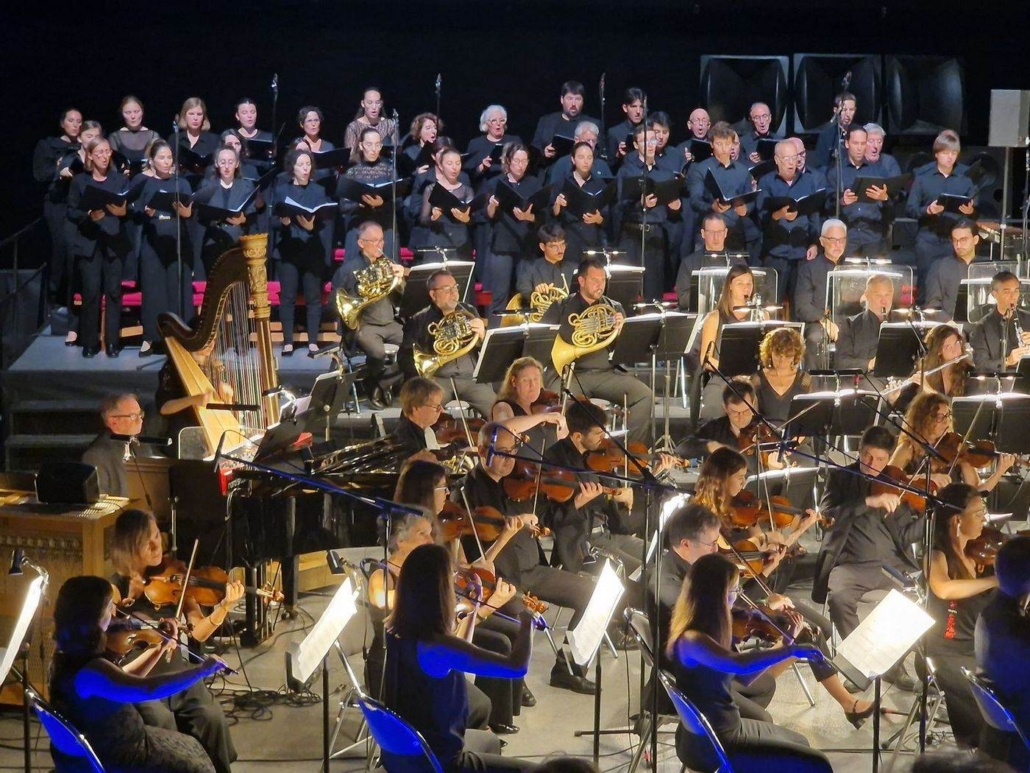
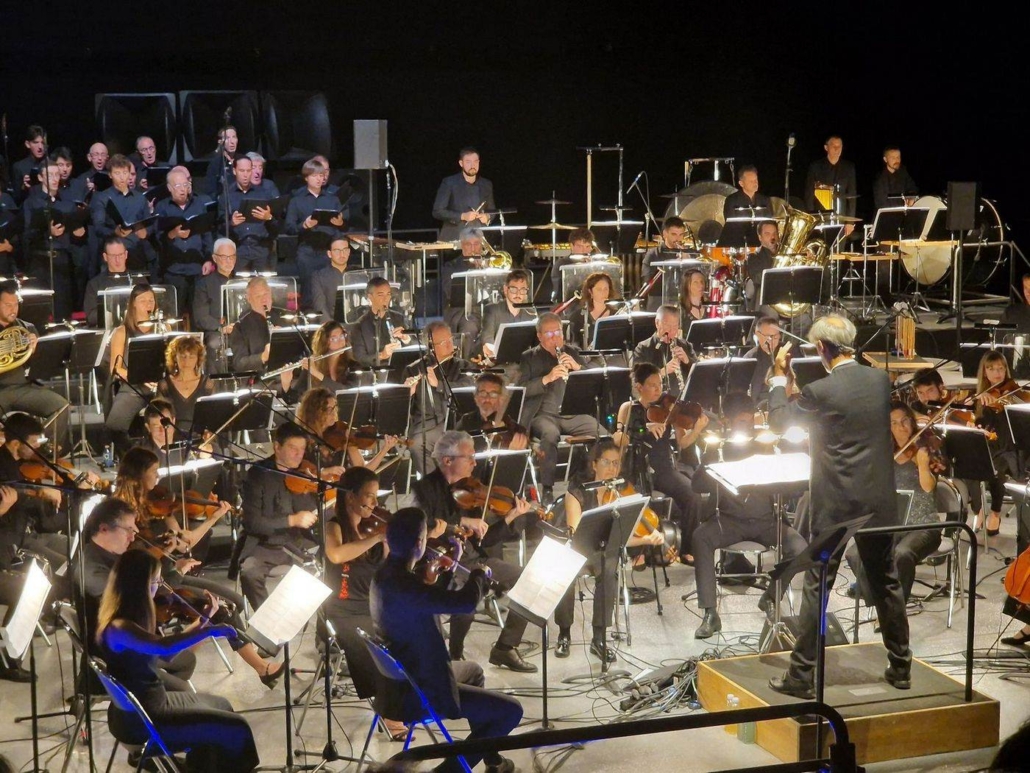
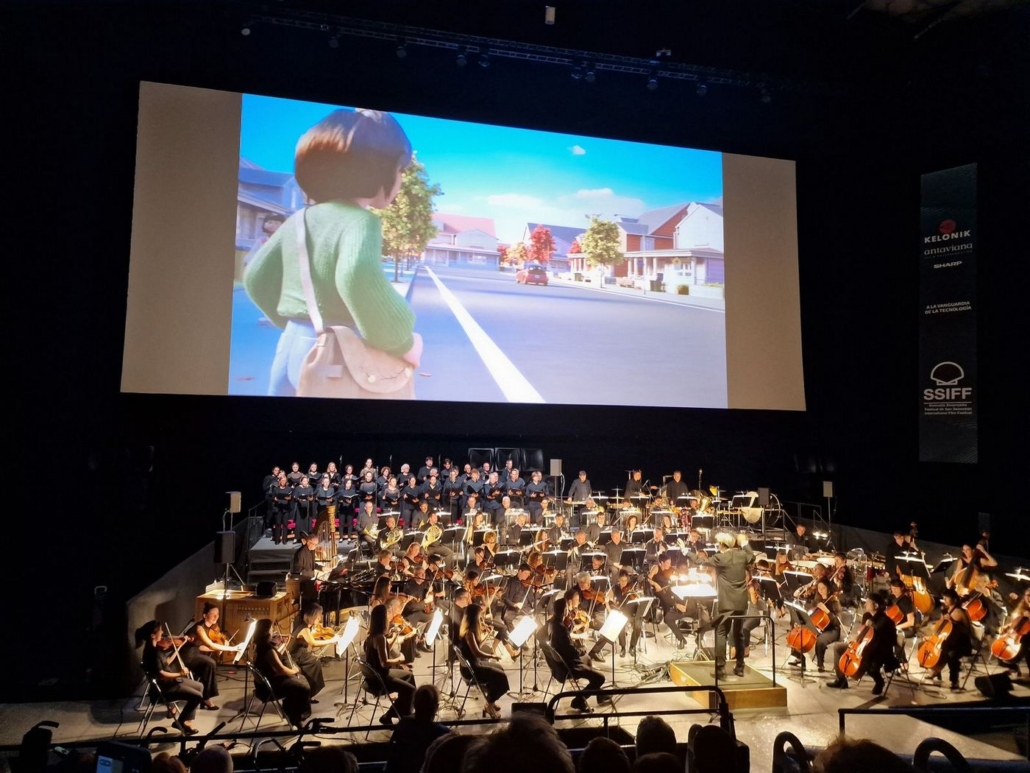
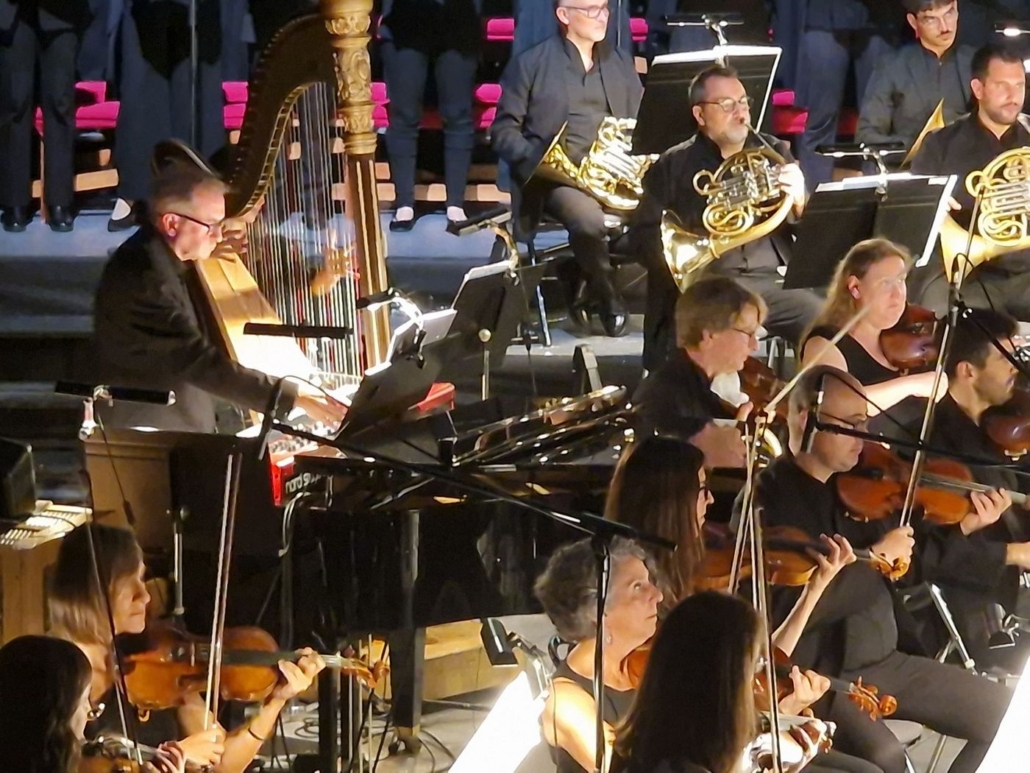
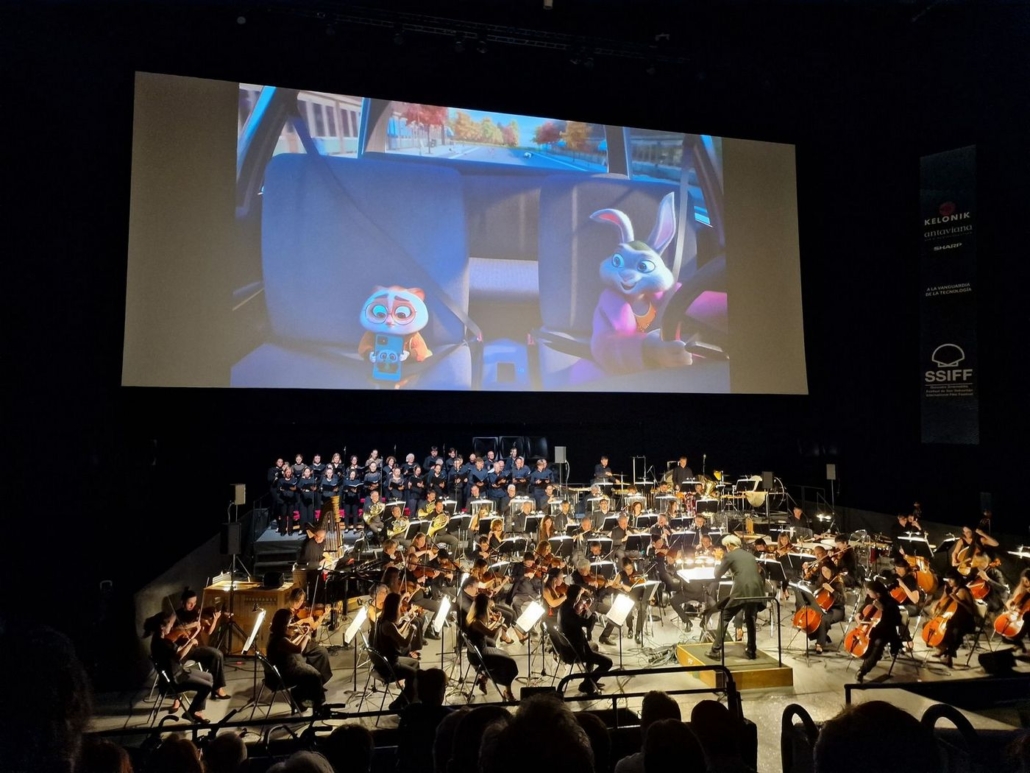
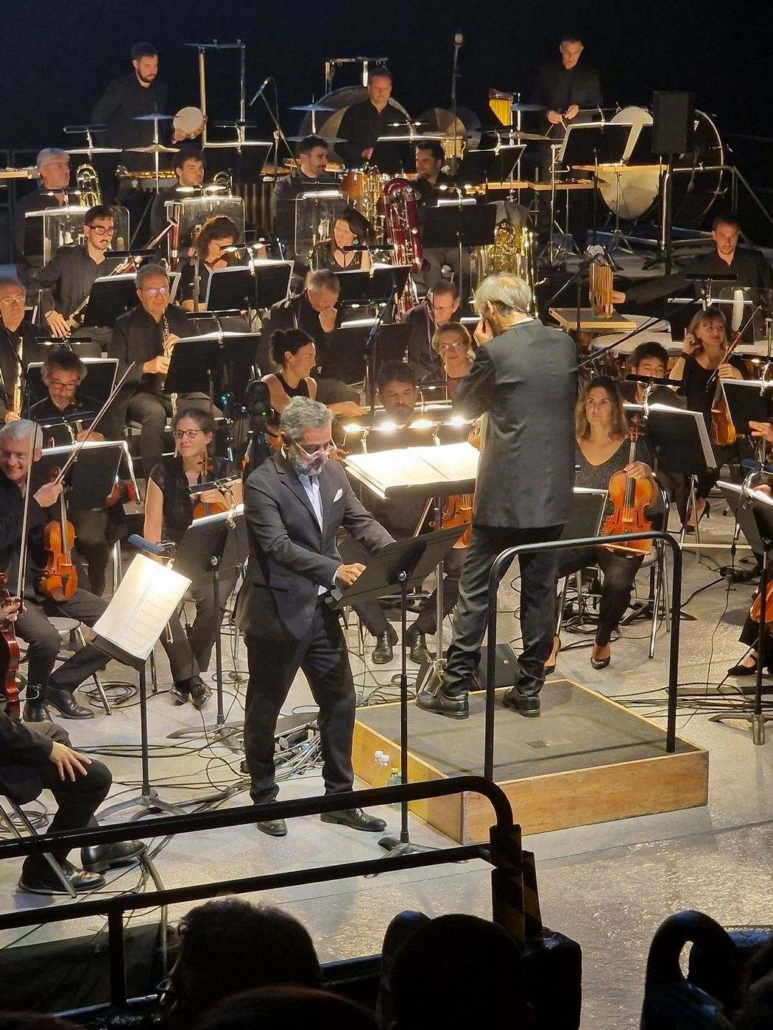
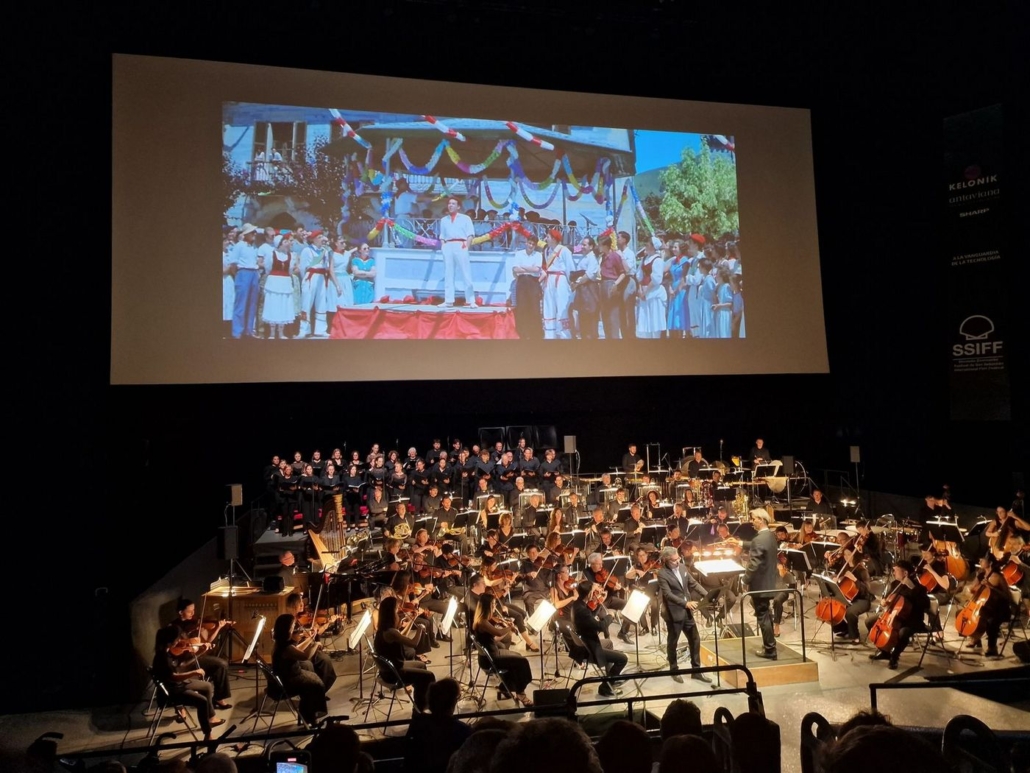
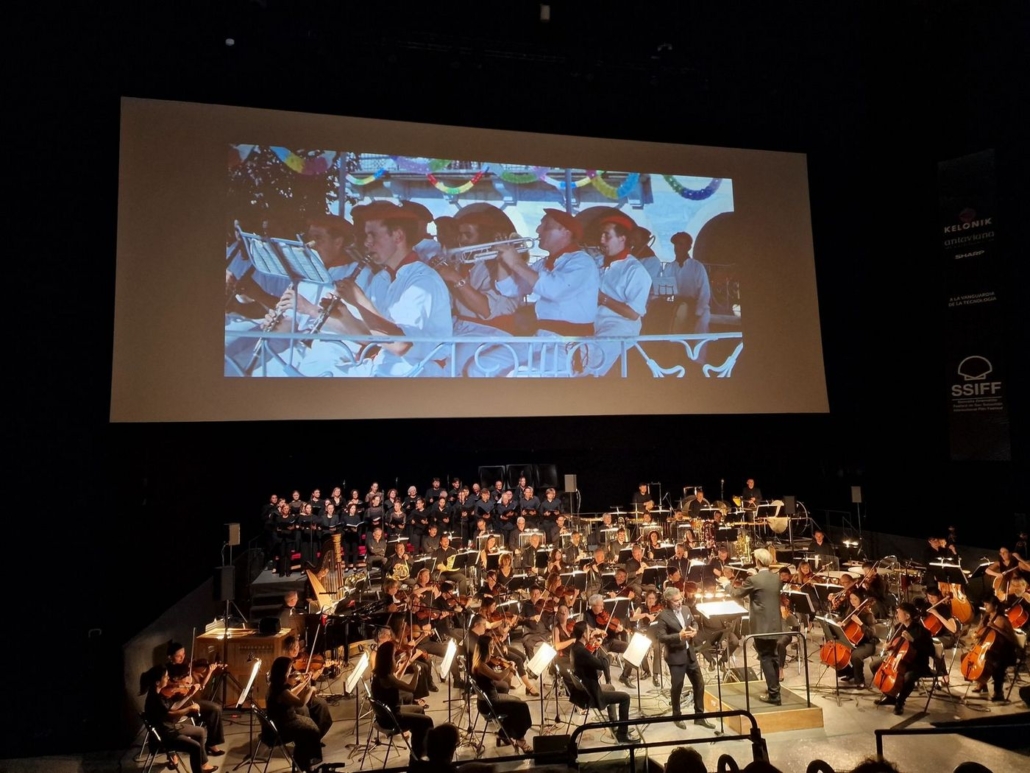
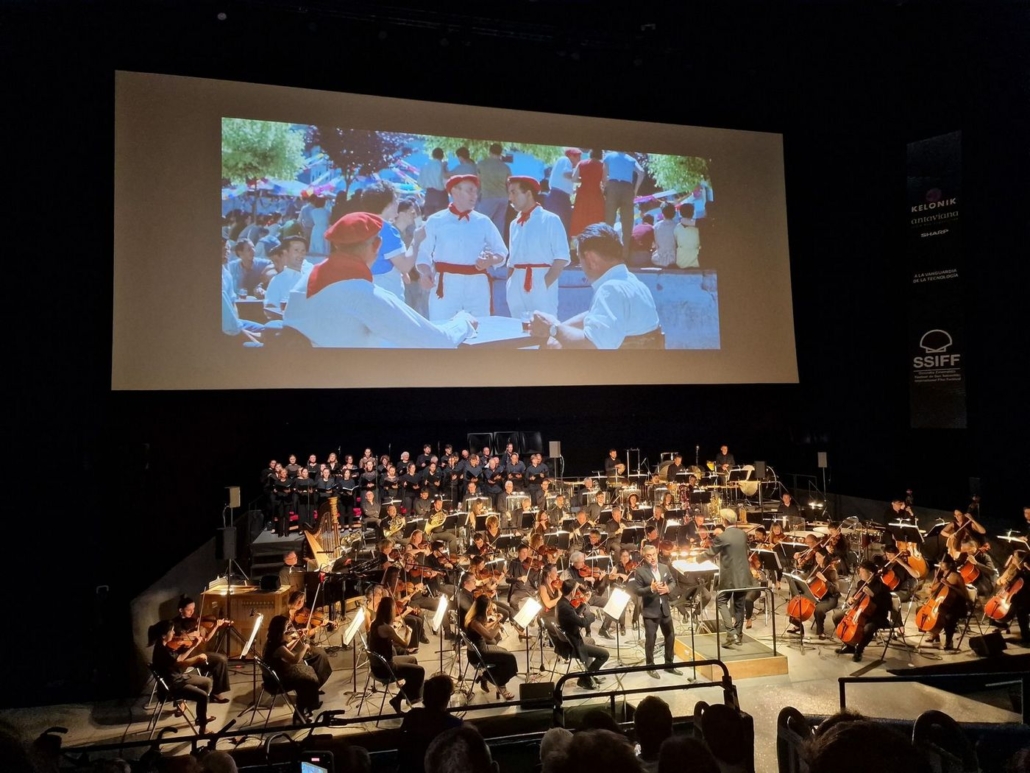
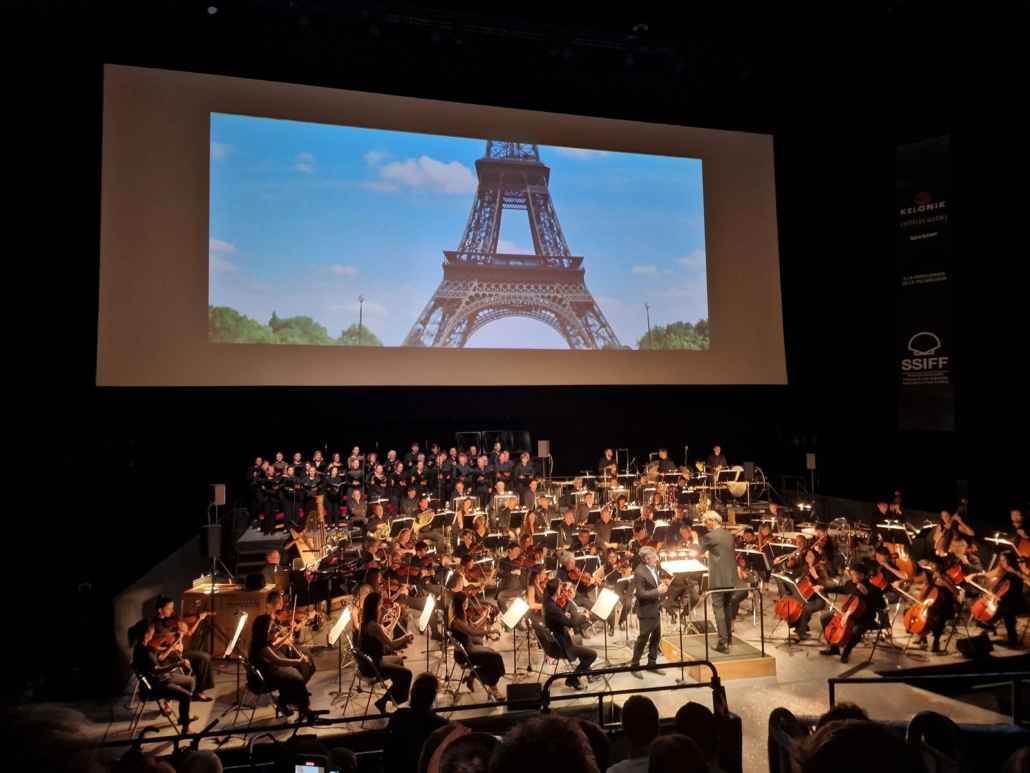
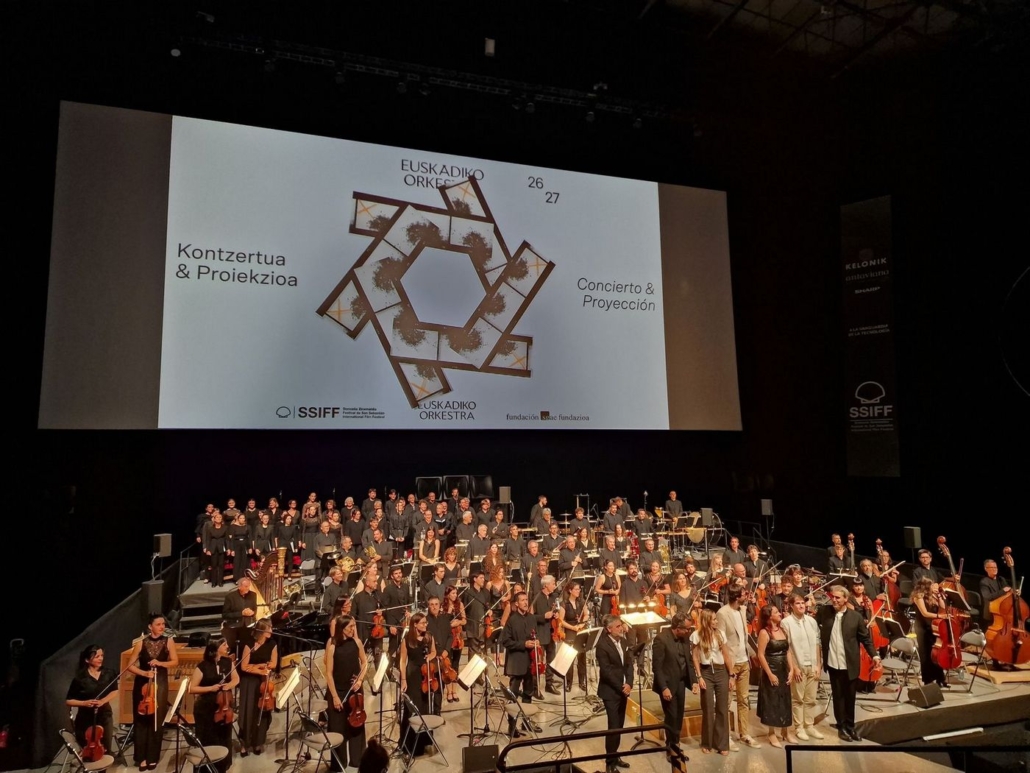
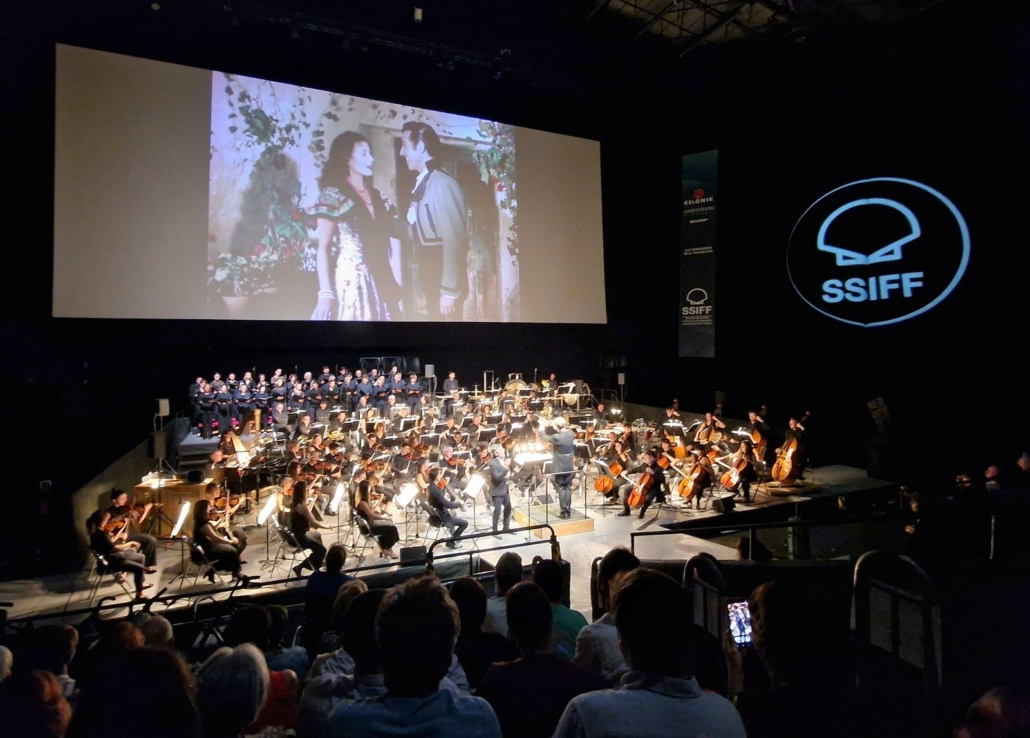
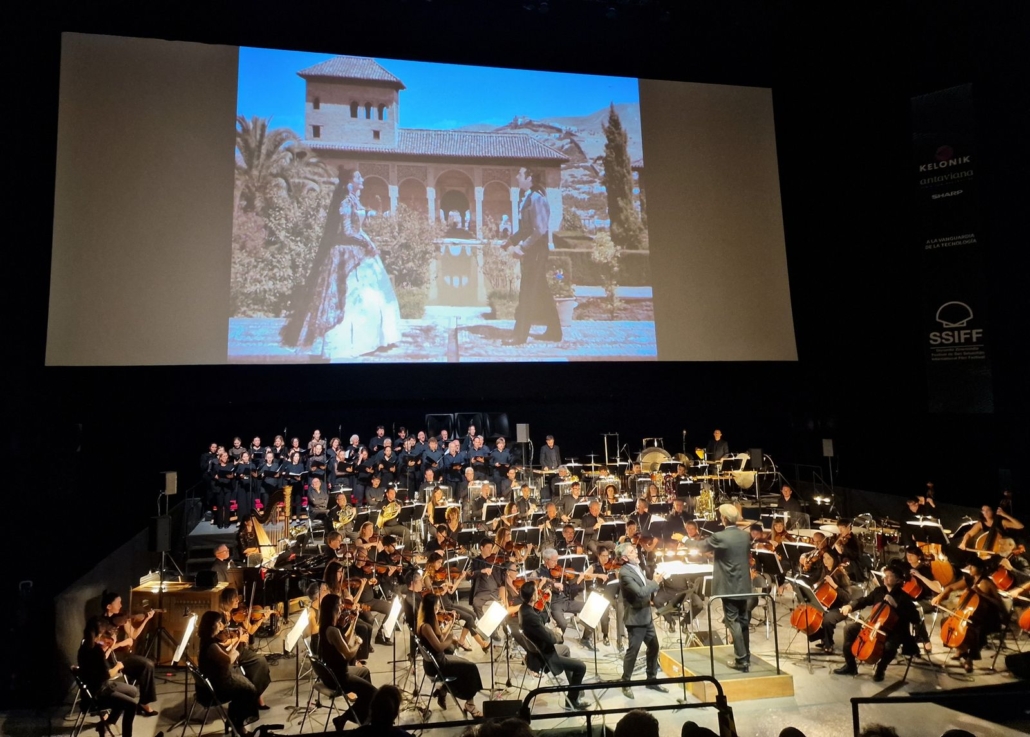
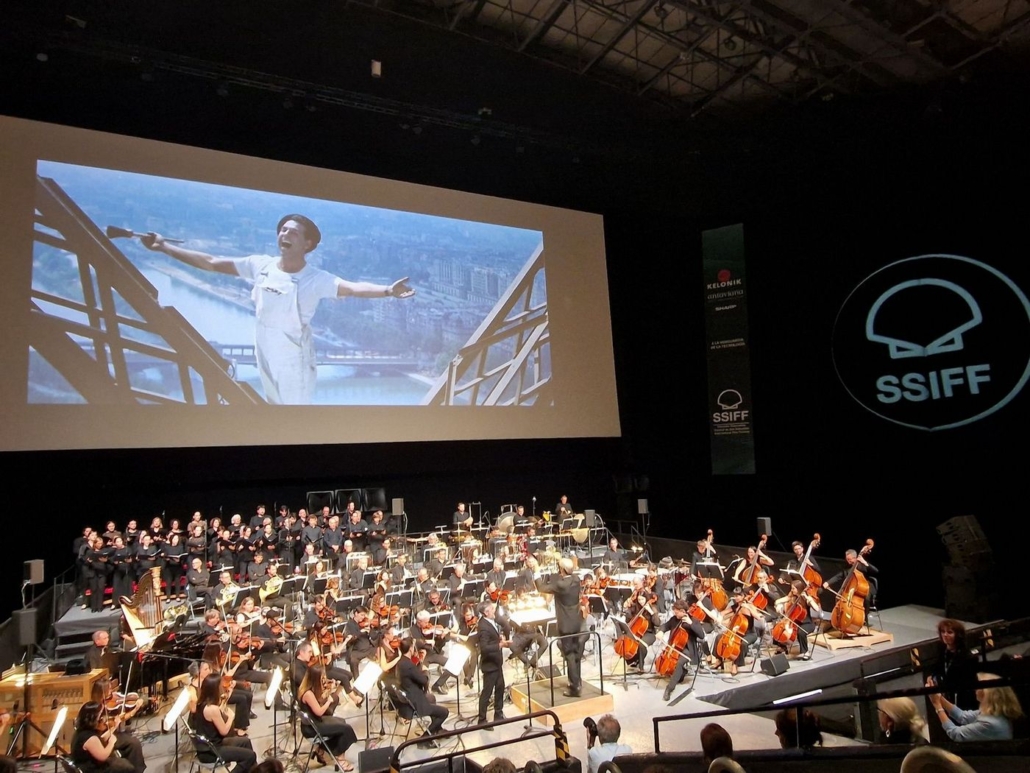
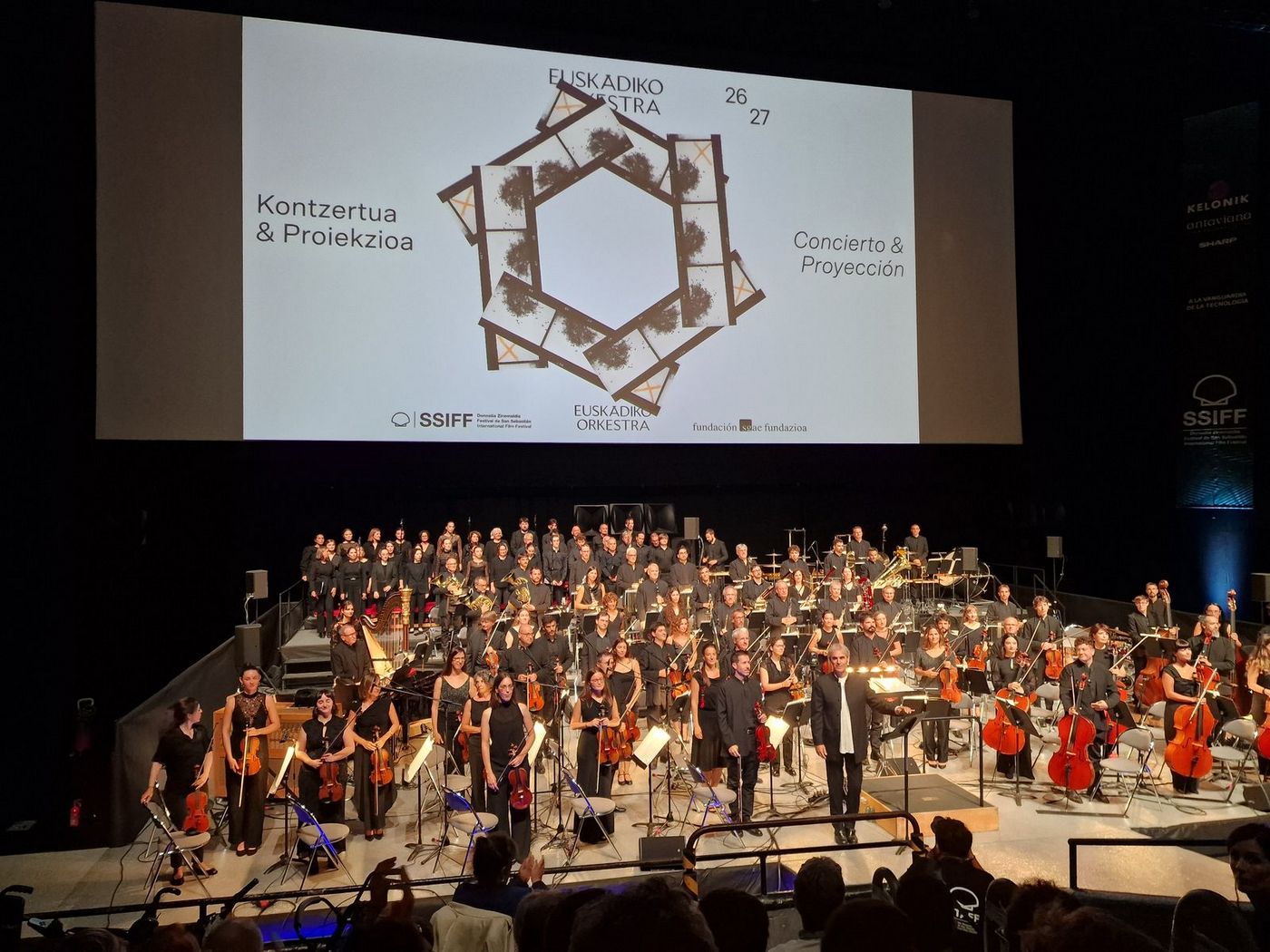
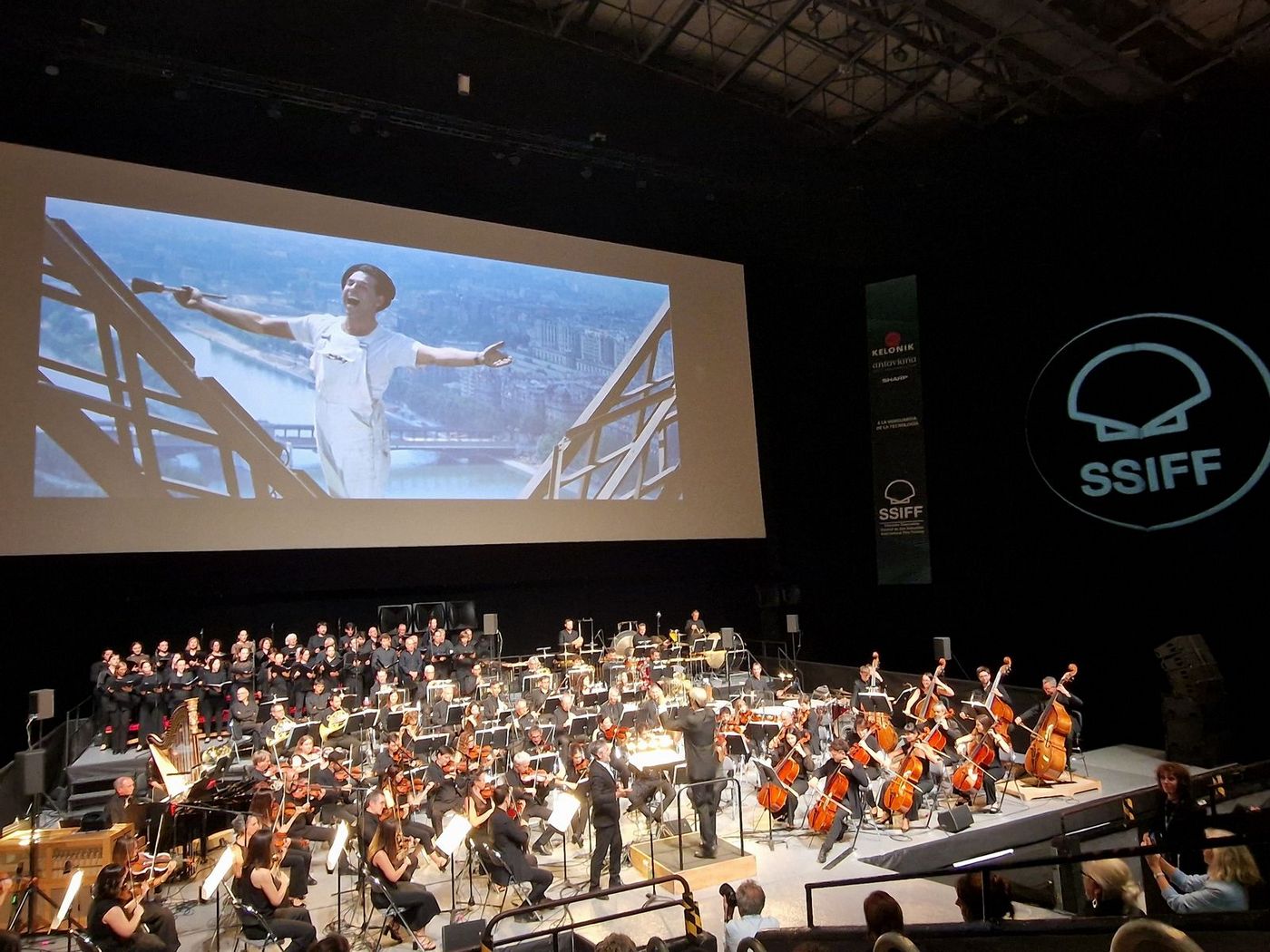
As in previous editions, the concert was made possible thanks to the collaboration between the San Sebastián Film Festival, the Euskadiko Orkestra and the Fundación SGAE. The orchestra was conducted by Juan José Ocón and was joined by the vocal support of the Orfeón Donostiarra. And, as the title of the event indicates, the performance of the music was accompanied by scenes from the films to which the musical pieces belonged. As has been the case for some years now, it took place at 18:00h with free entry by invitation, a fact that, without doubt, contributed to the stadium being completely full.
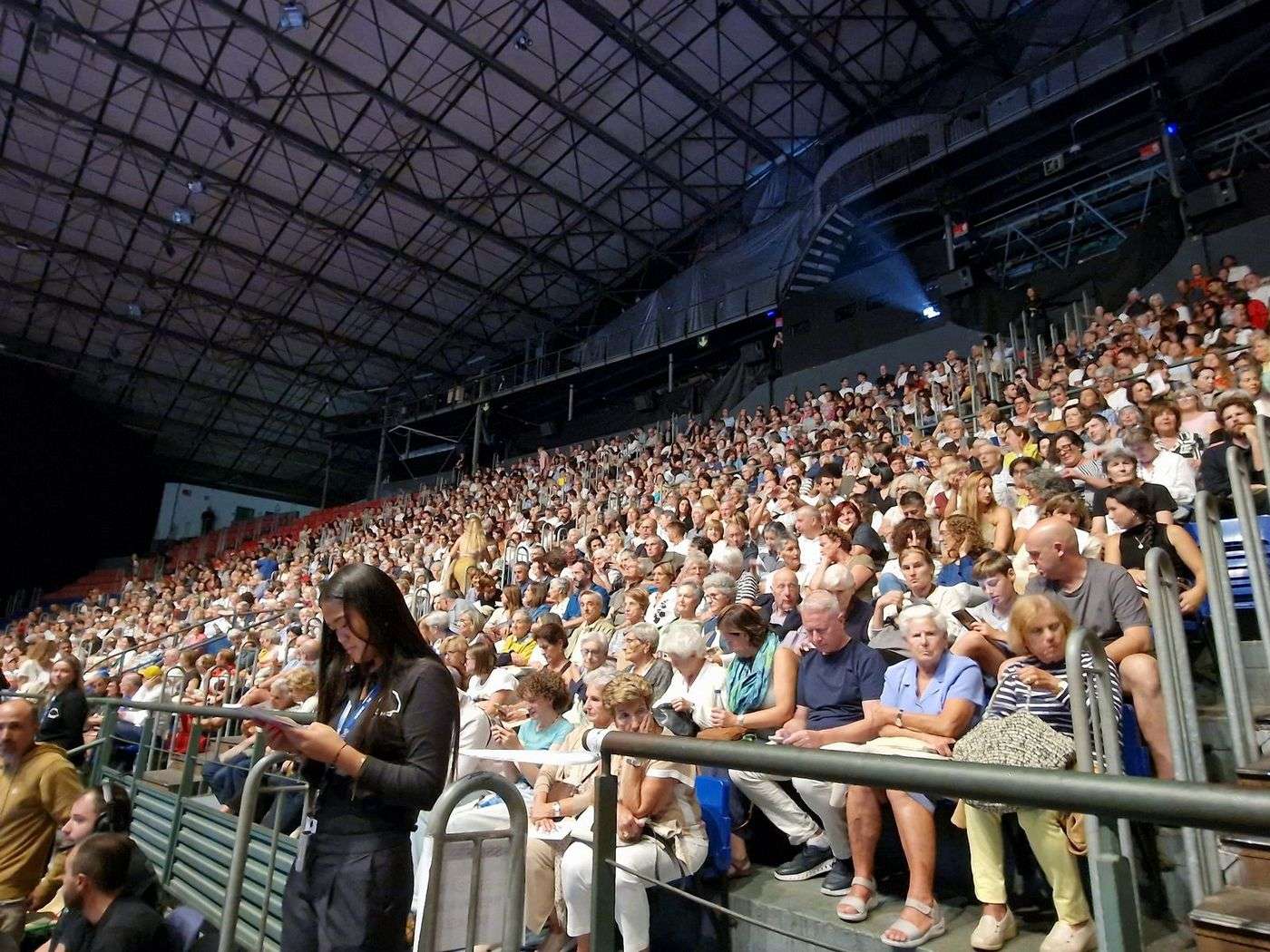
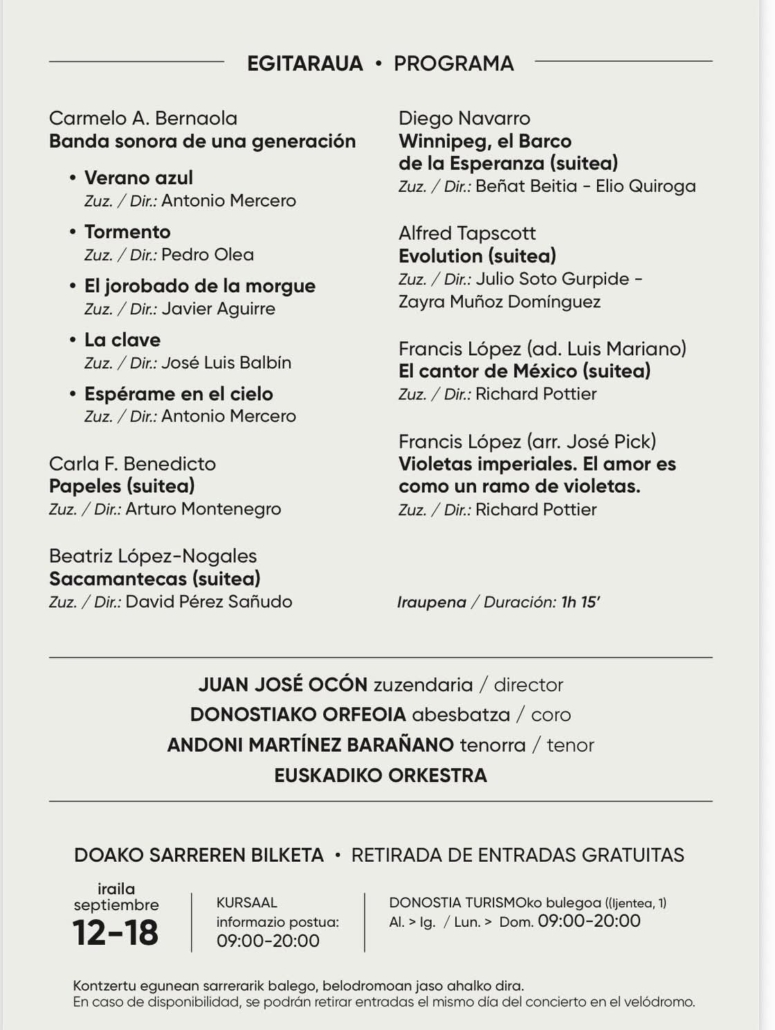
The concert programme was as follows:
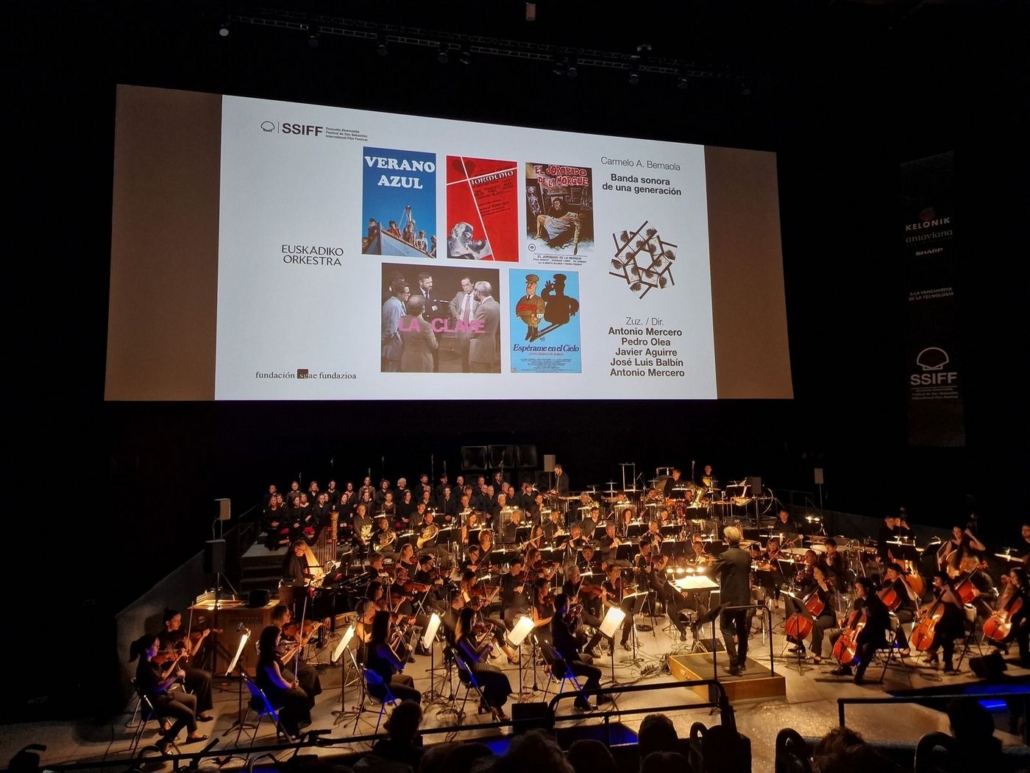
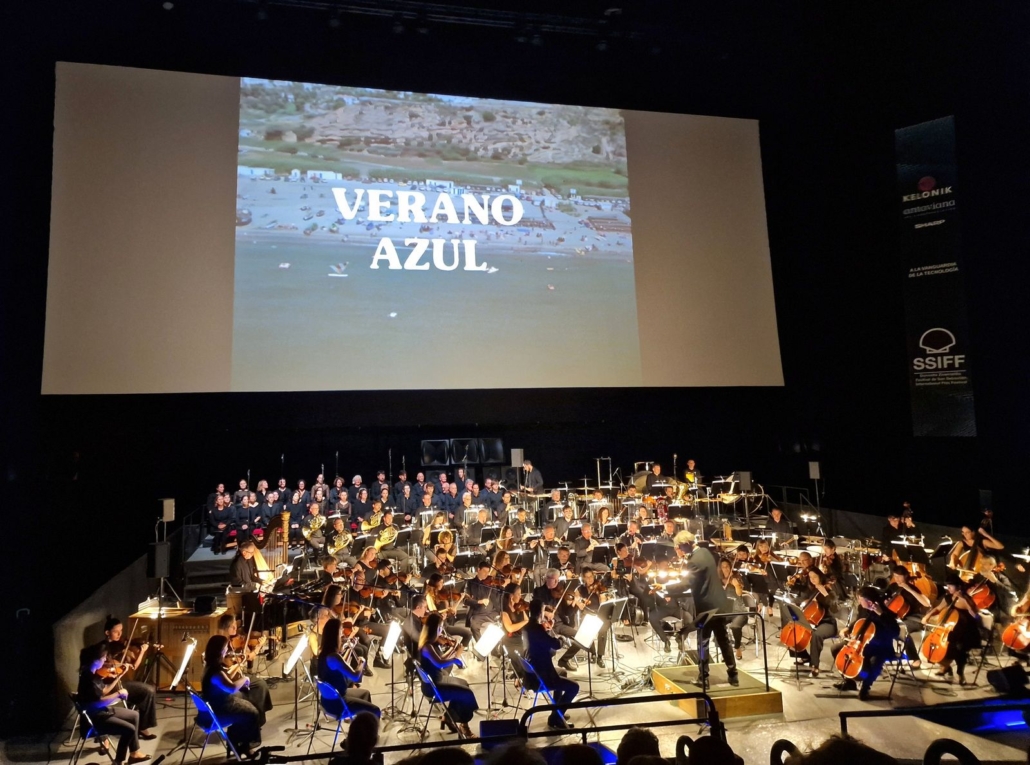
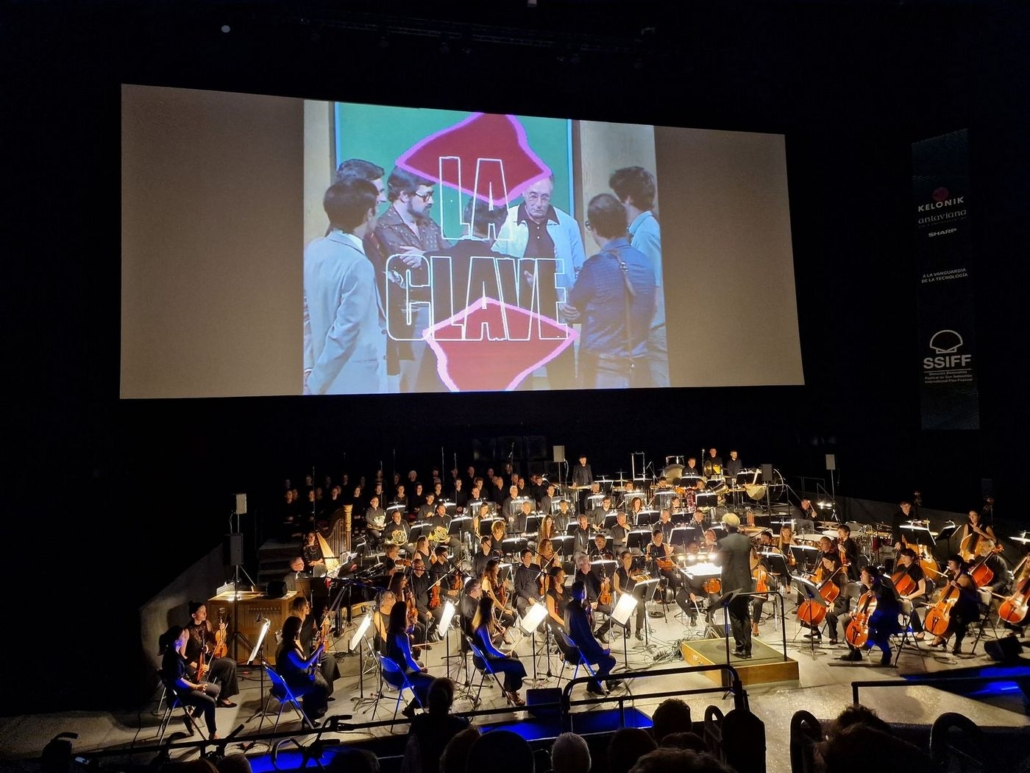
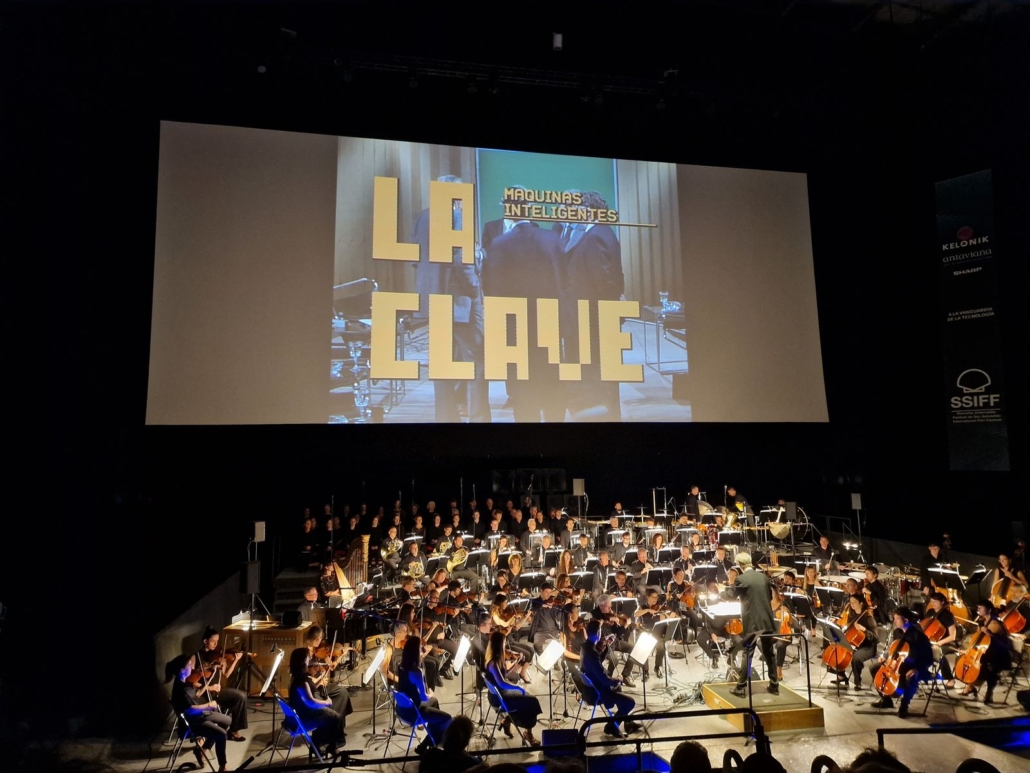
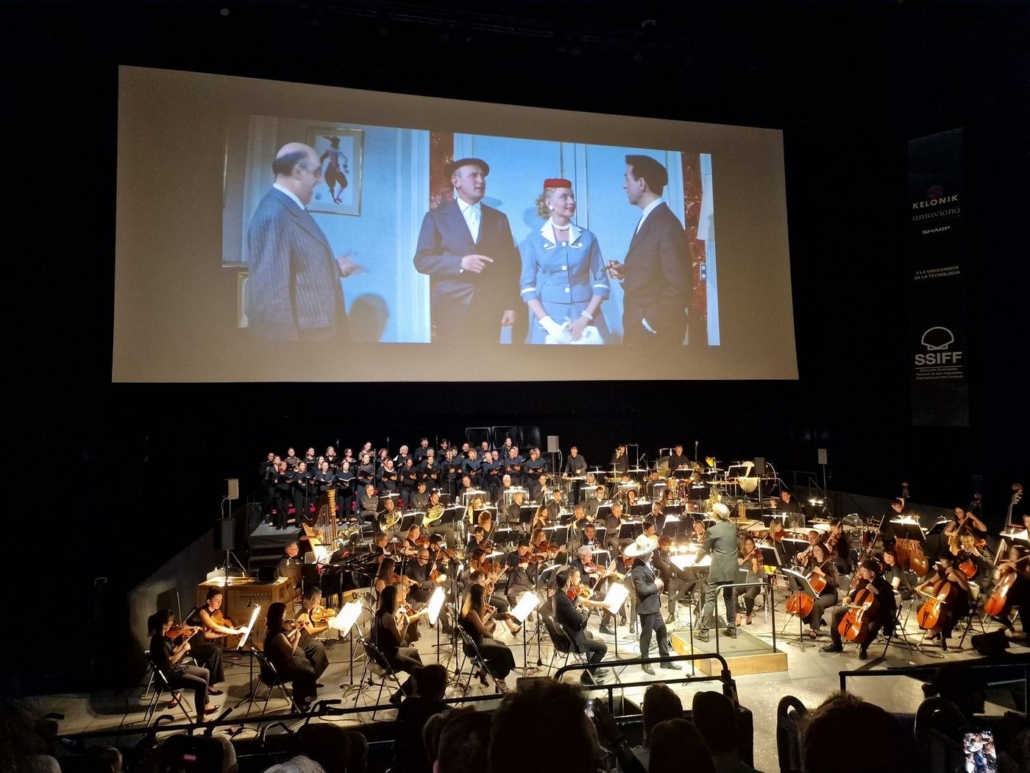
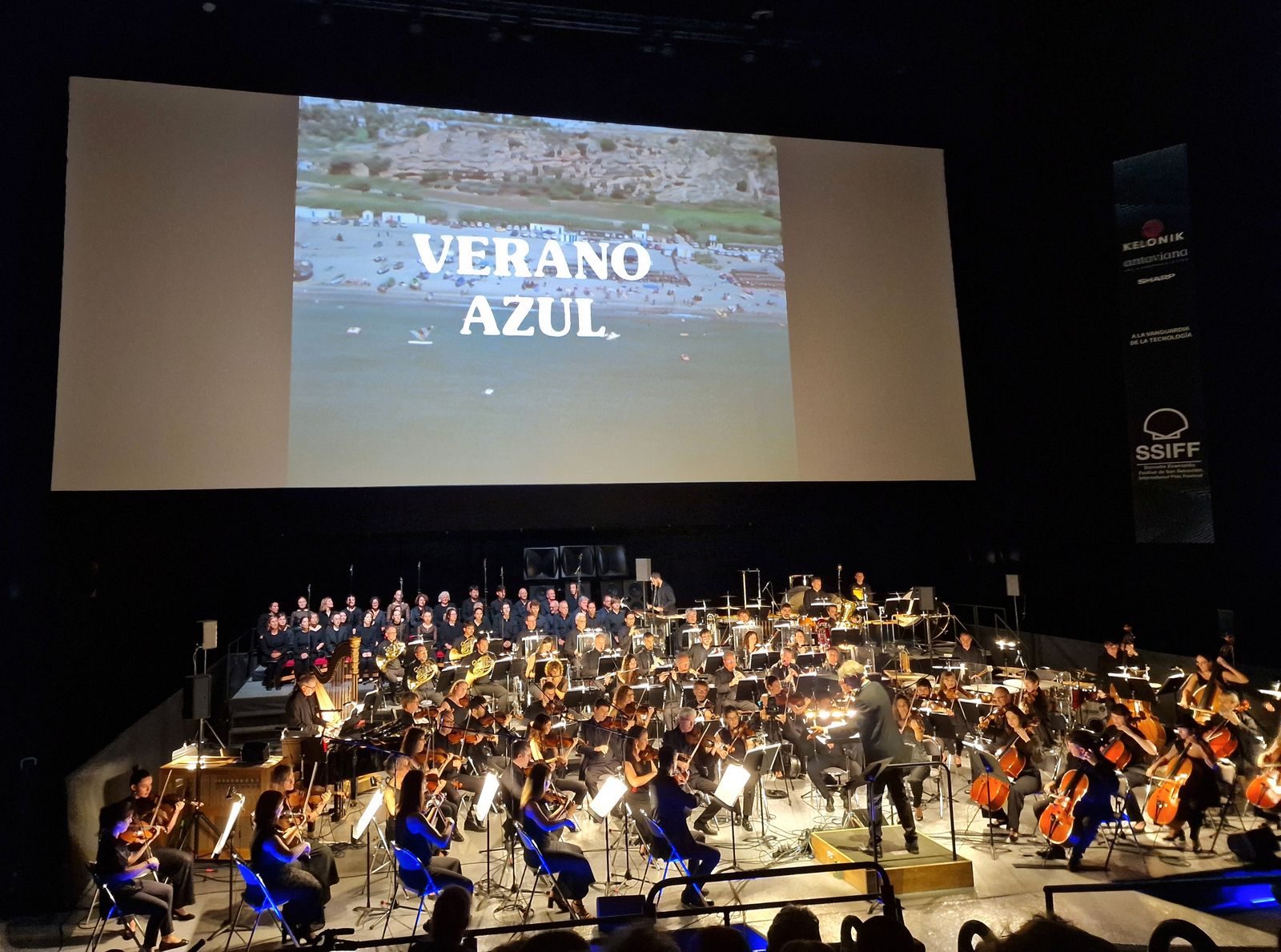
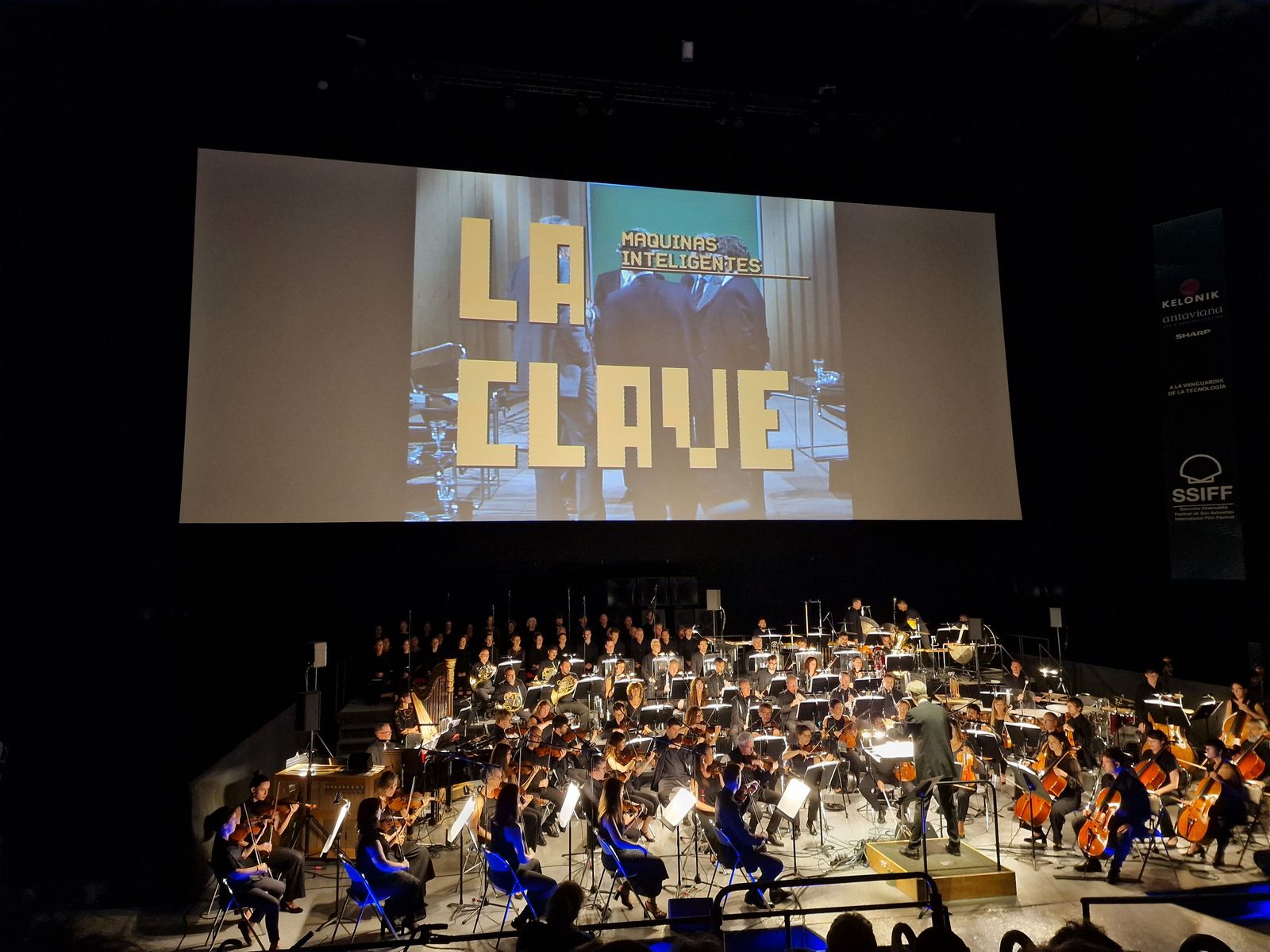
The concert opened by paying tribute to the classics. On this occasion, to composer Carmelo A. Bernaola, represented at the venue by his daughter and grandson. A suite featuring several of his most emblematic compositions was performed, beginning with the theme tune of the series Verano azul / Blue Summer. This production needs little introduction, and the music that accompanied its opening credits is a living memory for a generation who lived and felt every moment alongside a group of young friends during an unforgettable summer. Its legendary main theme is television history, and the only thing missing from the performance was the whistling that shaped the central tune. The musical selection continued with other, less widely remembered compositions by the composer, but equally noteworthy. This included a fragment of his score for Tormento / Torment, directed by Pedro Olea in 1974 and based on a work by Benito Pérez Galdós. This was followed by El jorobado de la Morgue, a horror production from 1972 starring Paul Naschy, with notes of a rather comic tone that contrasted with the genre of the film to which the projected images belonged. Then came a musical selection composed for La clave, the classic debate programme presented by José Luis Balbín in the 1970s. The selection then closed with a few chosen tunes from Espérame en el Cielo / Wait for Me in Heaven, the 1988 Antonio Mercero film, where a decidedly comic tone prevailed. To close the block, what better than a reprise of the immortal Verano azul.
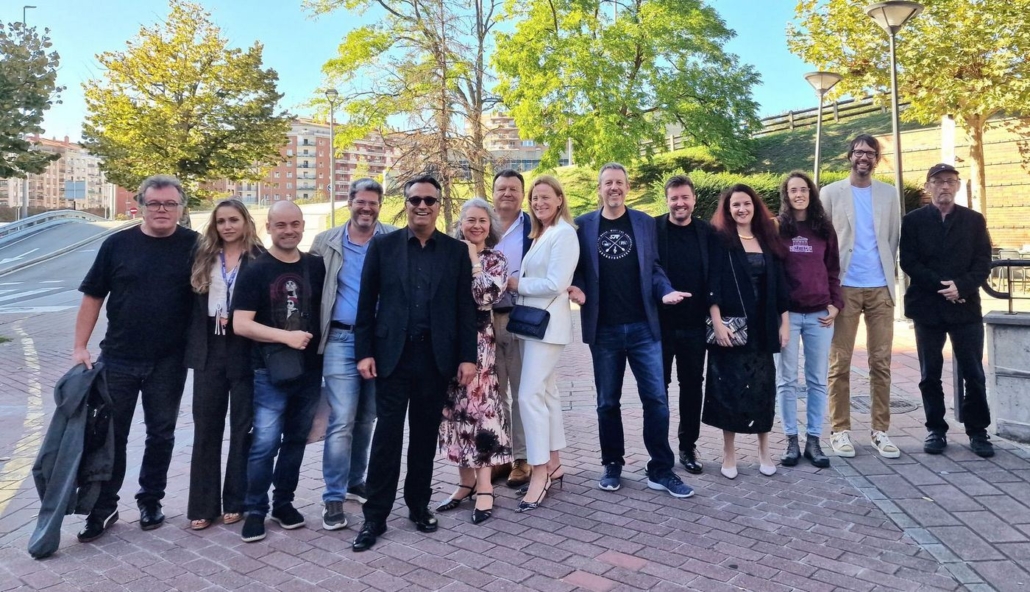
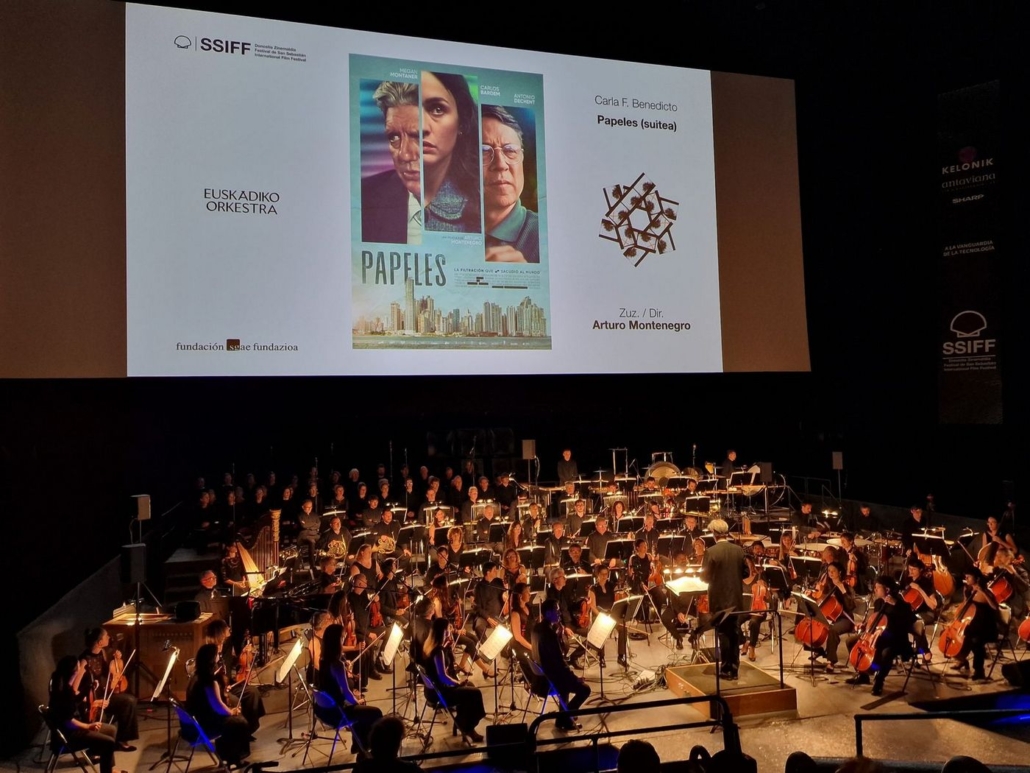
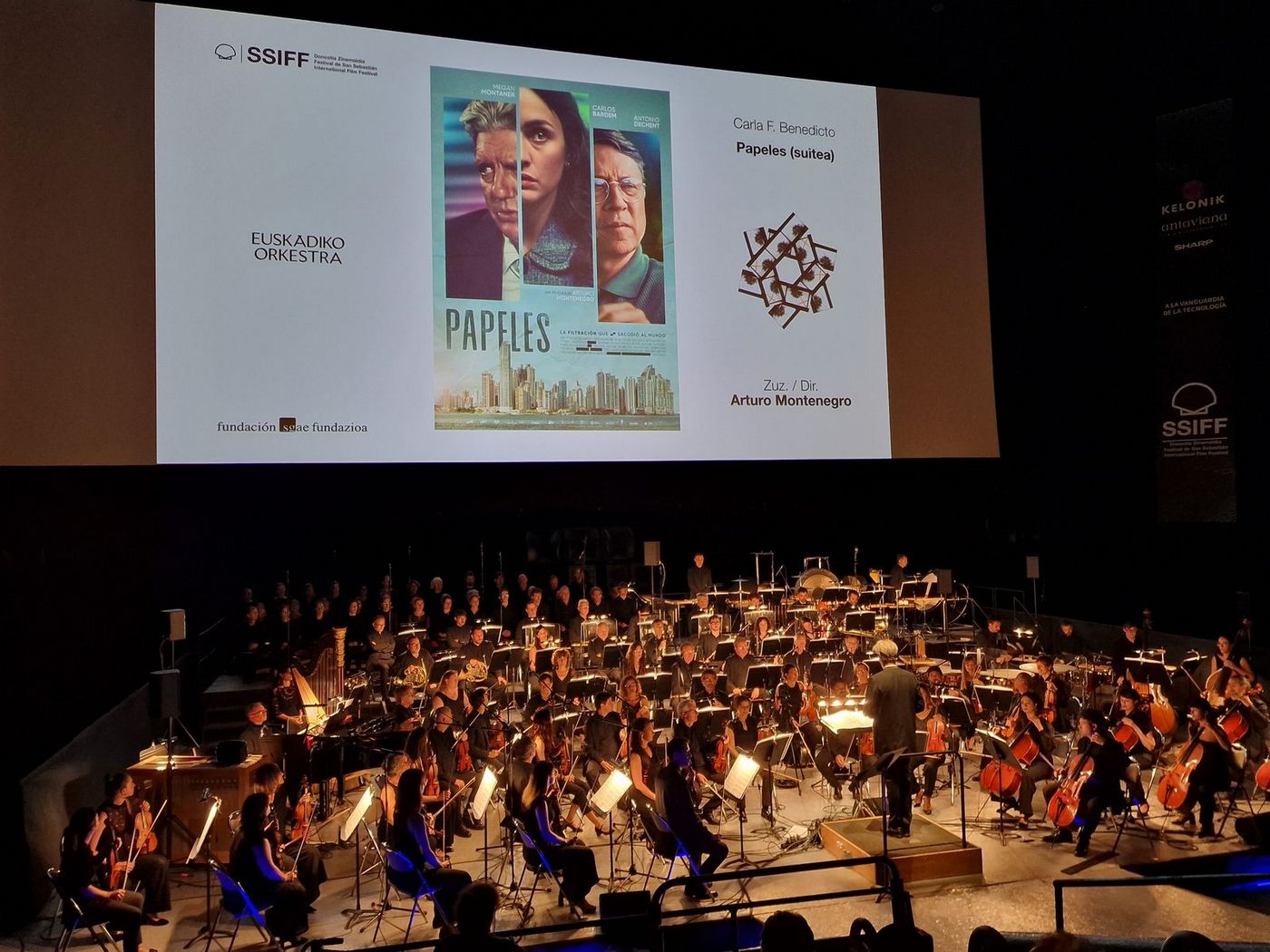
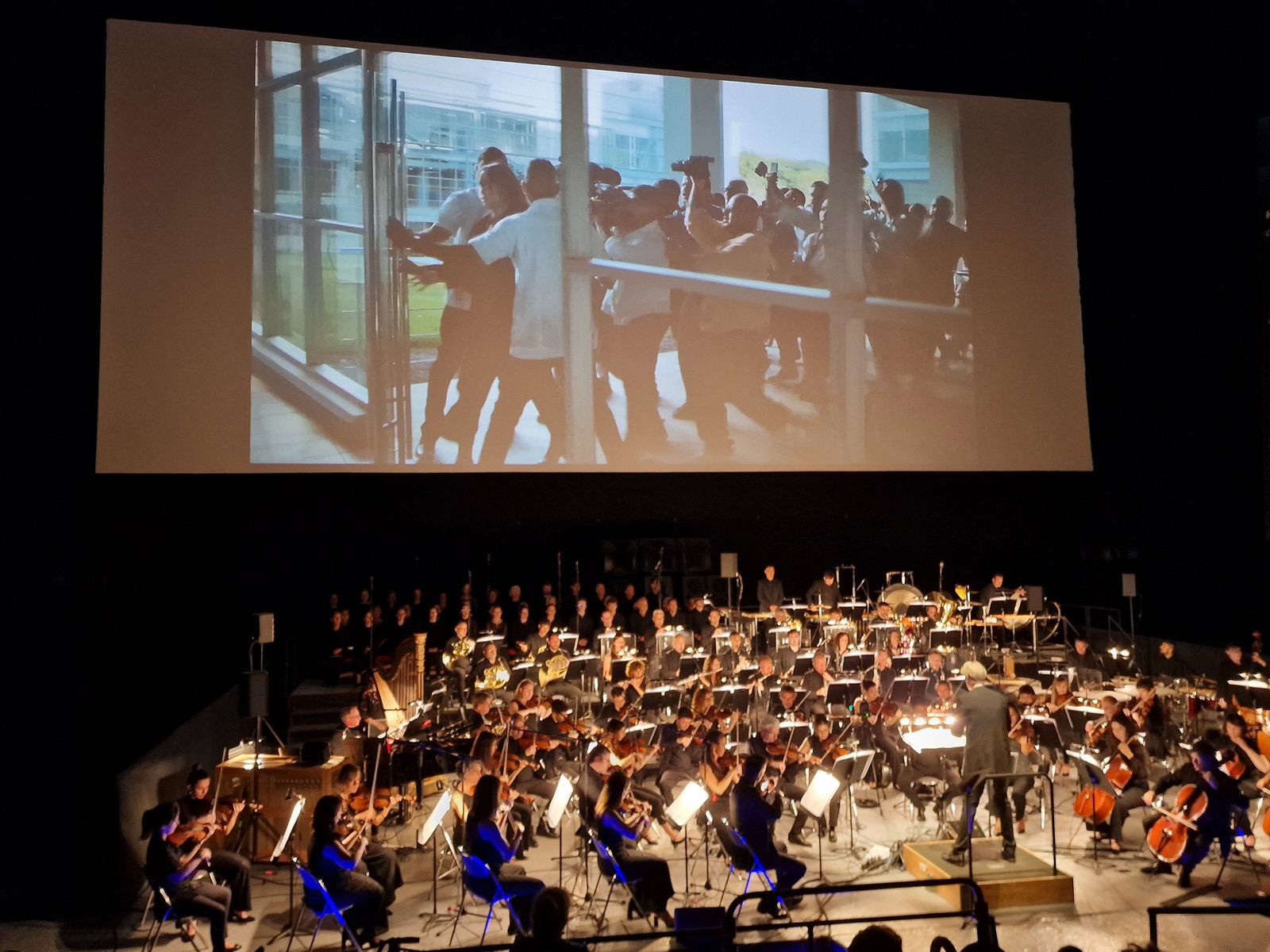
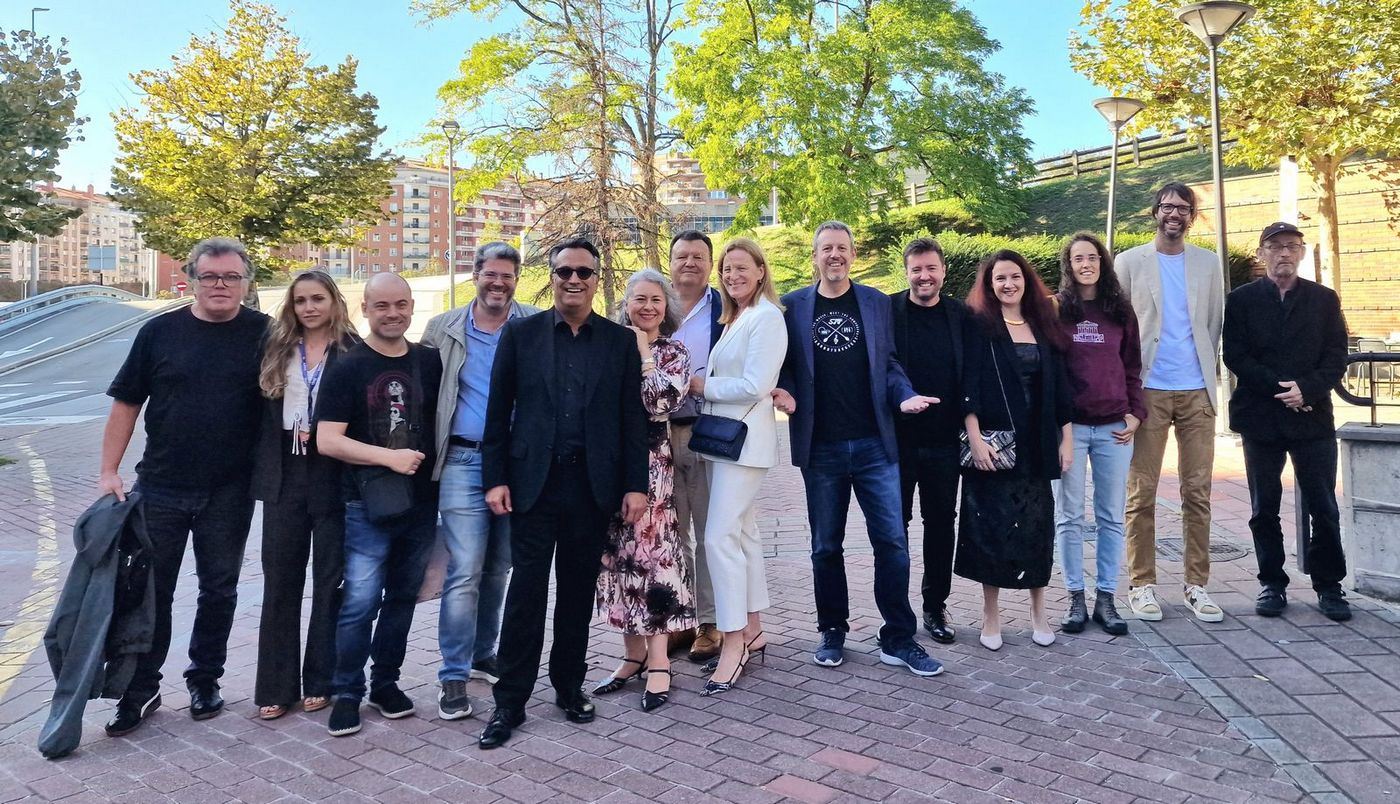
We move on to the selection of current composers, a quartet of musicians present at the event who had already been duly introduced to the audience at the start of the concert. These were Carla F. Benedicto, Beatriz López-Nogales, Diego Navarro and Alfred Tapscott. The first of this quartet of musicians, Carla F. Benedicto opened the block with her score for the film Papeles, from 2025, whose plot centered on the well-remembered case known as “the Panama Papers”. The suite presented was an extensive and very well-thought-out selection, in that it offered the full range of tones in the composition for the film. That is, powerful, tension-filled sequences, others more emotional, others more measured… A work that pushed the orchestra to the full, while not leaving aside occasional uses of electronics. An excellent representation of the composer’s work for the film.
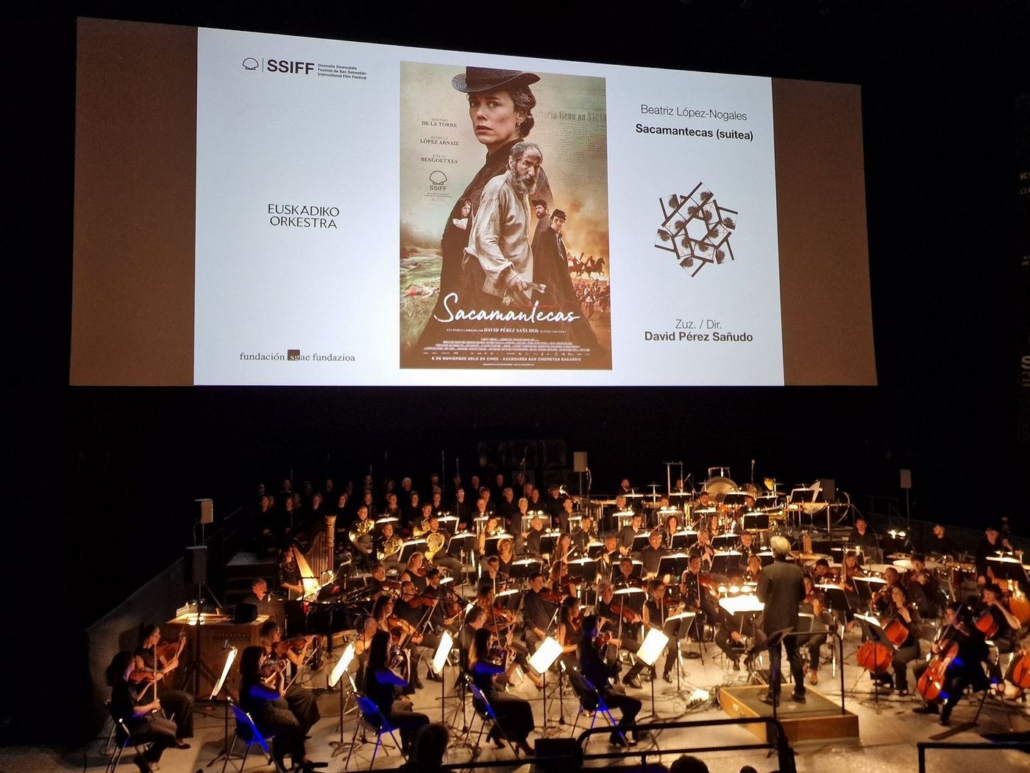
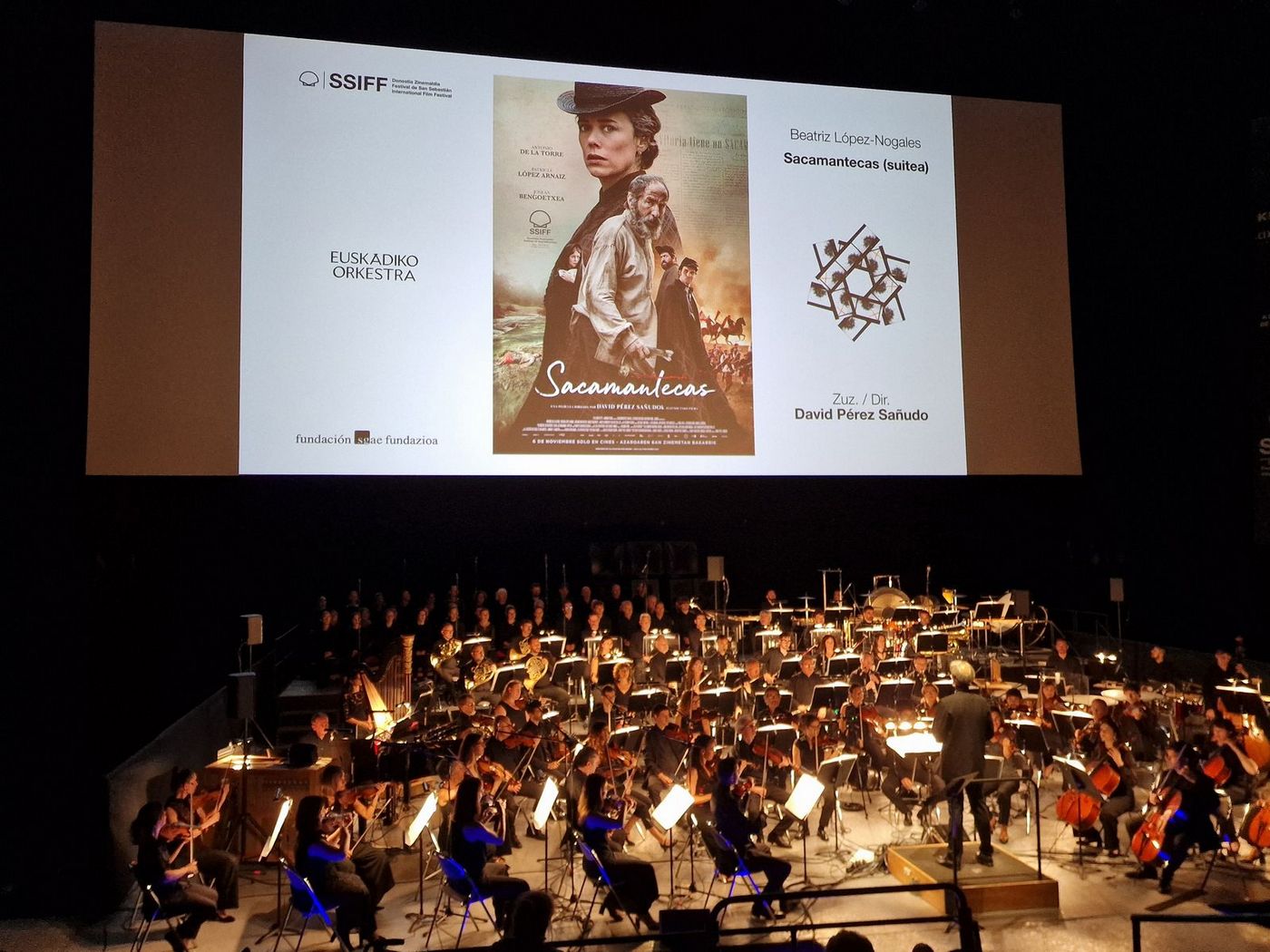
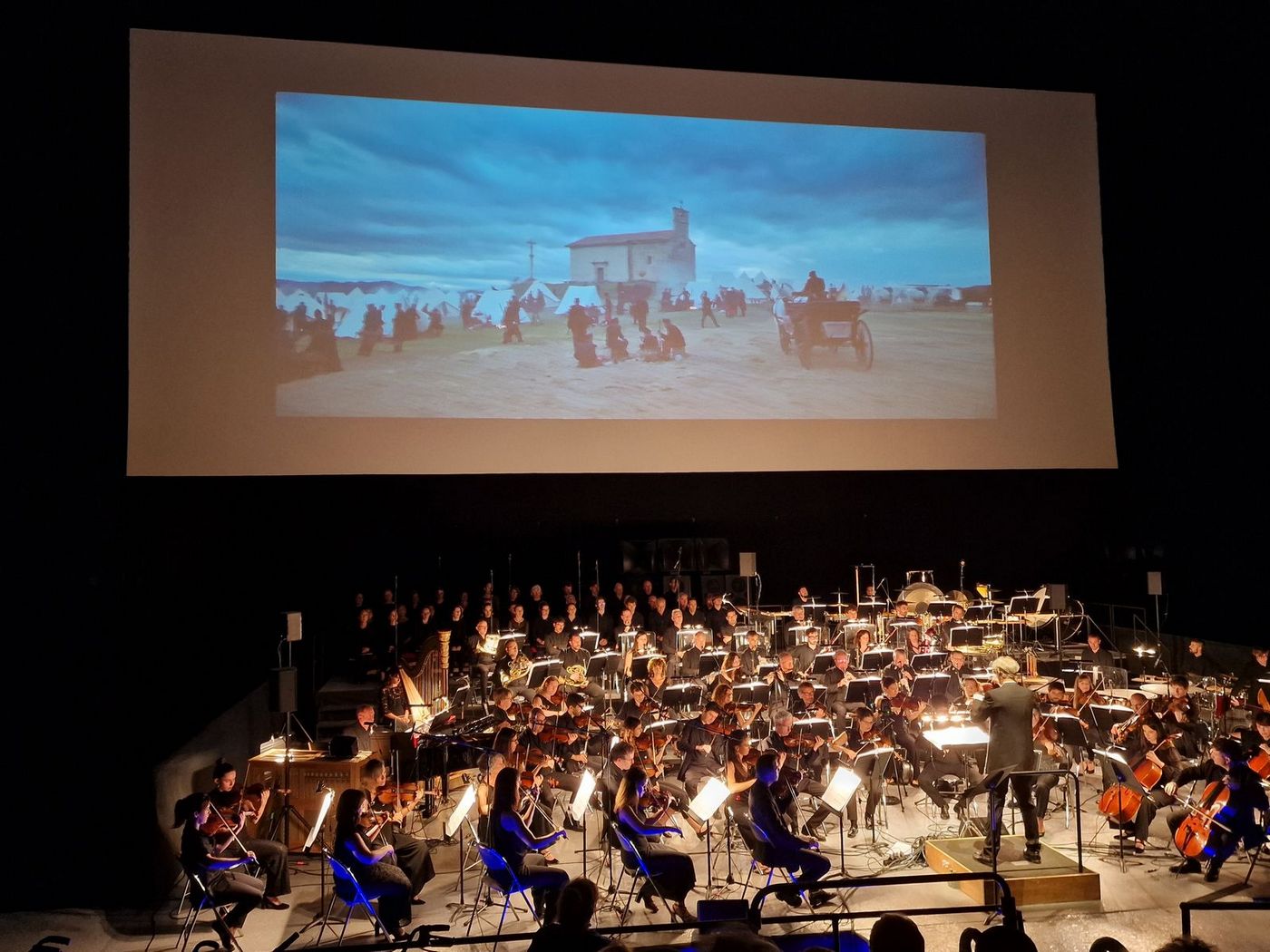
She was followed by Beatriz López-Nogales, with a sample of her composition for Sacamantecas / The Harvester (2026), a feature film portraying the man considered to be Spain’s first serial killer, who, between 1870 and 1879, murdered and raped at least six women. The score moves in a dramatic register, with marked use of strings, revolving around a recognisable central theme that captures the backward, dark rural setting of the period and the drama of the victims. Heartfelt and moving music, whose only flaw was that the suite was far too short.
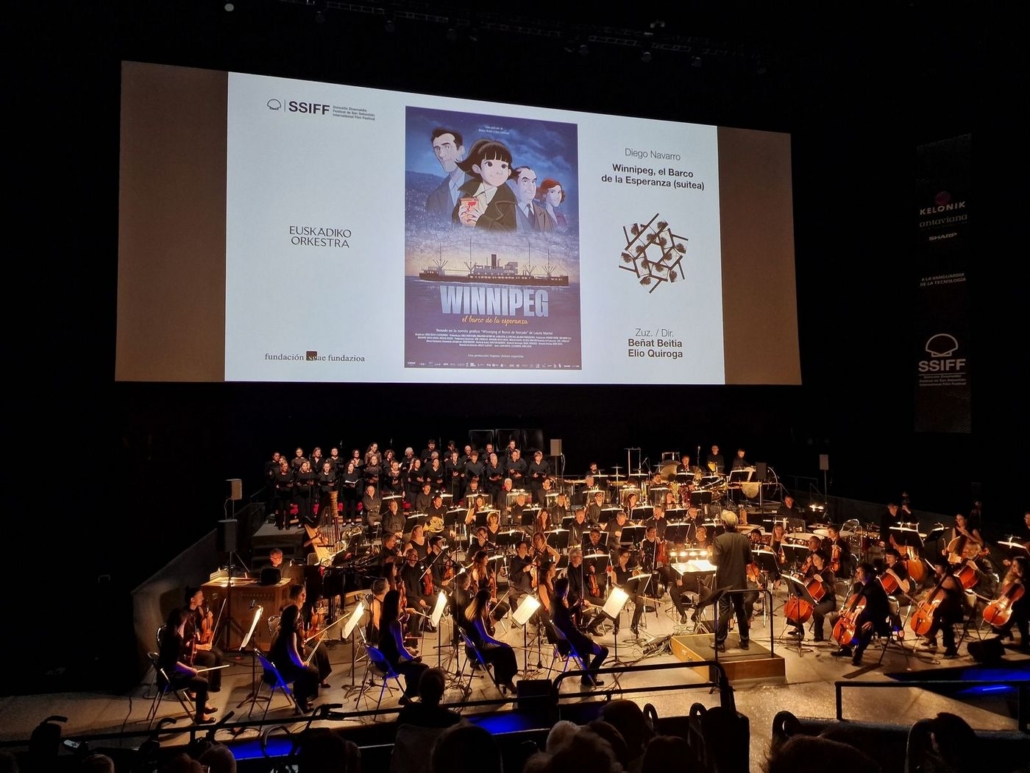
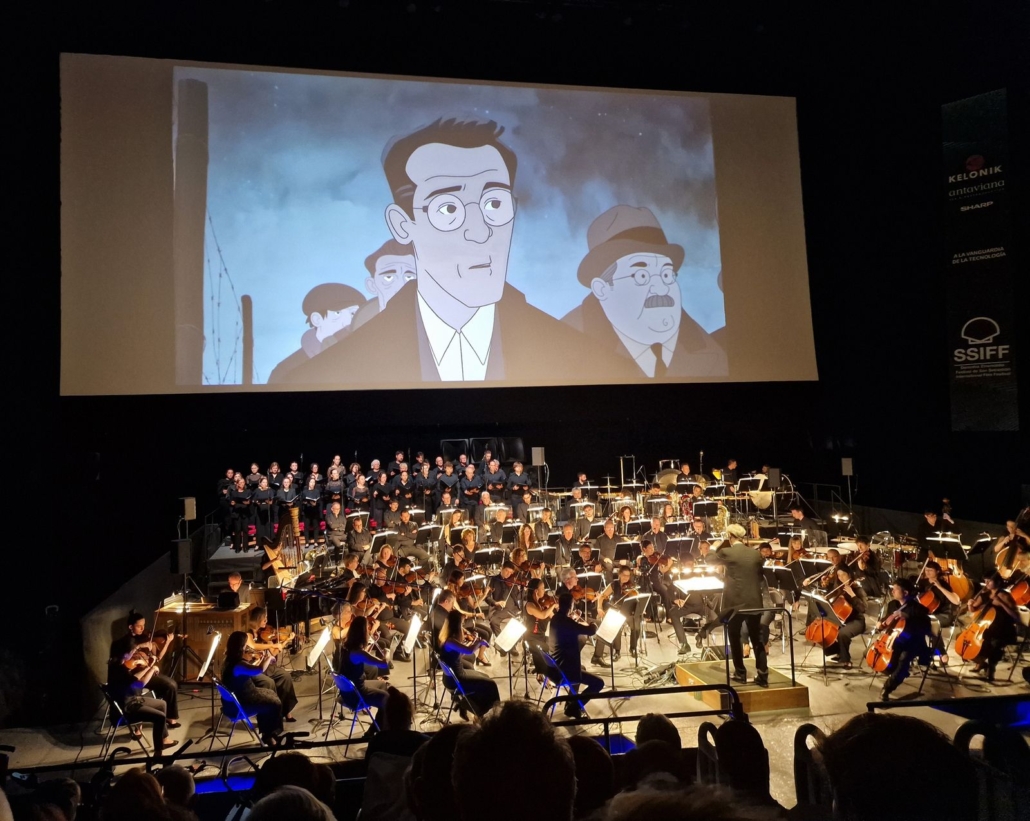
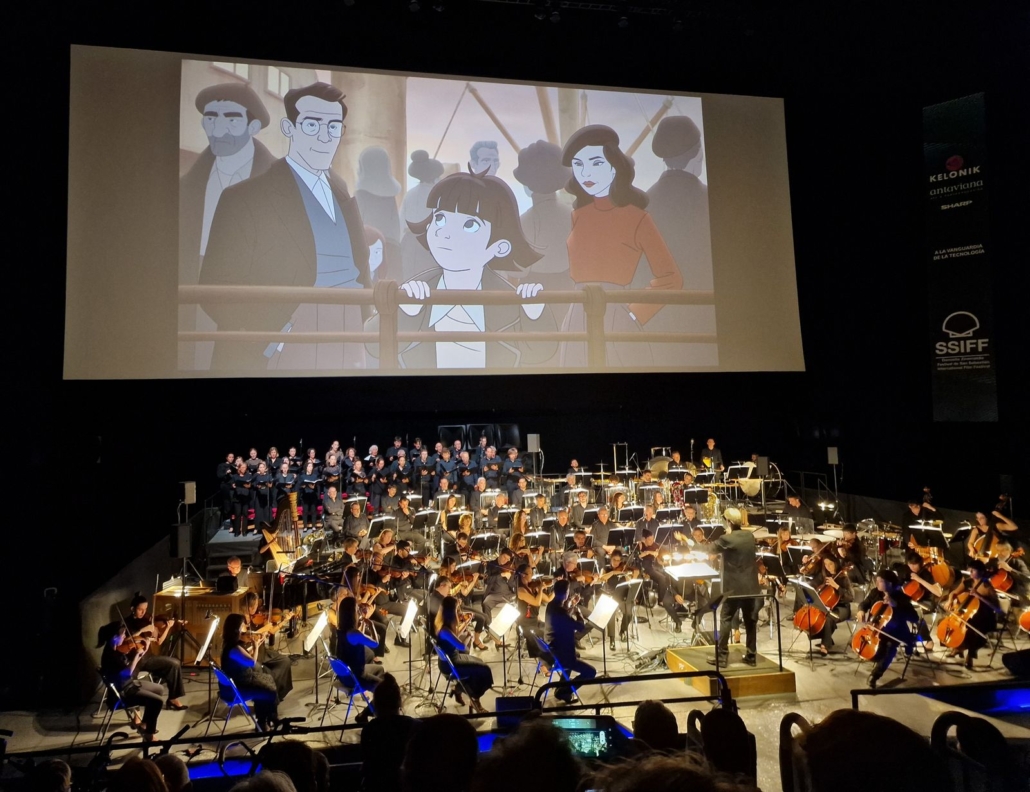
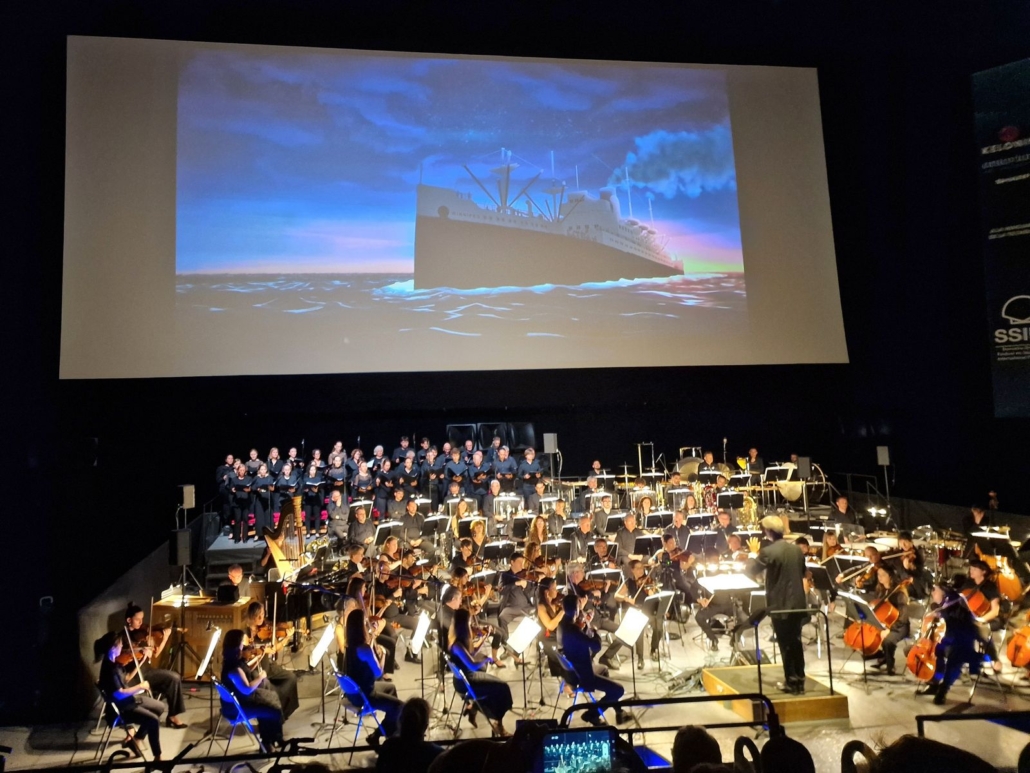
We move on to Diego Navarro, who presented his work for Winnipeg, the Seed of Hope (2026), a 2D animated production. A highly remarkable composition, which the orchestra, together with the vocal and solo support of the Orfeón Donostiarra made the most of, offering a repertoire of musically emotional and equally spectacular moments, giving us a superb sample of the Canarian composer’s work.
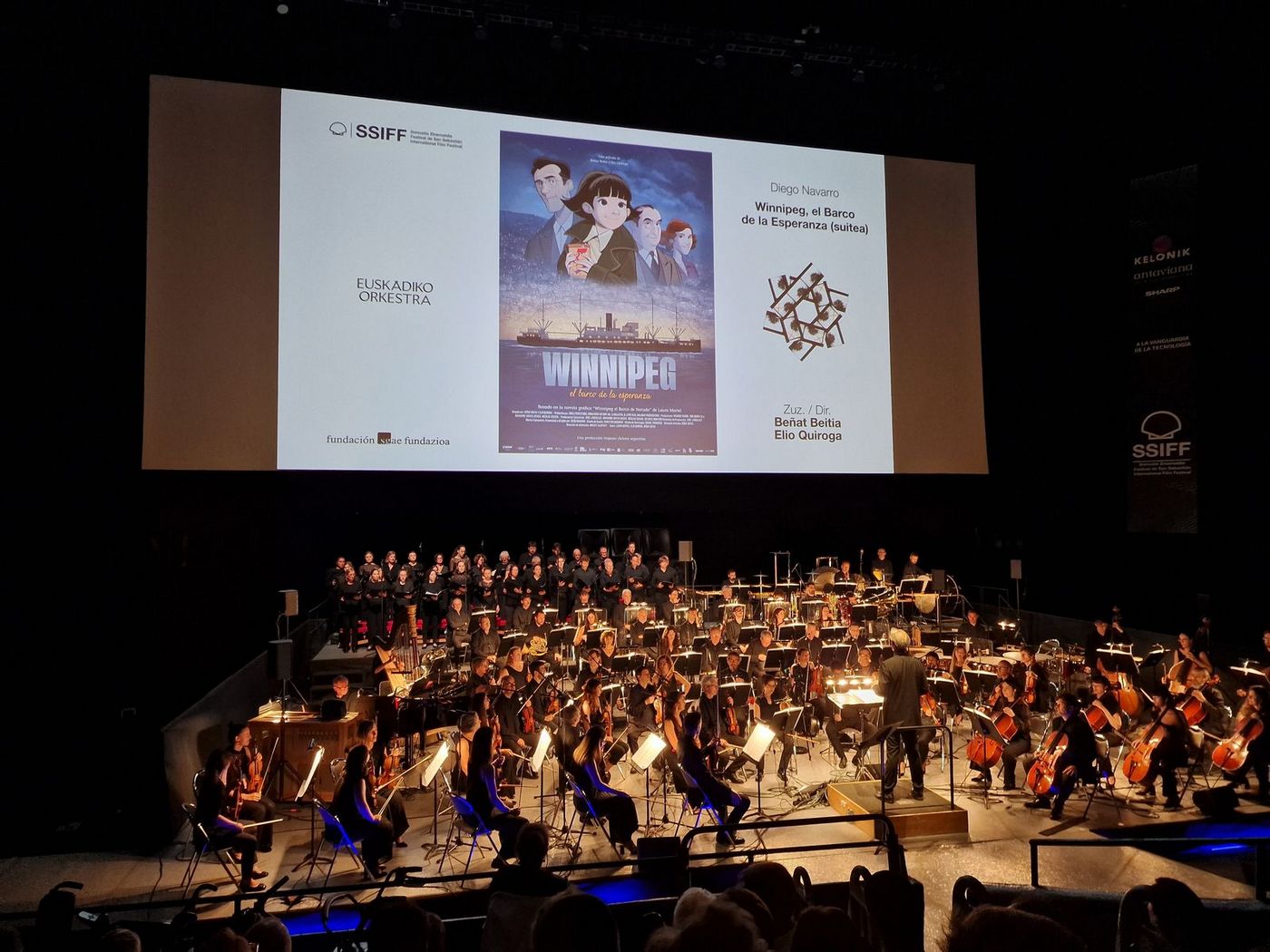
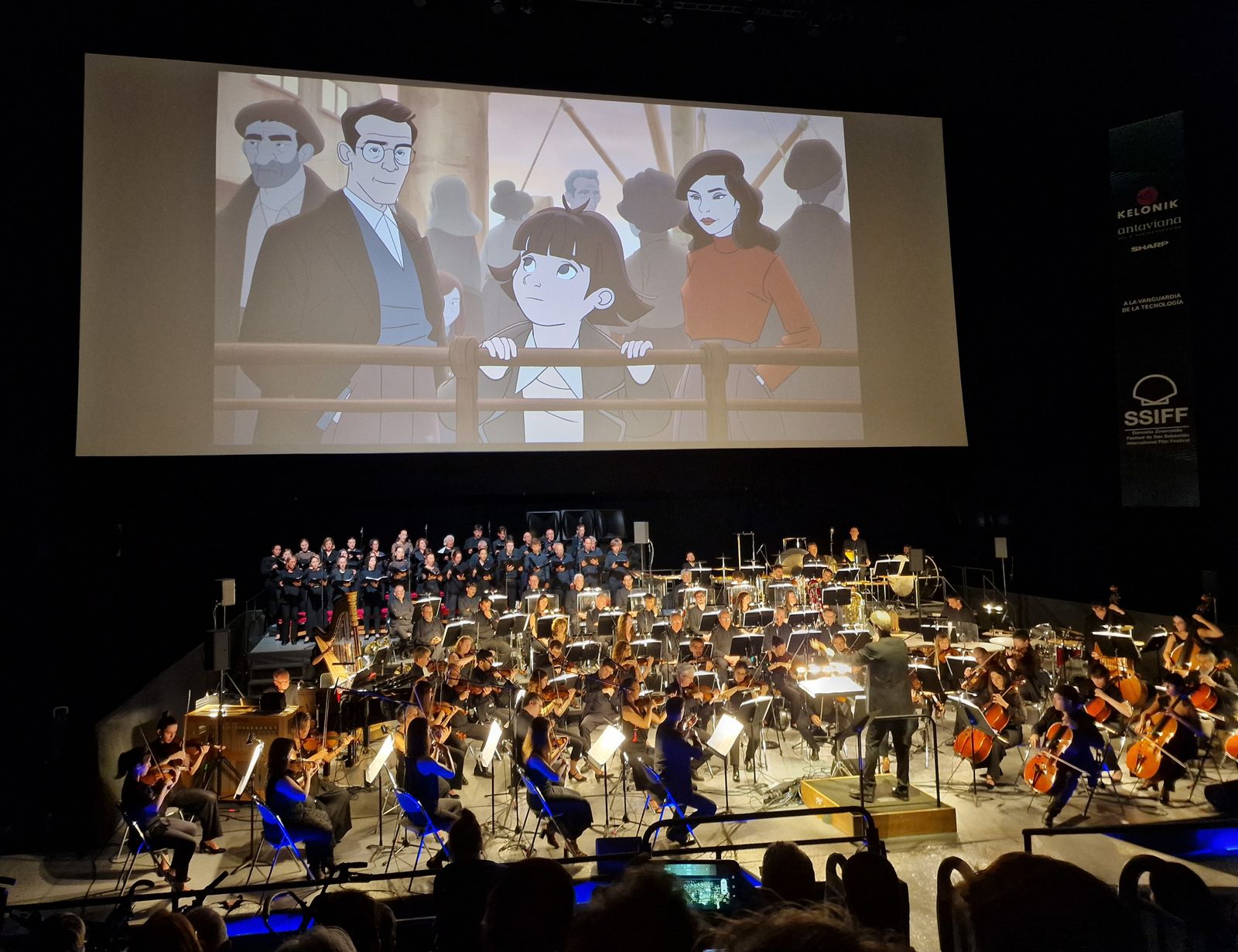
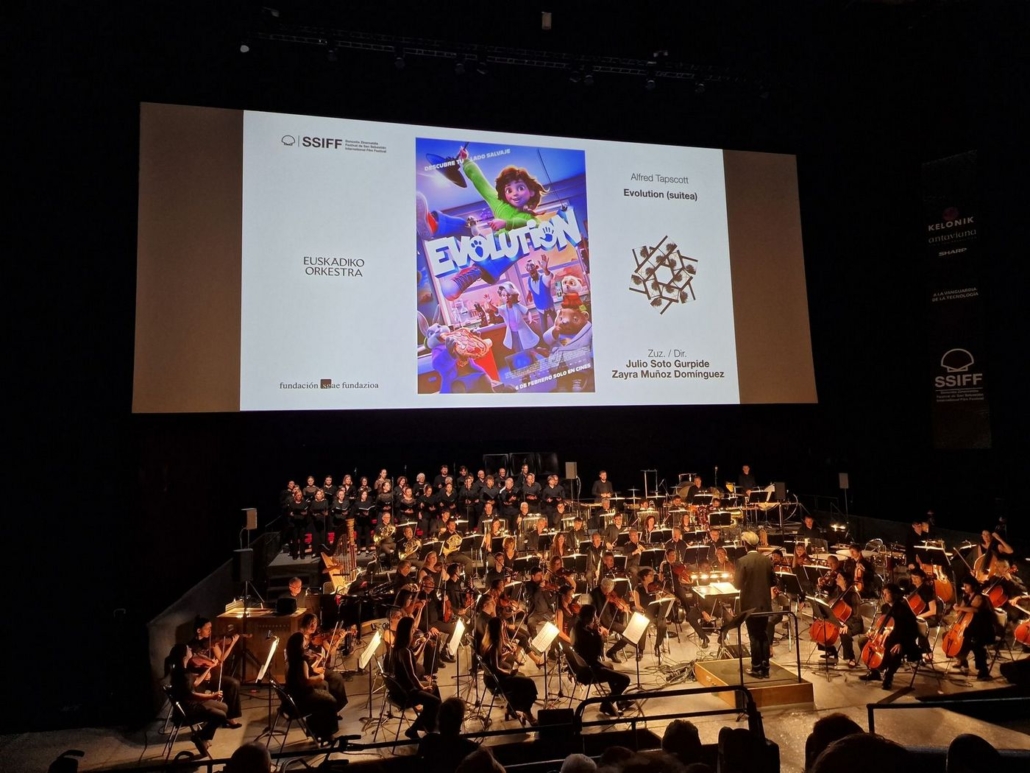
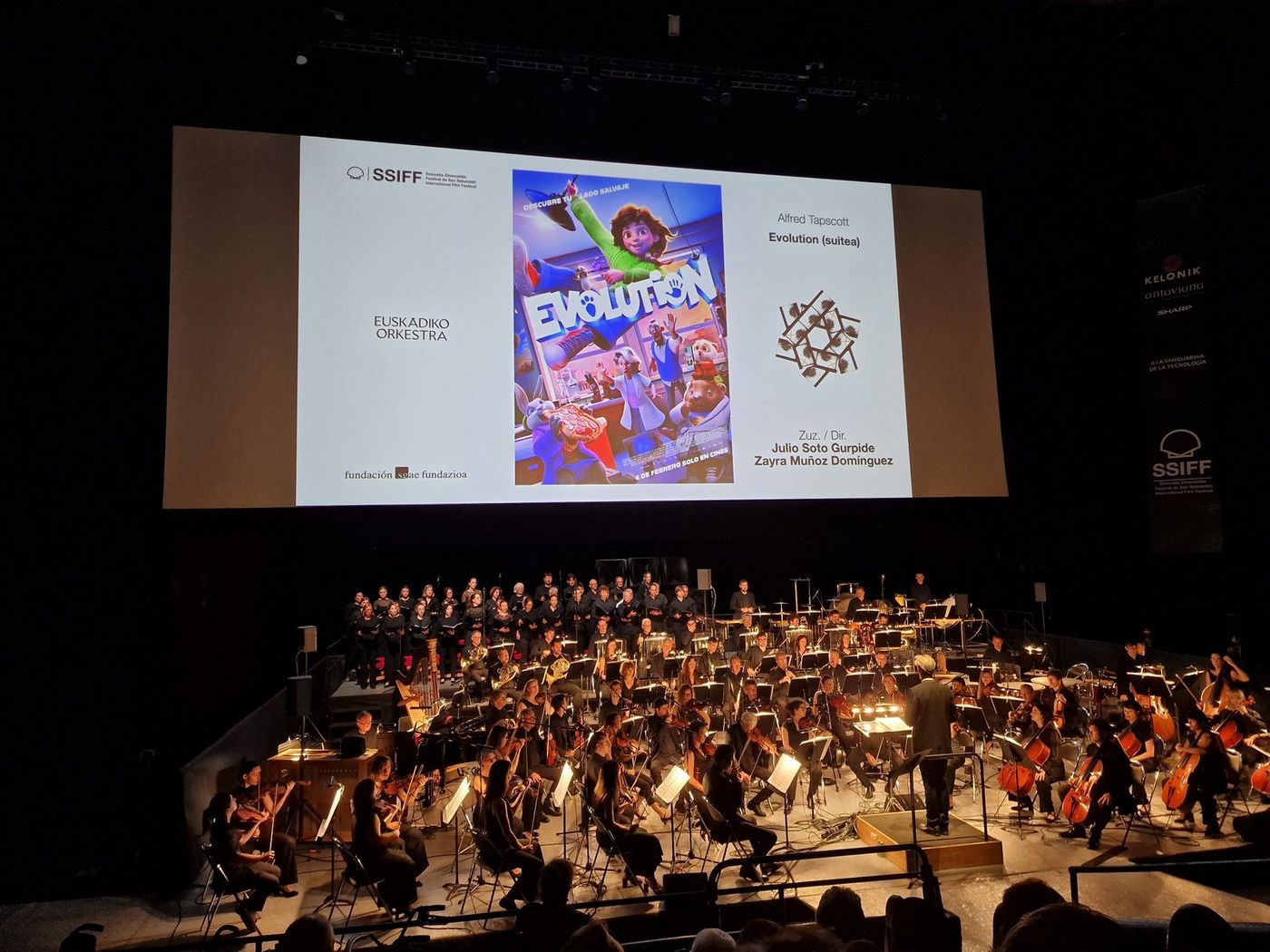
Next up was Alfred Tapscott, with a compendium of his score for Evolution (2026), a 3D animation for all audiences. Again, with the participation of the Orfeón Donostiarra, and with electronic support, the suite offered a varied musical selection, with themes of mystery, others adventurous and thrilling, others more emotional… resulting in a work that was highly rewarding to perform live.
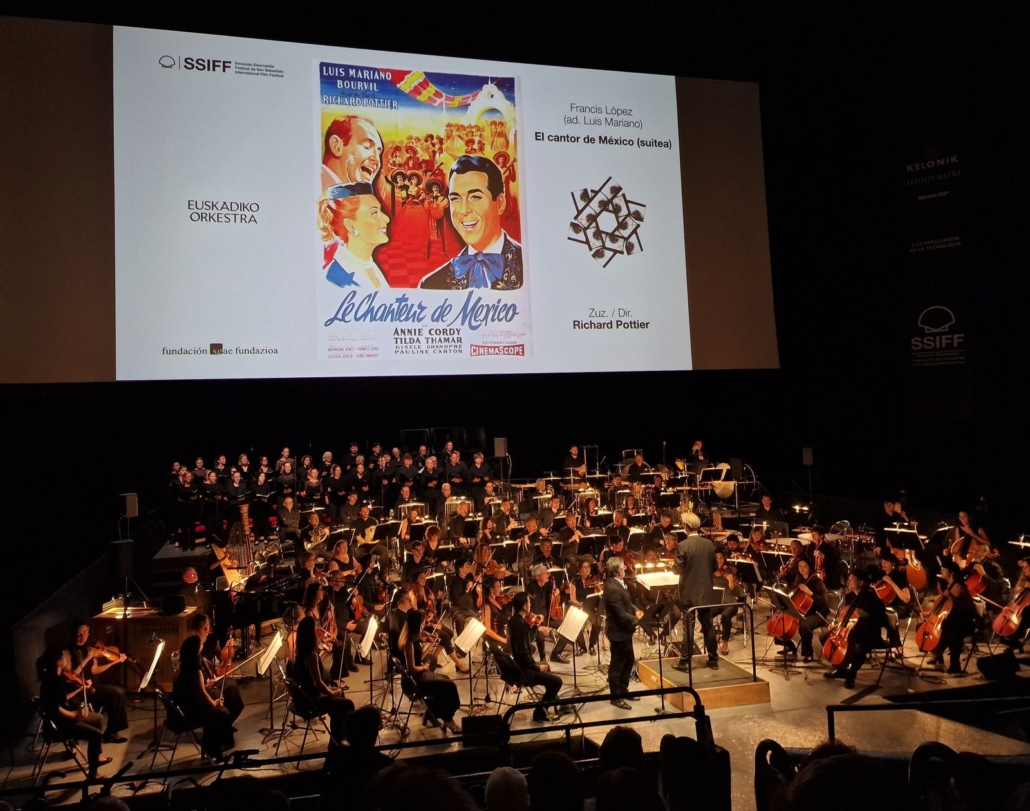
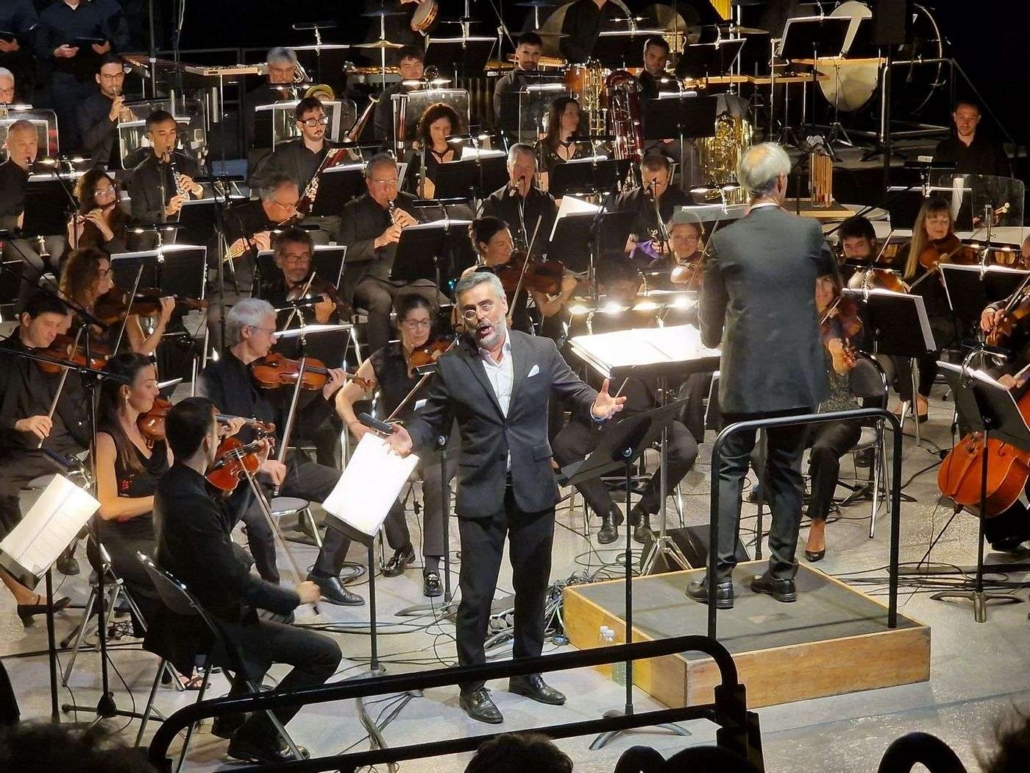
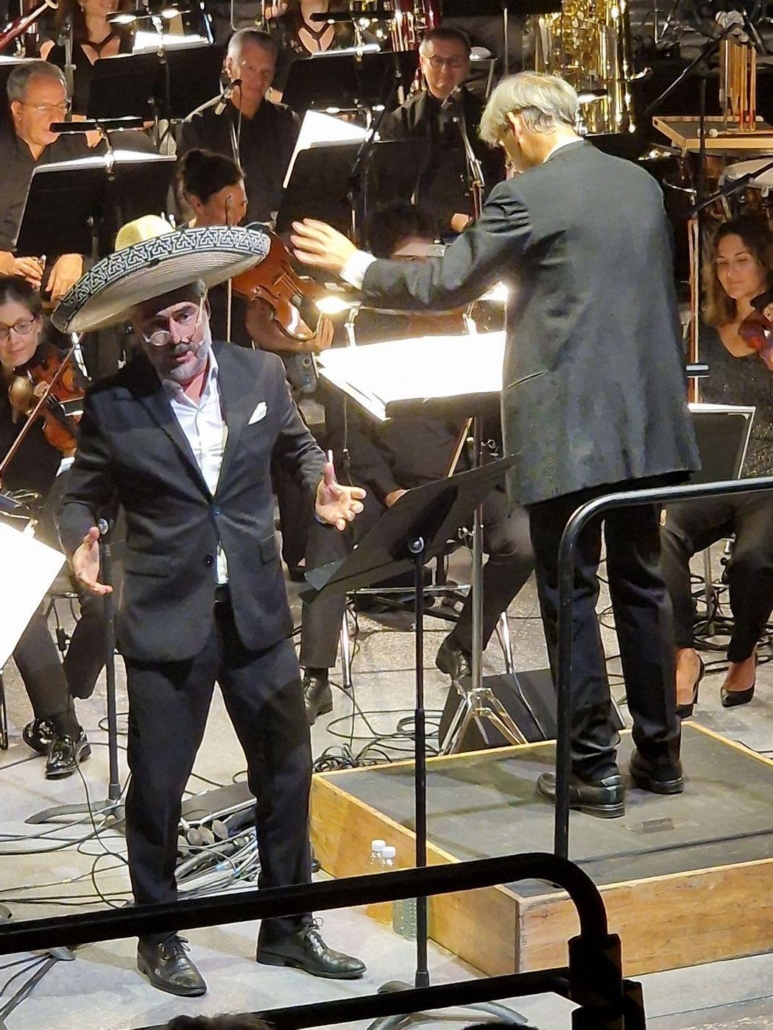
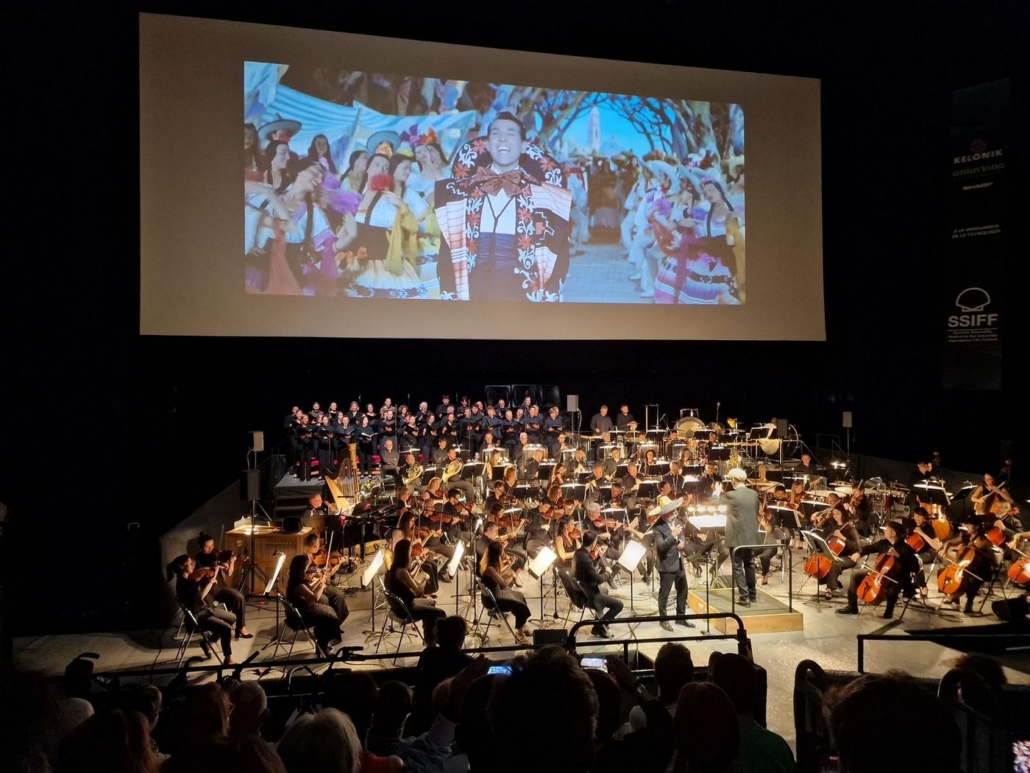
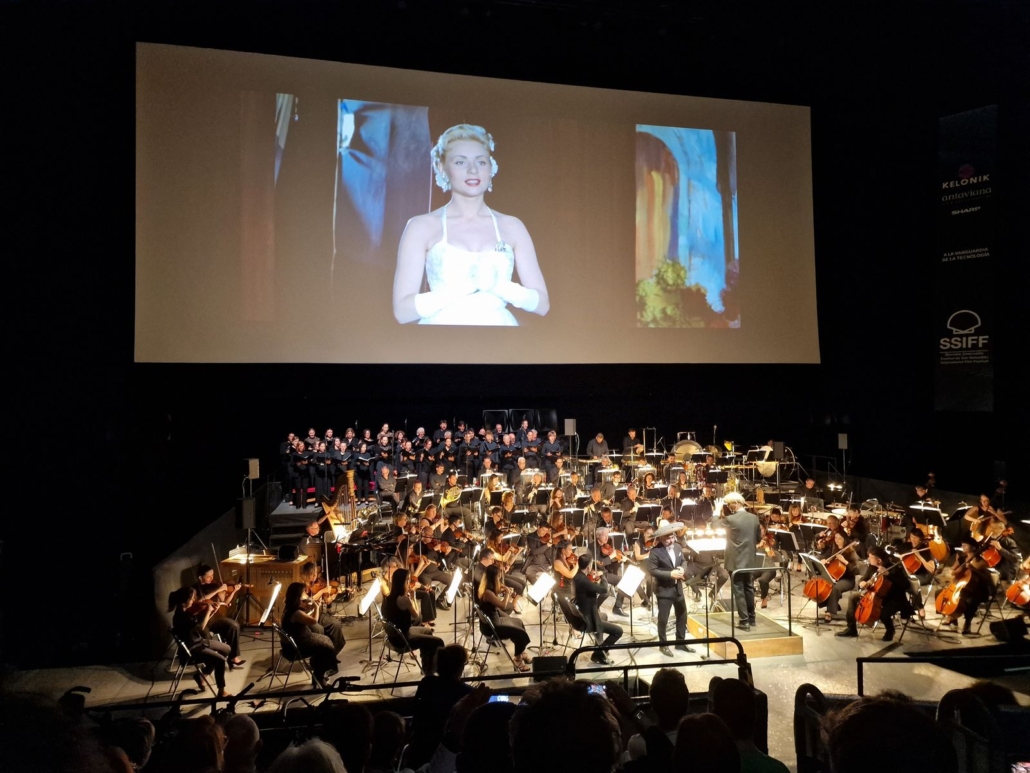
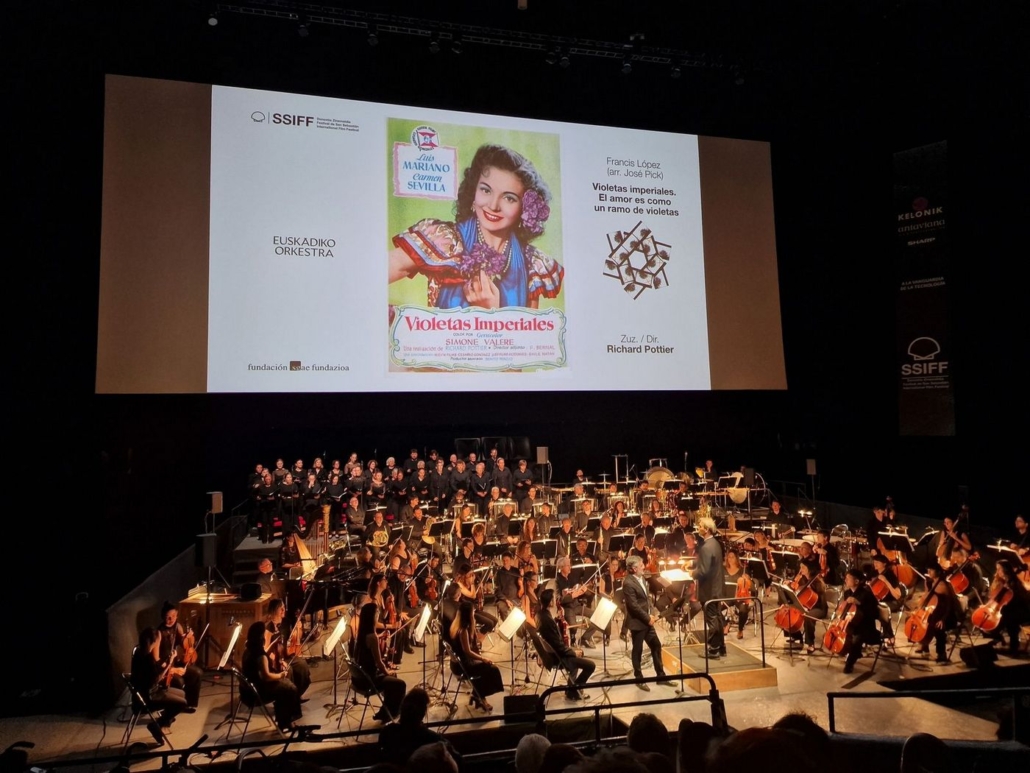
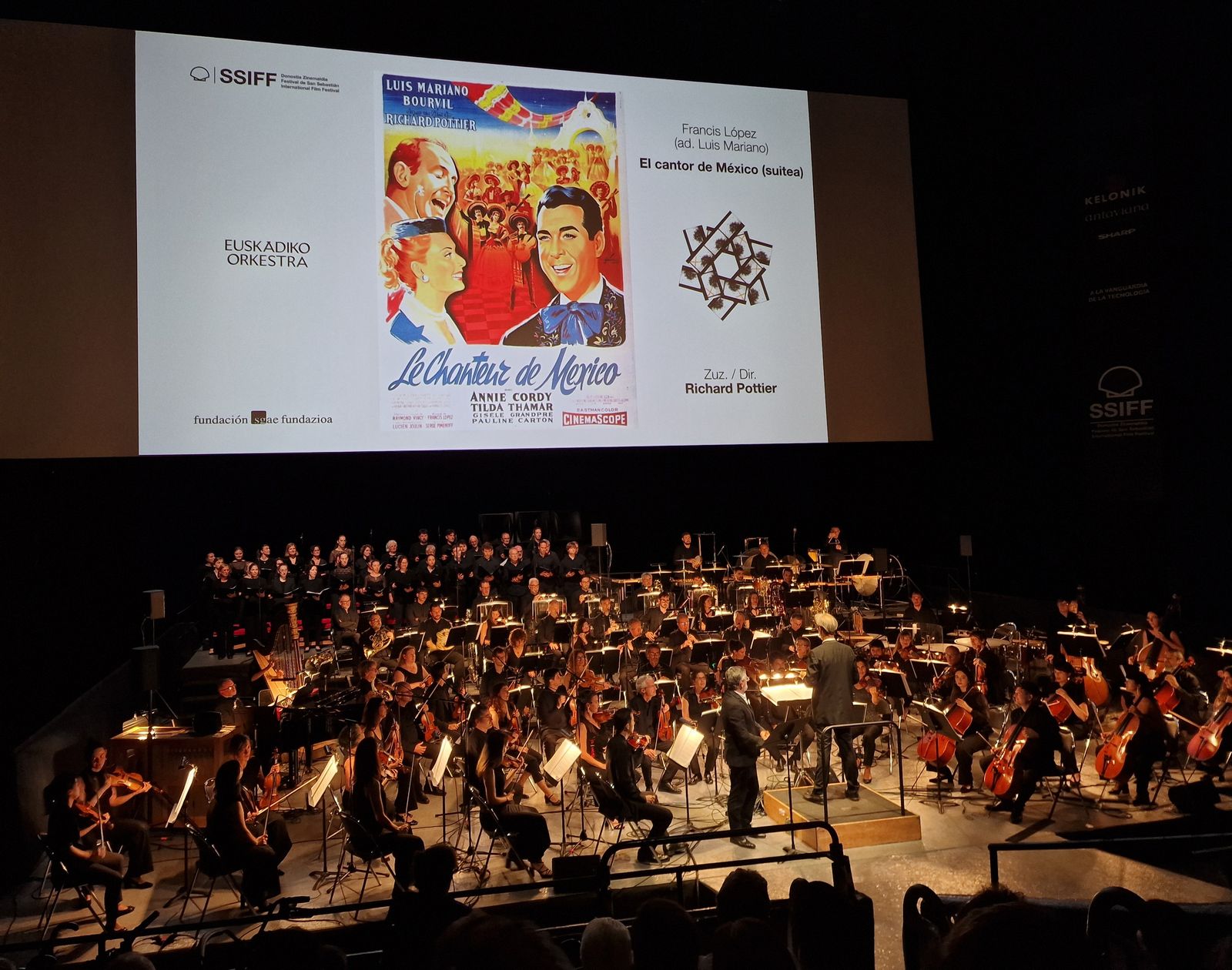
The final part of the concert was, once again, a return to the past, with a full tribute to the composer Francis López and the singer Luis Mariano, of whom a couple of songs from El cantor de México (1956) were performed, plus another from Violetas imperiales (1952), a film in which the singer shared the leading role with Carmen Sevilla. To bring back the musical spirit of the singer and actor from Irun, the concert featured tenor Andoni Martínez Barañano, whose vocal power and range would have flattered Luis Mariano himself. The performance of the legendary artist’s songs, together with the Euskadiko Orkestra and the Orfeón Donostiarra delighted the audience present, and even the well-remembered song “Aire tun txikitun” from El cantor de México became the final encore of the event.
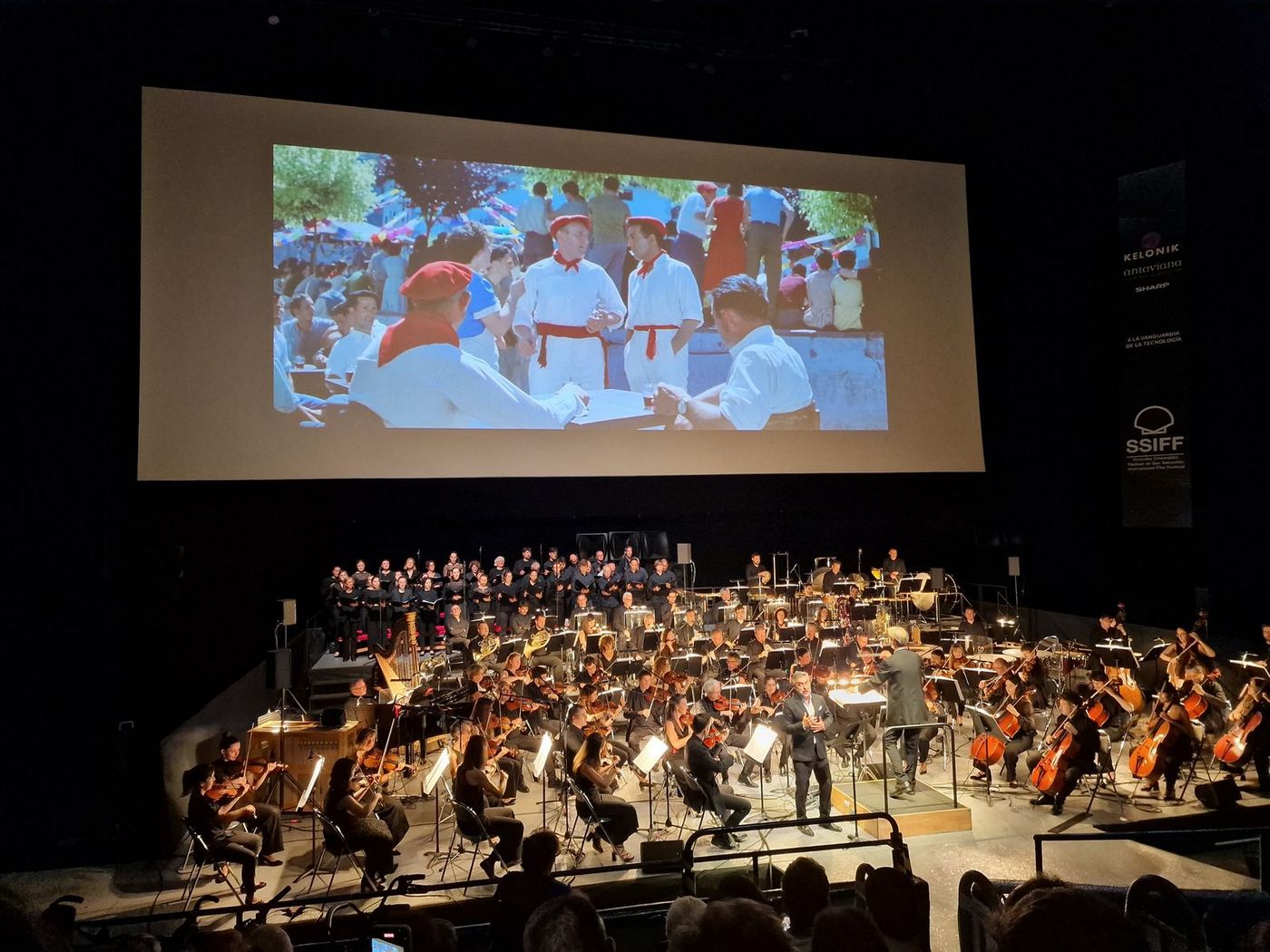
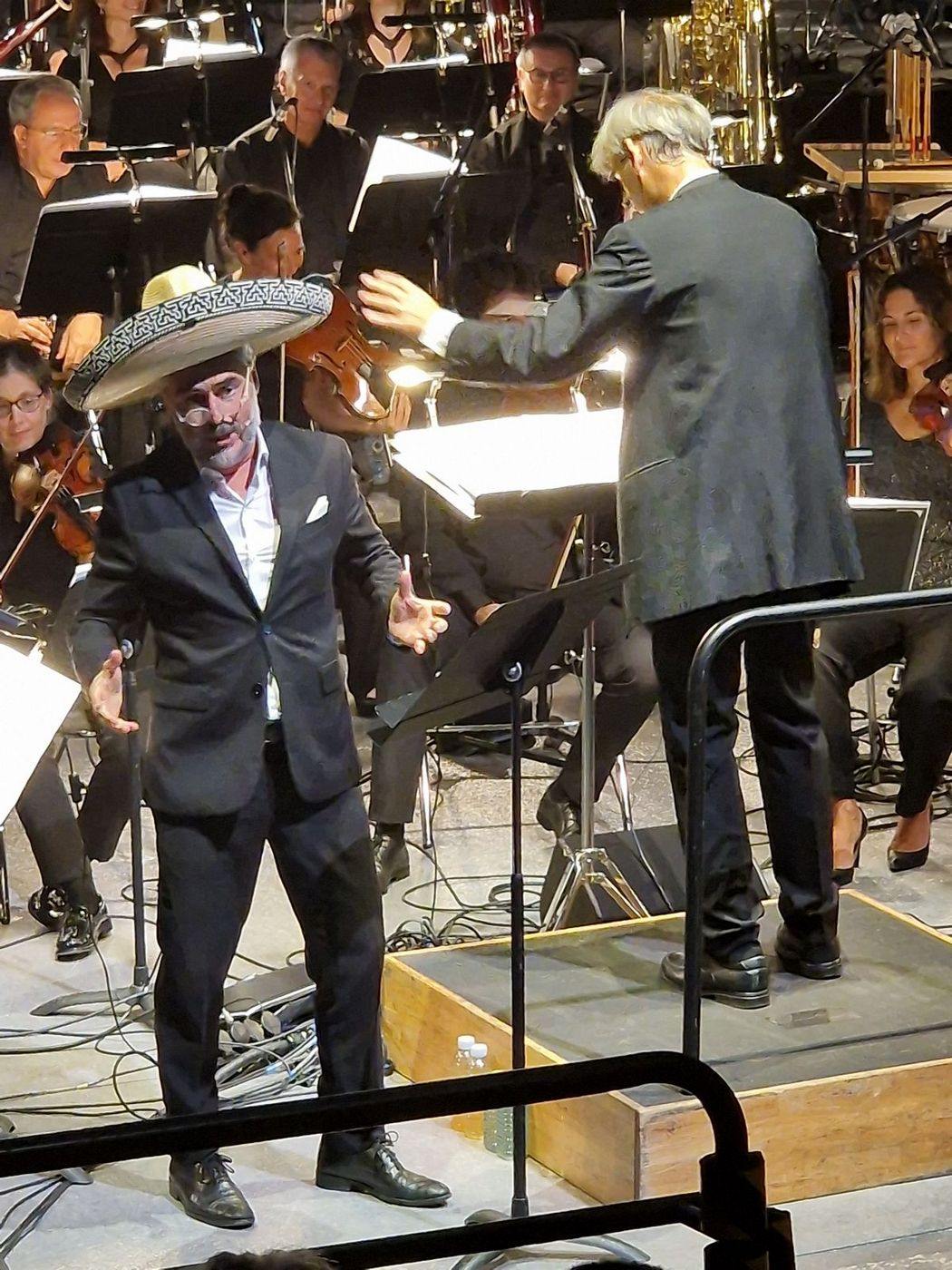
The final verdict, after a good hour and a half of concert, was that of a wonderful evening: from the flawless performance of the orchestra and choir, to the excellent choice of musical pieces, and the heart-warming finale with Luis Mariano’s songs. Well done to the Zinemaldia, to the Fundación SGAE, and we can only hope the initiative continues for many years to come.
Article by Felipe Múgica
Photos by Gorka Oteiza